
Frontier Aircraft Familiarization (External/Internal) Practice Test
$69.00
- Buy to unlock unlimited access to all Quiz questions and Answers in this Quiz.
- After purchase you can print a PDF of the whole quiz at any point. The PDF will contain the questions and the correct answers.
About this Exam
The Frontier Aircraft Familiarization (External/Internal) certification is designed to provide comprehensive, in-depth knowledge of Frontier Airlines' specific aircraft, covering both external and internal operations, safety procedures, and systems. This certification is essential for individuals seeking to join Frontier Airlines' specialized workforce, whether in ground handling, flight crew, maintenance, or operations.
Ready to test your knowledge?
Buy Now to Access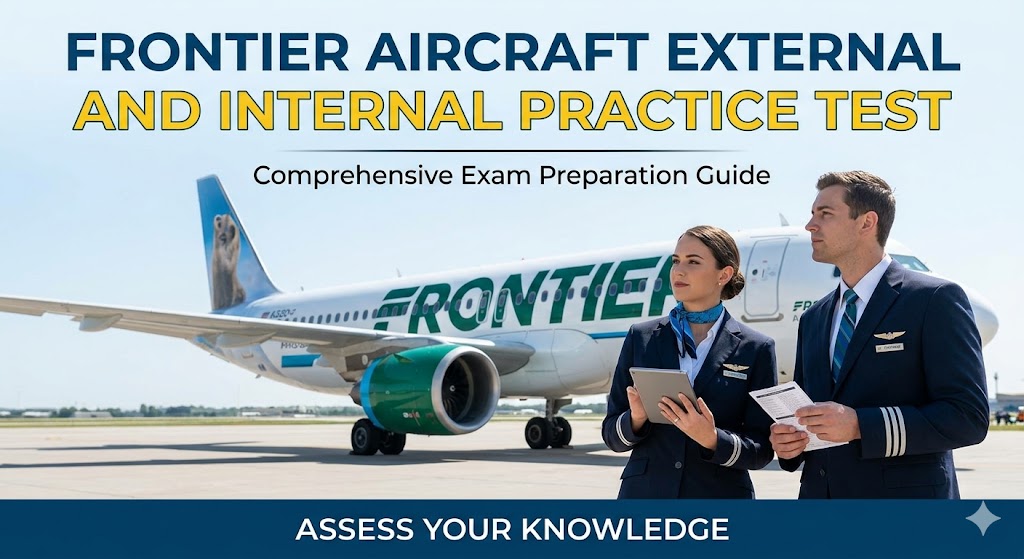
Additional Information
What the Course Entails and Exam Details
The Frontier Aircraft Familiarization course typically provides a structured learning curriculum that delves into:
Aircraft Recognition and Characteristics: Distinguishing features of Frontier's fleet (e.g., Airbus A320neo, A321neo), identifying aircraft specific variants, and understanding overall dimensions and performance capabilities.
Internal Systems and Layout: Detailed understanding of cabin configuration, seating arrangements, galley and lavatory locations, exit locations, and emergency equipment placement (fire extinguishers, first aid kits, oxygen systems).
External Aircraft Features: Identification and knowledge of external components, including engines, wings, flaps, slats, landing gear, cargo compartments, and access panels. Understanding external markings, placards, and light systems.
Ground Handling and Safety: Familiarization with towing, pushback procedures, cargo loading and unloading, refueling protocols, and vital ground safety practices.
Emergency Procedures (External/Internal): Comprehensive knowledge of emergency evacuation routes, door operations (both normal and emergency), slide deployment, emergency lighting, and initial response protocols for various external/internal emergencies.
Regulatory Compliance: Understanding of Federal Aviation Administration (FAA) regulations and Frontier Airlines’ internal safety procedures that apply to external and internal operations.
The exam itself is usually a proctored, multiple-choice assessment that tests knowledge recall and practical application scenarios derived from the course content.
What to Expect in the Final Exam
The final Frontier Aircraft Familiarization (External/Internal) exam will typically feature:
Format: A closed-book, multiple-choice questionnaire, potentially containing some True/False and matching questions.
Duration: Candidates generally have a specific time limit, often around 90-120 minutes, to complete the exam.
Passing Score: A passing score is usually required to be considered proficient. The specific score threshold (e.g., 80% or 90%) can vary depending on Frontier’s training standards.
Content Focus: Expect questions on specific aircraft configurations, key external components, emergency equipment location, procedures for various operational scenarios, and critical safety protocols.
Practical Scenarios: Some questions might present simplified scenarios to evaluate decision-making and proper application of procedures in a simulated environment.
How to Study and Exam Centers
Effectively preparing for the Frontier Aircraft Familiarization exam requires a systematic approach:
Utilize Official Training Materials: Thoroughly study the provided Frontier training manuals, modules, and relevant technical documents. Pay attention to diagrams, flowcharts, and safety-critical procedures.
Regular Practice Exams: Engage in mock tests to gauge your understanding, identify weak areas, and practice time management. This very practice test is an excellent starting point.
Flashcards for Retention: Create flashcards for critical terms, acronyms, component locations, emergency procedure steps, and regulatory requirements.
Form Study Groups: Collaborating with peers can enhance understanding, provide opportunities for discussions, and help in quiz-based learning.
Prioritize Safety Guidelines: Place high importance on mastering all safety protocols, procedures for emergency situations, and FAA regulations. This knowledge is not only essential for the exam but also paramount in operational environments.
Exam Centers:
Frontier Airlines Training Facilities: Many candidates take the exam directly at Frontier's dedicated training centers, usually following their completed internal training program.
Authorized Online Portals: Depending on Frontier's current training practices, some modules or the initial assessment could potentially be delivered through authorized online learning platforms or secure testing systems.
Approved Third-Party Training Partners: In some specific instances, Frontier might partner with approved training providers for certain aspects of their familiarization programs, and exams could be administered at those locations. It’s best to verify with the hiring or training department for the current, officially recognized exam delivery method.
Job Opportunities from the Course
Successfully achieving certification in Frontier Aircraft Familiarization (External/Internal) can unlock numerous career paths within Frontier Airlines and the broader aviation industry, including roles such as:
Ground Operations Specialist: Handling baggage, cargo loading, and assisting with ground safety procedures.
Ramp Agent: Providing aircraft ground support including marshaling, towing, and pushback.
Passenger Service Agent: Managing passenger check-in, boarding, and ensuring a smooth travel experience.
Flight Attendant: Ensuring passenger safety and comfort, and efficiently executing emergency procedures.
Cabin Crew Member: A general term for flight attendants and other cabin staff responsible for safety and service.
Maintenance Technician (Aircraft): Performing inspections, repairs, and preventative maintenance on Frontier's fleet.
Flight Dispatcher: Assisting pilots with flight planning, weather briefings, and ensuring regulatory compliance.
Flight Operations Specialist: Coordinating flight schedules, crew assignments, and managing logistical aspects of flight operations.
Frequently Asked Questions
Reviews
5.0
Based on 0 reviews
Leave a Review
No reviews yet. Be the first to review!