
Fuel Gas Systems PracticeTest
$69.00
- Buy to unlock unlimited access to all Quiz questions and Answers in this Quiz.
- After purchase you can print a PDF of the whole quiz at any point. The PDF will contain the questions and the correct answers.
About this Exam
The Fuel Gas Systems certification is a specialized credential designed for professionals in the HVAC, plumbing, and industrial piping sectors. It serves as a rigorous validation of a technician's ability to safely install, maintain, and troubleshoot gas-fired appliances and fuel distribution networks.
This certification is essential for anyone aiming to advance their career in mechanical trades, particularly those working with natural gas, propane, and liquid petroleum systems. It is tailored for aspiring gas fitters, service technicians, and building maintenance professionals who want to ensure compliance with stringent safety codes and industry standards.
Ready to test your knowledge?
Buy Now to Access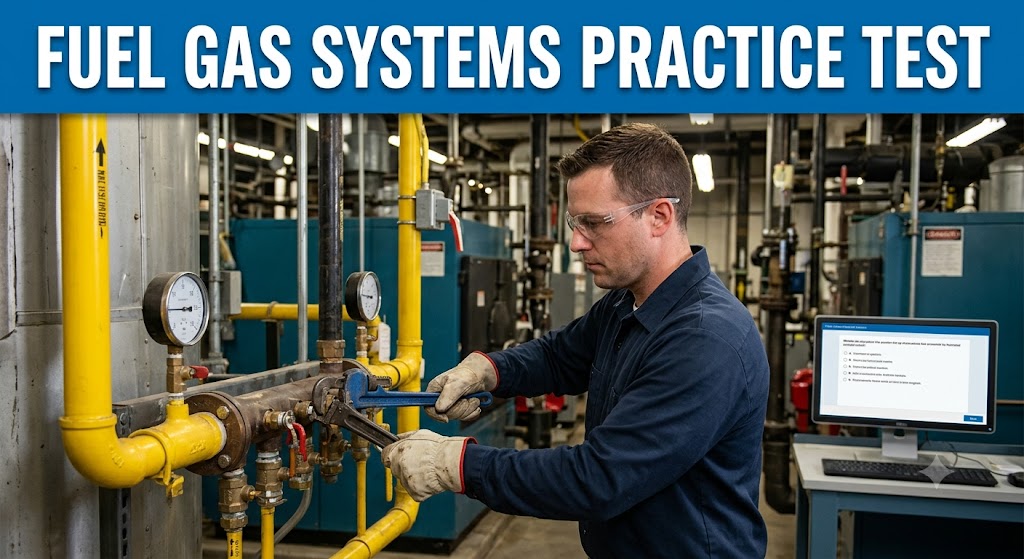
Additional Information
What the Course Entails and Exam Details
This course provides a deep dive into the fundamental principles of combustion, gas pressure regulation, and venting requirements. Participants gain a comprehensive understanding of the technical skills required to work in high-stakes environments where gas safety is paramount.
The curriculum covers a broad spectrum of critical topics, including:
Properties of fuel gases and combustion theory.
Proper sizing and installation of gas piping materials.
Operation, testing, and maintenance of regulators and pressure controls.
Detailed analysis of venting systems and air supply requirements.
Troubleshooting gas-fired equipment malfunctions.
Adherence to local and national fuel gas codes (such as the NFPA 54).
Rigorous safety protocols for leak detection and emergency shut-off procedures.
What to Expect in the Final Exam
The final exam is designed to test both theoretical knowledge and practical application under time-constrained conditions. Most certifying bodies utilize a computer-based testing (CBT) format.
Exam Format: The test typically consists of 50 to 100 multiple-choice questions.
Content Focus: Questions are divided between code interpretation, schematic reading, and situational troubleshooting scenarios.
Time Limits: Candidates are usually provided with 2 to 3 hours to complete the examination.
Passing Score: A minimum passing score is generally set at 70% to 75%, depending on the governing board.
Rules: This is a "closed-book" examination in most jurisdictions, though some provide a standardized code reference manual for candidates to consult during the test.
How to Study and Exam Centers
Success in this exam requires a structured approach to preparation. Start by obtaining the official study guide or recommended textbook provided by the accrediting organization.
Utilize Practice Tests: Engage with multiple practice exams to get comfortable with the pacing and the phrasing of technical questions.
Code Book Familiarization: Dedicate significant time to navigating your local or national fuel gas code book. Knowing exactly where to find regulations quickly is often the key to passing.
Hands-on Experience: Complement your studies with actual fieldwork. Understanding the physical layout of gas systems helps bridge the gap between theory and exam questions.
Exam Centers: Exams are typically administered through authorized third-party testing providers like Pearson VUE or Prometric. In some cases, vocational schools or labor union halls serve as proctored sites. You must register through your state or local licensing board’s website to locate the nearest approved testing facility or to schedule a remote proctored session if available.
Job Opportunities from the Course
Earning this certification significantly enhances your professional credibility and opens doors to various specialized roles within the trades industry.
The certification unlocks the following career paths:
Gas Fitter: Specializing in the installation and repair of residential or commercial gas piping systems.
HVAC Service Technician: Handling the maintenance and repair of gas-fired furnaces, boilers, and water heaters.
Industrial Piping Technician: Managing large-scale fuel distribution systems in manufacturing plants or refineries.
Building Maintenance Engineer: Overseeing the safe operation of complex gas systems in high-rise buildings and commercial facilities.
Plumbing Inspector: Utilizing your deep knowledge of codes to evaluate the safety and compliance of new installations.
Propane Equipment Specialist: Focusing on the specific storage, transport, and delivery systems for liquid petroleum gas.
Frequently Asked Questions
Reviews
5.0
Based on 0 reviews
Leave a Review
No reviews yet. Be the first to review!