
Fuel Handlers Course Practice Test
$69.00
- Buy to unlock unlimited access to all Quiz questions and Answers in this Quiz.
- After purchase you can print a PDF of the whole quiz at any point. The PDF will contain the questions and the correct answers.
About this Exam
The Fuel Handlers Course is a specialized certification program designed to ensure that individuals responsible for the transfer, storage, and management of volatile fuels adhere to the highest safety and environmental standards. Whether you are working in aviation, maritime logistics, commercial trucking, or industrial manufacturing, this certification is essential for maintaining compliance with federal and international safety regulations.
This course is specifically tailored for fuel terminal operators, commercial drivers, refueling technicians, and safety compliance officers. By mastering the protocols outlined in this curriculum, you demonstrate to employers that you are proficient in minimizing fire hazards, preventing spills, and executing emergency response procedures with confidence and precision.
Ready to test your knowledge?
Buy Now to Access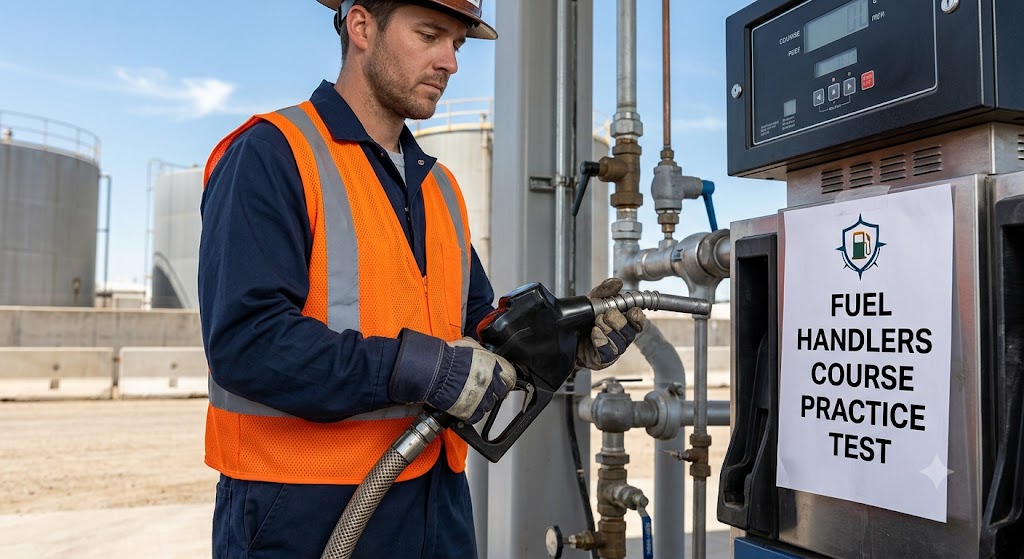
Additional Information
What the Course Entails and Exam Details
The Fuel Handlers Course covers a comprehensive syllabus that integrates theoretical knowledge with operational best practices. Students will engage with critical modules, including but not limited to:
Physical properties of fuels and their specific fire hazards.
Proper bonding and grounding techniques to prevent static electricity discharge.
Environmental regulations, including spill containment and pollution prevention protocols.
Standard operating procedures (SOPs) for loading and unloading fuel transport vehicles.
Proper maintenance and inspection of refueling equipment, including hoses, nozzles, and emergency shut-off valves.
Hazardous materials communication and the interpretation of Safety Data Sheets (SDS).
What to Expect in the Final Exam
The final exam is designed to rigorously test your ability to apply safety protocols in real-world scenarios rather than just testing rote memorization. Candidates should be prepared for the following:
The exam format generally consists of multiple-choice questions, though it may also include "drag-and-drop" scenario questions that require you to identify the correct order of operations during a fuel transfer.
Candidates typically need to achieve a score of 80% or higher to receive their certification.
You are usually allotted 90 to 120 minutes to complete the exam.
The exam is strictly proctored. In most cases, you are not permitted to use external reference materials, personal electronic devices, or notes during the testing period.
How to Study and Exam Centers
Effective preparation is the key to passing your Fuel Handlers certification on the first attempt. Start by reviewing your primary course textbook or digital learning modules at least three times. Utilize this practice test to familiarize yourself with the question style, and focus your studies on the sections where you consistently score lower.
Focus heavily on the "Safety and Emergency Response" sections, as these are often the most heavily weighted areas in the final exam. Participating in hands-on workshops at your workplace, if available, is also a highly effective way to solidify your understanding of equipment handling.
When you are ready to certify, registration is typically handled through your employer’s HR or safety department or via authorized third-party training portals. Many exams are now administered through secure online testing platforms, though some specific certifications require physical assessment at authorized vocational schools or designated regional testing centers. Always verify your specific testing location through your course provider’s official portal well in advance of your desired exam date.
Job Opportunities from the Course
Earning your Fuel Handlers certification opens doors to various critical roles within the transportation and energy sectors. By holding this qualification, you become a qualified candidate for the following career paths:
Fuel Terminal Operator: Responsible for the daily management and oversight of fuel storage facilities and bulk transfer operations.
Refueling Technician: Often found in aviation and military sectors, these professionals ensure the safe and accurate refueling of large-scale transport vessels and aircraft.
Hazardous Materials (HAZMAT) Transport Driver: Specialized drivers who handle fuel tankers and require advanced safety certifications to operate legally and securely.
Safety and Compliance Inspector: A role focused on auditing fuel handling sites to ensure they meet local, state, and federal environmental and fire safety regulations.
Energy Logistics Coordinator: Professionals who manage the supply chain and distribution schedules for fuel, requiring a deep understanding of safety protocols to minimize operational risks.
Frequently Asked Questions
Reviews
5.0
Based on 0 reviews
Leave a Review
No reviews yet. Be the first to review!