
GACE Agricultural Education I (040) Practice Test
$69.00
- Buy to unlock unlimited access to all Quiz questions and Answers in this Quiz.
- After purchase you can print a PDF of the whole quiz at any point. The PDF will contain the questions and the correct answers.
About this Exam
The GACE Agricultural Education I (040) exam is a comprehensive assessment designed for individuals seeking certification to teach agricultural education at the secondary level, grades 6–12, in Georgia. This test is part of the Georgia Assessments for the Certification of Educators (GACE) program, which ensures that prospective educators possess the knowledge and skills necessary for effective teaching. The exam is specifically tailored for those who aim to inspire students about the diverse and vital field of agriculture, from traditional farming practices to cutting-edge agri-science and technology. By passing this exam, you demonstrate your commitment to preparing the next generation for careers in the agricultural industry and related sectors.
Ready to test your knowledge?
Buy Now to Access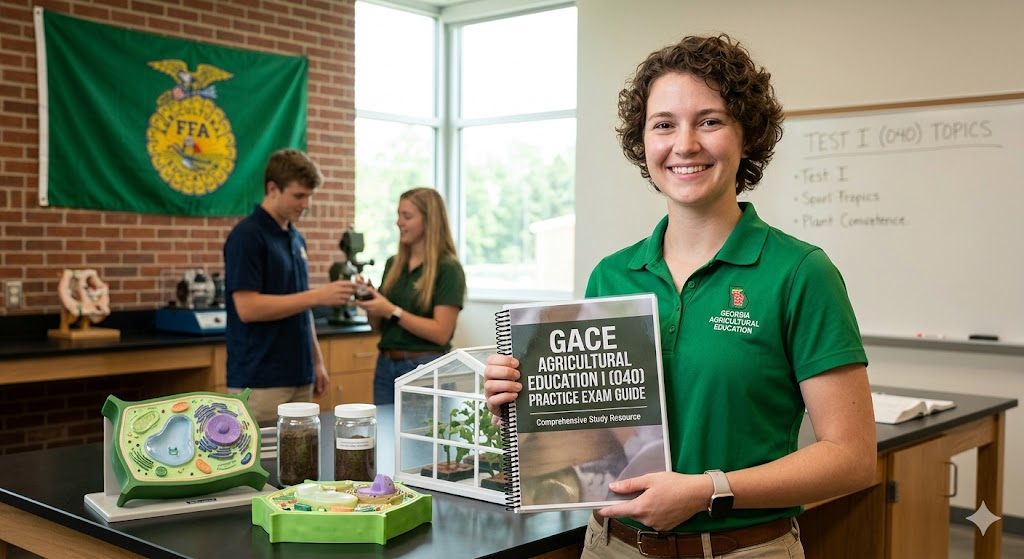
Additional Information
What the Course Entails and Exam Details
This exam covers a wide array of foundational and specialized topics within the field of agricultural education. The core topics, or subareas, and their approximate weight on the exam are:
Subarea I: Foundations of Agriculture and Agricultural Education (60%)
This substantial section focuses on the history, philosophy, and future of agricultural education and the primary youth organization, FFA. You must understand the relationship between the three integral components of a comprehensive agricultural education program: classroom and laboratory instruction, experiential learning through Supervised Agricultural Experience (SAE) programs, and leadership development through FFA.
Additional topics include general agribusiness management, marketing, sales, and economics; agricultural leadership, including parliamentary procedure and team building; and career opportunities across all sectors of the agricultural industry.
Subarea II: Food Science and Biotechnology (20%)
This area tests knowledge of the scientific principles and industrial processes related to the production, processing, and preservation of food and fiber products.
It covers topics such as food safety and sanitation, regulatory agencies, fundamental principles of food chemistry and microbiology, and the application of biotechnology in agriculture, including genetic engineering and its impact.
Subarea III: Power, Structural, and Technical Systems (20%)
This subarea assesses your understanding of the technical skills and knowledge required for agricultural engineering and mechanics.
Key areas include the principles and operation of agricultural power units, machinery, and equipment; structural systems, such as construction materials and fabrication techniques; and technical systems, including environmental control and precision agriculture technologies.
What to Expect in the Final Exam
The GACE Agricultural Education I (040) is a computer-delivered exam. It consists of 80 selected-response questions, which may include matching, multiple-choice, and drag-and-drop formats.
The test has a two-hour testing limit, with a total duration of approximately two and a half hours to account for tutorials and other administrative screens.
The passing score for GACE content assessments is tiered, providing two potential passing levels:
Induction Level (220–249): Meeting this score standard qualifies you for an induction certificate, suitable for those beginning their teaching career.
Professional Level (250 or higher): Achieving a score in this range qualifies you for a professional certificate, indicating a higher level of mastery.
Note that some questions on the exam may be pretest questions that do not count toward your final score. These are embedded to collect data for future test development.
How to Study and Exam Centers
Effective preparation is essential for success on the GACE Agricultural Education I exam. Here are some actionable study strategies:
Utilize Official Resources: Start with the official GACE website, which provides the Test at a Glance (TAAG) document. This comprehensive guide outlines all objectives and subareas, serving as a direct study syllabus.
Take Practice Tests: Practice tests are crucial for diagnosing your strengths and weaknesses. Focus on identified areas of opportunity to improve your score.
Engage with Hands-on Materials: Because of the practical nature of agricultural education, engage with resources from FFA and other agricultural organizations to solidify your understanding of SAEs and leadership activities.
Form Study Groups: Collaborating with other aspiring agricultural educators can provide diverse perspectives and help explain complex concepts in agribusiness or power systems.
To take the exam, you must create a GACE account and register through the official website. You can select from several testing options:
Remote Proctoring: Take the exam from the comfort of your home, under strict online supervision.
Physical Testing Centers: Choose from a list of authorized testing centers, which include educational institutions and Pearson VUE centers across Georgia. Specific locations are updated regularly within your GACE account during the registration process.
Job Opportunities from the Course
Passing the GACE Agricultural Education I (040) exam opens a direct path to a rewarding career, unlocking various distinct professional roles, including:
High School Agriculture Teacher (Grades 9–12)
Middle School Agriculture Teacher (Grades 6–8)
Career and Technical Education (CTE) Director
FFA Advisor
Extension Agent (specializing in 4-H or Agriculture)
Agribusiness Sales Representative
Farm or Ranch Manager
Agricultural Communications Specialist
Curriculum Developer for Agricultural Programs
This certification is a vital step toward shaping the future of agriculture by educating and inspiring students. Best of luck on your journey!
Frequently Asked Questions
Reviews
5.0
Based on 0 reviews
Leave a Review
No reviews yet. Be the first to review!