
GACE Media Specialist Practice Test
$69.00
- Buy to unlock unlimited access to all Quiz questions and Answers in this Quiz.
- After purchase you can print a PDF of the whole quiz at any point. The PDF will contain the questions and the correct answers.
About this Exam
The GACE Media Specialist assessment is designed to measure the professional knowledge of prospective school media specialists in Georgia. This critical certification ensures that educators possess the skills to manage a dynamic school library and media program, effectively facilitating learning for students from Pre-K through Grade 12.
Candidates are tested on their ability to create a nurturing educational environment, integrate emerging technologies into the curriculum, and serve as an instructional leader in their school community. For educators passionate about connecting students and staff with the information and resources they need to thrive, this exam is the final hurdle to unlocking a rewarding career.
Ready to test your knowledge?
Buy Now to Access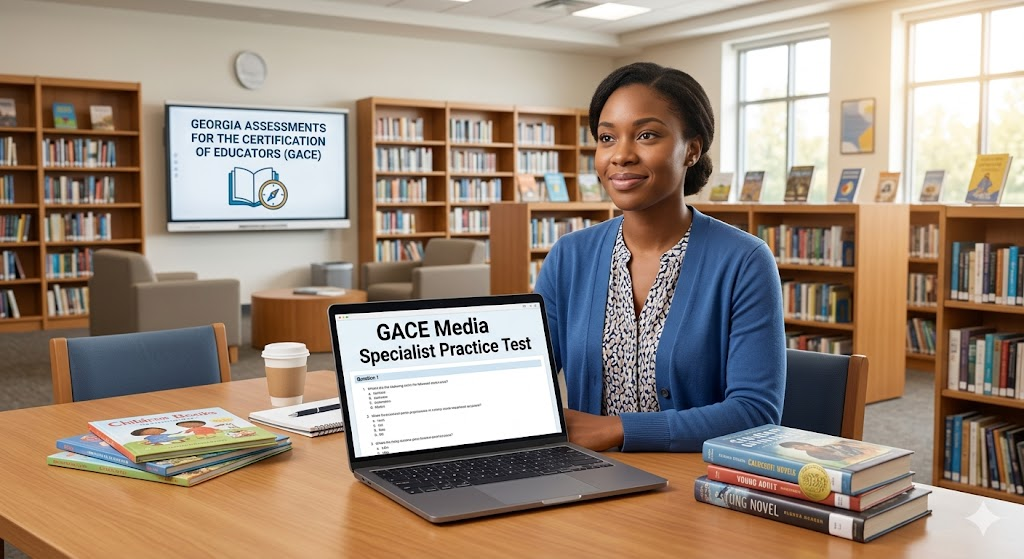
Additional Information
What the Course Entails and Exam Details
This comprehensive assessment is divided into two separate subtests, which can be taken on the same day or individually. Together, they cover the diverse spectrum of responsibilities inherent in the modern media specialist role.
Test I (101) focuses on two key domains:
Learning and Teaching (approximately 60%): You will need a deep understanding of children's and young adult literature, including major book awards, distinguished recipients, and prominent authors. This section also evaluates knowledge of current literary genres, reading instructional models, and strategies to foster critical thinking and creativity. You must demonstrate familiarity with lesson plan development, assessment tools, and the theoretical and practical aspects of classroom management within a media center context.
Collection Development (approximately 40%): This section tests your grasp of selecting, acquiring, and maintaining a robust media collection. Topics include understanding selection policies aligned with the First Amendment, the ALA Library Bill of Rights, and the de-selection process. Candidates must show proficiency in organizing resources using standard cataloging systems (such as Sears List of Subject Headings, AACR2, and Dewey decimal classification) and interpreting basic MARC tag fields.
Test II (102) covers three pivotal areas:
Program Administration (approximately 40%): Here, you will be assessed on the fundamental principles of organization, management, and evaluation of media programs and services. This includes developing and implementing policies and procedures for media center operations, understanding the rationale behind circulation and acceptable use policies, and practicing shared decision-making with stakeholders.
Professional Development, Leadership, and Advocacy (approximately 30%): This subarea examines your commitment to professional growth and leadership. You must identify relevant professional organizations, outline procedures for collaborative activities, and demonstrate strategies for advocating for the media program to the broader community.
Information Access and Delivery (approximately 30%): This section confirms your ability to provide equitable access to a wide array of information resources. It covers knowledge of reference resources, interlibrary loans, digital resources, and the ethical policies regarding material circulation. This area also tests your familiarity with hardware and information retrieval methods.
What to Expect in the Final Exam
The GACE Media Specialist assessment is a computer-delivered, objective-based exam. Each subtest consists of 80 selected-response questions, bringing the total number of questions for the complete assessment to 160. Questions may require you to select a single answer, multiple answers, or provide a short-answer response.
For each subtest, candidates are allotted two hours of actual testing time. The full test duration is 2.5 hours, which includes an extra half-hour for orientation and administration activities. The combined assessment (Test I and II) has a total duration of five hours.
To pass, you must achieve a scaled score of at least 220, which is classified as "passing at the induction level." A score of 250 or higher is recognized as "passing at the professional level." Both scores fulfill Georgia's certification requirements. Candidates must pass both subtests to fulfill the entire Media Specialist assessment.
Specific rules, such as acceptable forms of ID and security measures at the testing centers, must be followed. These include photo identification, fingerprinting, and signature comparison, which are standard to maintain the integrity of the assessment.
How to Study and Exam Centers
Preparation is the cornerstone of success. Start by downloading the official "GACE Media Specialist Assessment Test at a Glance" PDF from the ETS website to understand the exact breakdown of objectives. Actionable strategies include:
Utilization of Official Study Guides: Leverage the official study guides and interactive practice tests, which provide real examples of test questions and comprehensive explanations for answers.
Targeted Review: Focus your studies on the key areas mentioned above. If your background is in teaching, spend more time on cataloging and collection development (Test I). If you are coming from a library background, dedicate time to learning theories, lesson planning, and P-12 literature (Test I and II).
Flashcards and Groups: Create digital or physical flashcards for complex topics like cataloging codes, major book awards, and ethical policies. Join an online study group to discuss challenging concepts and share resources.
GACE exam centers: The GACE Media Specialist exam is administered through Prometric test centers and some Regional Education Service Agencies (RESAs), and participating school districts throughout Georgia. Candidates may also have the option for at-home testing, which must meet strict technology and environment requirements.
Registration is completed through your ETS GACE testing account. You must create a MyPSC account with the Georgia Professional Standards Commission (GaPSC) to request eligibility to test before you can register.
Job Opportunities from the Course
Passing the GACE Media Specialist assessment is your ticket to a range of rewarding educational careers. Here is a list of the primary job titles and paths this certification unlocks:
School Library Media Specialist: The classic role in an elementary, middle, or high school, managing the library collection, teaching information literacy, and collaborating with teachers.
Educational Media Specialist: Focuses on integrating technology and multimedia resources into the curriculum.
K-12 Media Coordinator: Oversees media programs and resources across multiple schools within a district.
Librarian (in specialized education settings): Working within specialized schools, academies, or alternative learning centers.
District Media Director/Supervisor: A leadership position responsible for the entire library and media program of a school district.
This certification also creates pathways for roles in public libraries (especially in youth services) and as a curriculum or technology integration specialist, opening a door to continued professional growth and leadership in the educational sector.
Frequently Asked Questions
Reviews
5.0
Based on 0 reviews
Leave a Review
No reviews yet. Be the first to review!