
Gas Furnace Certification Practice Exam
$69.00
- Buy to unlock unlimited access to all Quiz questions and Answers in this Quiz.
- After purchase you can print a PDF of the whole quiz at any point. The PDF will contain the questions and the correct answers.
About this Exam
The Gas Furnace Certification is a specialized designation within the HVAC/R industry. It is designed for entry-level and experienced technicians who wish to validate their expertise in the installation, service, maintenance, and troubleshooting of modern gas-fired heating systems. This certification proves to employers and clients that you have the specific knowledge required to work safely and efficiently with natural gas and propane appliances, ensuring compliance with strict safety codes and maximizing system performance. Whether you are aiming for a NATE specialty or a standalone industry credential, this certification is your gateway to becoming a recognized heating expert.
Ready to test your knowledge?
Buy Now to Access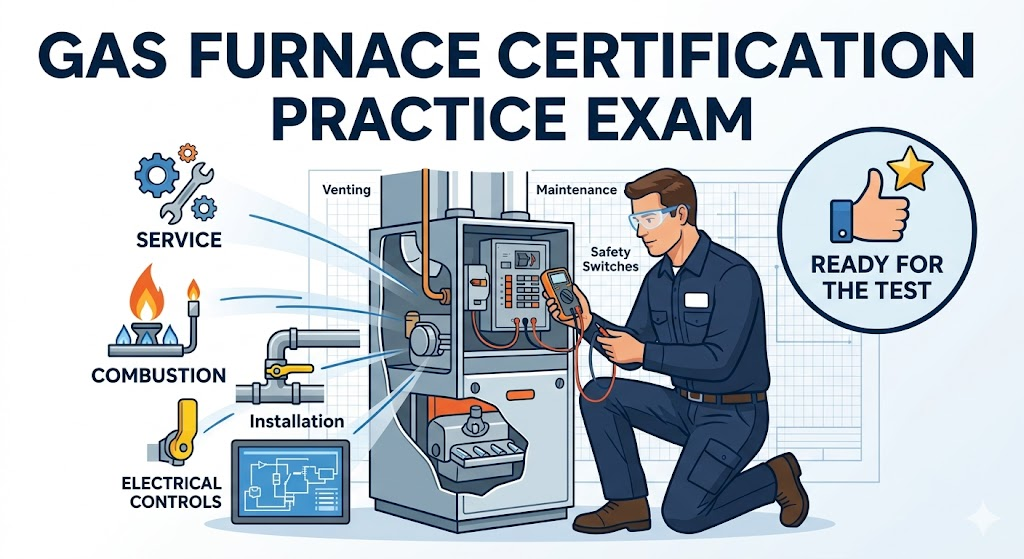
Additional Information
What the Course Entails and Exam Details
Preparing for the Gas Furnace Certification exam requires a deep understanding of several core areas. A typical course of study will cover, and the exam will measure your knowledge of, the following vital topics:
Combustion Theory and Safety: You must understand the science behind how natural gas and propane burn, including the requirements for primary air, secondary air, and excess air. A major focus is on safe operation, understanding the hazards of carbon monoxide (CO), and performing proper combustion analysis.
System Components and Operation: The exam tests your familiarity with every part of a gas furnace. This includes heat exchangers (both primary and secondary in condensing furnaces), burners, igniters (standing pilot, HSI, DSI), gas valves, inducer fans, blower motors, and safety controls like limit switches and flame sensors.
Installation and Venting: Proper installation is critical. You will be tested on fuel gas piping sizing and materials, proper furnace sourcing, and, most importantly, venting. You must know the difference between Category I, II, III, and IV venting systems and how to apply the National Fuel Gas Code (NFPA 54) to ensure safe flue gas termination.
Electrical Troubleshooting and Controls: You need to be proficient in reading ladder and schematic wiring diagrams. The exam includes questions on 24V control circuits, thermostat operation, and diagnosing common electrical failures in the ignition and blower sequences.
Maintenance and Service: This covers routine procedures such as cleaning burners, checking gas pressure (manifold pressure), inspecting heat exchangers for cracks, and verifying total external static pressure (TESP) for correct airflow.
What to Expect in the Final Exam
While specific exam formats can vary slightly between certifying bodies, most final exams for the Gas Furnace Certification share common characteristics.
Format: The primary format is a multiple-choice exam. You will be presented with a question and four potential answers. The number of questions typically ranges from 50 to 100. Some advanced certifications might include a practical, hands-on component where you must demonstrate troubleshooting skills on live equipment, though this is less common for the initial "Practice Exam" level.
Time Limit: You will be on a clock. Expect a time limit between 1.5 and 2.5 hours. This means you must not only know the material but also be able to recall it quickly and make decisive choices.
Passing Score: The required passing score is generally between 70% and 80%. It is essential to aim higher during your practice sessions to ensure a comfortable margin of error on test day.
Rules: The exam is typically closed-book. This means you cannot reference codebooks, notes, or textbooks during the test. For proctored exams, either in-person or online, you will need to provide valid identification and will be monitored to ensure integrity.
How to Study and Exam Centers
The key to success is a structured approach to your studies.
Actionable Study Strategies: Start by obtaining the correct study materials, which are often provided by the certifying body (e.g., NATE study guides or HVAC Excellence preparatory manuals). Dedicate specific time each day to review codebooks, specifically the current National Fuel Gas Code. However, the most effective tool in your arsenal is taking a dedicated Gas Furnace Certification Practice Exam.
Leverage Practice Exams: Using a practice exam allows you to do two things. First, it familiarizes you with the phrasing and style of the actual questions you will encounter. Second, and more importantly, it helps you identify your weak points. If you consistently miss questions related to venting categories or gas pressure adjustments, you know exactly where to focus your remaining study time. Treat these practice sessions as real simulations: set a timer, turn off your phone, and see how you perform under pressure.
Exam Centers: Once you are ready to take the final proctored exam, you will usually book your session through the certifying organization’s official portal. Many organizations utilize nationwide testing networks like Pearson VUE, which have physical testing centers in most major cities. Alternatively, many accredited trade schools and community colleges serve as authorized testing sites. Many providers now also offer online remote proctoring, allowing you to take the exam from your home, provided you meet the strict technical and environmental requirements.
Job Opportunities from the Course
Earning your Gas Furnace Certification instantly makes you a more competitive and valuable asset in the HVAC/R job market. It unlocks specific career paths and specializations, including:
HVAC Service Technician (Heating Specialist): The most common path, where you will focus on diagnosing and repairing complex gas heating systems.
Gas Furnace Installer: A specialized role within installation teams, ensuring new equipment is set up according to manufacturer specs and code.
Preventative Maintenance Engineer: Many large residential and commercial service companies employ technicians solely to perform seasonal precision tune-ups on heating equipment.
Fuel Gas Inspector: With sufficient field experience, this certification can help you qualify for roles within municipal or private inspection agencies, verifying code compliance for new and existing installations.
Heating and Plumbing Engineer: In many regions, gas certification is paired with plumbing licensure for comprehensive residential systems service.
HVAC Sales/Application Specialist: Your technical mastery can translate into a role helping customers and contractors select the correct heating equipment for their projects.
This certification is more than a piece of paper; it is a testament to your commitment to safety, code compliance, and technical excellence in the vital field of gas heating. Good luck with your preparation, and we look forward to welcoming you to the ranks of certified gas furnace experts.
Frequently Asked Questions
Reviews
5.0
Based on 0 reviews
Leave a Review
No reviews yet. Be the first to review!