
Gas Tungsten Arc Welding (GTAW) Welding Technology Practice Test
$69.00
- Buy to unlock unlimited access to all Quiz questions and Answers in this Quiz.
- After purchase you can print a PDF of the whole quiz at any point. The PDF will contain the questions and the correct answers.
About this Exam
The Gas Tungsten Arc Welding (GTAW) Welding Technology Practice Test is an essential resource designed for aspiring and current welders aiming to validate their expertise in TIG welding. This test serves as a crucial preparatory step for individuals seeking formal certification, offering a comprehensive review of the knowledge and skills required to excel in this precise welding discipline. Whether you are a student finishing your training or a professional looking to sharpen your skills, this practice test provides a clear benchmark of your readiness for real-world application and certification exams.
Ready to test your knowledge?
Buy Now to Access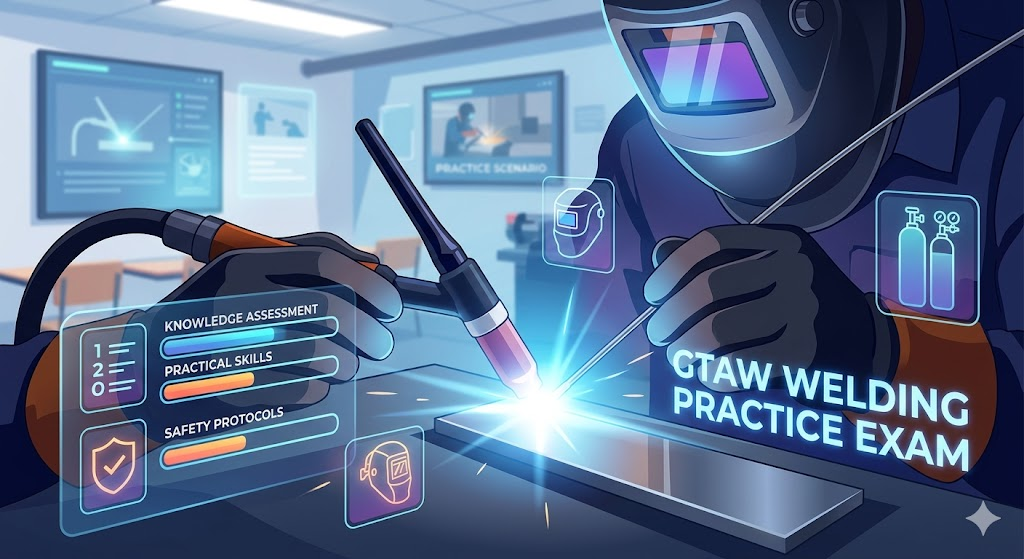
Additional Information
What the Course Entails and Exam Details
A comprehensive GTAW course covers a wide array of technical topics essential for mastering the craft. Key areas of focus typically include the fundamentals of the GTAW process, safety procedures specific to high-frequency starting and shielding gases, and the intricate setup and operation of TIG welding equipment. You will explore advanced concepts such as electrode selection and preparation, filler metal identification for varying alloys, and the effects of welding parameters like amperage, voltage, and gas flow rates. Furthermore, the course delves into joint design, blue print reading, and crucial quality control measures, ensuring you can identify and prevent common weld defects while adhering to industry standards and codes.
What to Expect in the Final Exam
The final examination to become a certified GTAW welder usually consists of both a written knowledge assessment and a practical hands-on performance test. The written portion, mirrored by this practice exam, typically includes multiple-choice questions that evaluate your theoretical understanding of safety, equipment, materials, and processes. You can expect a time limit—often 2 hours—and will likely need a minimum score of around 70-80% to pass. The practical segment requires you to perform specific welds (such as on plate or pipe in various positions like 2G, 3G, 5G, or 6G) which are then visually inspected and often subjected to destructive or non-destructive testing to ensure soundness and compliance with welding codes.
How to Study and Exam Centers
To prepare effectively, you should adopt a multi-faceted study approach. Begin by thoroughly reviewing your course textbooks, classroom notes, and safety manuals provided by authoritative bodies like the American Welding Society (AWS). Utilize online study resources, interactive quizzes, and consistently practice with mock exams, such as the GTAW Welding Technology Practice Test, to build your speed and identify areas needing improvement. Combining this theoretical study with extensive hands-on practice in a workshop setting is crucial for honing your dexterity and technique. Official certification exams are typically administered at AWS Accredited Test Facilities (ATFs), authorized community colleges, or specialized technical training centers. You can find locations and schedule your exam through the official websites of major welding certification organizations.
Job Opportunities from the Course
Achieving a GTAW welding certification opens doors to diverse and rewarding career opportunities across numerous high-tech industries. Certified GTAW welders are in high demand for roles that require exceptional precision and weld quality. Potential job titles and career paths include:
Aerospace Welder (working on aircraft and spacecraft components)
Motorsports Fabricator (building racing chassis and exhaust systems)
Nuclear Welder (specializing in critical piping and pressure vessels)
Medical Equipment Fabricator (creating instruments and sterile devices)
Custom Bike/Automotive Builder
Semiconductor Tooling Welder
Specialized Repair Technician for exotic metals
Piping and Pressure Vessel Welder for pharmaceutical or food processing plants
Frequently Asked Questions
Reviews
5.0
Based on 0 reviews
Leave a Review
No reviews yet. Be the first to review!