
General Emergency Practice Exam
$69.00
- Buy to unlock unlimited access to all Quiz questions and Answers in this Quiz.
- After purchase you can print a PDF of the whole quiz at any point. The PDF will contain the questions and the correct answers.
About this Exam
The General Emergency Practice Exam is a comprehensive assessment tool designed for individuals preparing for certification and licensing exams within the field of emergency medical services and first response. It is a crucial resource for Emergency Medical Technicians (EMTs), paramedics, firefighters, and other healthcare professionals who must possess a mastery of emergency protocols. This practice exam simulates the actual testing environment, allowing candidates to evaluate their readiness and identify areas requiring further study.
Ready to test your knowledge?
Buy Now to Access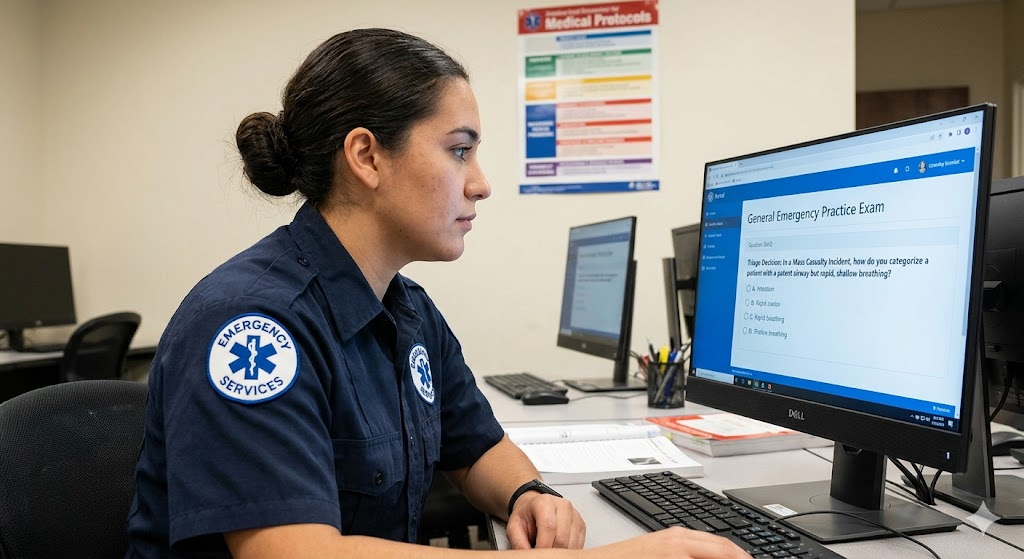
Additional Information
What the Course Entails and Exam Details
This practice exam covers the essential knowledge and skills required for effective emergency medical response. The content aligns with the National EMS Education Standards and focuses on critical areas including:
Patient Assessment (Primary and Secondary Surveys)
Cardiopulmonary Resuscitation (CPR) and AED operation
Airway Management and Ventilation
Trauma Care (Wound Management, Splinting, Hemorrhage Control)
Medical Emergencies (Neurological, Cardiovascular, Respiratory)
Pediatric, Geriatric, and Obstetric Emergencies
Emergency Operations (Triage, Incident Command, Mass Casualty Incidents)
Pharmacology for EMS Professionals
What to Expect in the Final Exam
While the exact structure of this specific practice exam may vary, it typically follows standard educational testing formats used in the EMS field. Candidates should anticipate the following:
Multiple-Choice Questions: The primary format, requiring the selection of the best answer from several options.
Real-World Scenarios: Many questions present a clinical scenario, demanding the application of critical thinking to determine the correct immediate intervention.
Timed Conditions: Practice exams often include a timer to simulate the pressure of an actual certification test, demanding efficiency in answering.
Passing Score Concept: Unlike official certification exams that require a specific minimum score (often 70% or higher), the passing score on a practice exam is an indicator of your readiness. Many resources aim for a minimum of 80% to ensure a strong foundation.
Immediate Feedback: Comprehensive practice exams provide instant scoring and detailed rationales for correct and incorrect answers, allowing for focused review.
How to Study and Exam Centers
Effective preparation for emergency services certifications requires a dedicated and structured approach. Start by utilizing this practice exam to identify your strengths and weaknesses. Focus your study efforts heavily on the topics where you struggled. Simulate actual test conditions by taking full practice exams without interruptions or notes. Always review the detailed explanations for every question, understanding why the correct answer is right and the incorrect options are wrong. Complement your practice with reliable study guides, textbooks, and review courses based on the current curriculum (e.g., NHTSA guidelines).
Regarding Exam Centers, it is important to understand that practice exams are typically accessible through online learning platforms, educational websites, and private training organizations. They are designed for self-study and assessment and do not require registration at official physical testing centers. However, once you have mastered the material and are ready for the official certification or licensing exam (such as those administered by the National Registry of Emergency Medical Technicians or state boards), you will need to register and take the test at an authorized Pearson VUE testing center or other designated official physical locations.
Job Opportunities from the Course
While completing a practice exam does not grant professional credentials, the successful completion of the underlying comprehensive training and the subsequent official certification exam opens doors to a variety of critical roles in emergency services:
Emergency Medical Technician (EMT)
Paramedic
First Responder
Emergency Room Technician
Firefighter/EMT
Flight Paramedic
Search and Rescue Technician
Emergency Dispatcher
Disaster Response Specialist
Industrial Emergency Responder
Frequently Asked Questions
Reviews
5.0
Based on 0 reviews
Leave a Review
No reviews yet. Be the first to review!