
General Requirements For Wiring Methods And Materials Practice Test
$69.00
- Buy to unlock unlimited access to all Quiz questions and Answers in this Quiz.
- After purchase you can print a PDF of the whole quiz at any point. The PDF will contain the questions and the correct answers.
About this Exam
Welcome to your essential first step toward mastering foundational electrical knowledge. This article is your comprehensive guide to preparing for a General Requirements For Wiring Methods And Materials Practice Test. Designed for aspiring apprentices, current electricians looking to validate their skills, and future electrical inspectors, this practice test focuses on the core principles and critical code requirements governing how electrical systems are structured. It is the perfect study aid to ensure you understand the essential rules and safety standards found in regulatory documents like the National Electrical Code (NEC), specifically targeting general installation practices, appropriate material usage, and standard equipment integration. This practice exam is not just about memorizing facts; it is about building the knowledge and safety awareness necessary for a successful and legally compliant career in the electrical trade. Mastering this material is often a key milestone in a larger electrical licensing or certification process.
Ready to test your knowledge?
Buy Now to Access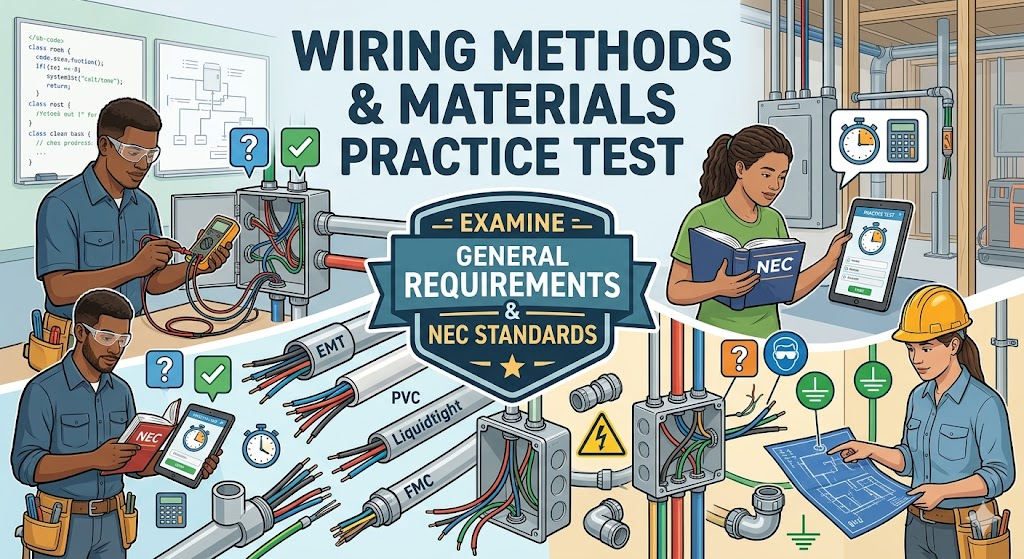
Additional Information
What the Course Entails and Exam Details
The course of study reflected by this practice exam is deeply rooted in general electrical installation standards. The actual practice test itself consists of a series of meticulously crafted multiple-choice questions designed to mirror the content and complexity of a professional licensing or certification final. While the format is focused on testing your knowledge, the underlying topics are foundational. This resource tests your competency in the following key areas derived from standard electrical codes:
Understanding General Installation Requirements: Applying rules that cross all types of wiring methods, such as protection against physical damage and general practices.
Conductor and Cable General Rules: Correct usage, sizing, and color coding across various general scenarios.
Box and Fitting Standards: Applying code to determine the appropriate boxes, fittings, and proper installation of these essential junction points.
Conduit and Raceway Rules: Understanding the general application and installation of different types of conduit systems.
Material and Equipment Selection: Choosing and installing approved materials for various situations.
Code Application and Navigation: Developing the skill to quickly and accurately find answers within standard electrical code reference materials.
The specific "exam details" for this practice test usually involve it being available through an online educational portal or as a standalone downloadable resource. Question counts can vary (often 25 to 100 questions), and it may or may not be timed. It is crucial to remember that this is a practice tool, not the official licensing exam itself.
What to Expect in the Final Exam
When preparing for the final official licensing or certification exam that this practice test simulates (such as a state Journeyman Electrician, Master Electrician, or Electrical Inspector exam), you should have specific expectations. These high-stakes examinations are designed to be thorough. The final exam typically takes a multiple-choice format and is conducted under timed conditions at a secure location or through a proctored online system. Passing score requirements are strict, often necessitating a minimum score of 70% to 75%. You will often be tested on your ability to not only recall information but also to apply code concepts to specific scenarios. Many official licensing exams allow the use of a clean, standard electrical code book (such as the NEC) as a reference tool, reflecting real-world code application. It is imperative that you check the specific requirements of the state licensing board, testing company, or certification body (e.g., PSI, Pearson VUE, state boards) for the exact final exam details, rules, and passing standards, as these can vary significantly by jurisdiction and exact license type. The questions on the final exam relating to "General Requirements for Wiring Methods and Materials" will likely integrate calculations, scenario-based problem solving, and direct code-specific identification.
How to Study and Exam Centers
To maximize your chances of success, follow these actionable study strategies:
Master the Code: The actual licensing exam is based on current electrical codes (e.g., the NEC). Make the current code book your primary study reference. Learn how to navigate its structure, index, and table of contents efficiently. The key to passing is often being a strong code-reference user, not just memorizing every rule.
Take Multiple Practice Tests: Utilize resources like this General Requirements For Wiring Methods And Materials Practice Test repeatedly. Timed practice exams help you get used to the format and manage your time.
Analyze Your Mistakes: Don’t just check your score. Thoroughly review every question you got wrong. Understand why you made the error and look up the corresponding code reference to ensure you comprehend the rule.
Focus on Calculations: Ensure you are confident with all the essential calculations related to wiring methods, such as box fill, conduit fill, and basic load calculations.
Structured Courses and Guides: Consider enrolling in a comprehensive study course (online or in-person) specifically designed for the exam you are taking. These programs are structured to guide you through the required material systematically.
Where to Take the Practice and Final Exams:
Practice Tests: You can typically access practice tests like this one through various online portals, educational websites, test preparation providers, and often through authorized electrical schools or union training programs. These are generally taken from any location with internet access.
Final Licensing/Certification Exams: These official exams are usually conducted at specific, highly controlled Exam Centers. Most states utilize established, third-party testing services (like Pearson VUE or PSI), which have physical testing centers located across the country. Alternatively, some exams may be administered directly by state electrical boards or authorized schools and training centers. Always consult the official website of the body administering your specific electrical license or certification to find the list of approved test providers and testing locations. Online proctoring options may also be available in some jurisdictions but require specific setup and rules.
Job Opportunities from the Course
Successfully mastering the material covered by the corresponding code and passing electrical exams creates a clear path to diverse and lucrative career opportunities. While this practice test alone is not a course or license, the expertise it helps build is essential for roles across the entire electrical field. Potential career paths and job opportunities include:
Apprentice Electrician: A vital entry-level position where you will continue to learn on the job while applying foundational code knowledge.
Journeyman Electrician: A licensed professional capable of installing and maintaining electrical systems, supervising apprentices, and running projects.
Master Electrician: The highest level of electrician, capable of managing large-scale electrical operations, designing systems, and obtaining contracting licenses.
Electrical Inspector: Responsible for ensuring that electrical installations comply with all relevant safety codes and standards.
Electrical Contractor/Owner: Operating your own electrical services business.
Electrical Estimator/Project Manager: Planning and managing electrical aspects of construction projects.
Maintenance Electrician: Ensuring the safe operation of electrical systems in industrial, commercial, or residential settings.
Code Compliance Specialist: Advising companies on proper code application.
Instructor for Electrical Trades: Teaching future generations of electrical professionals.
Remember, each role may require additional levels of licensure, experience, and sometimes further certification. Succeeding on the final official exams by building strong foundational code knowledge, a process this practice test supports, is a major step toward these rewarding careers.
Frequently Asked Questions
Reviews
5.0
Based on 0 reviews
Leave a Review
No reviews yet. Be the first to review!