
Georgia Drinking Water Laboratory Analyst Practice Test
$69.00
- Buy to unlock unlimited access to all Quiz questions and Answers in this Quiz.
- After purchase you can print a PDF of the whole quiz at any point. The PDF will contain the questions and the correct answers.
About this Exam
The GA Water Lab Analyst certification is a critical credential for professionals dedicated to ensuring the safety and quality of Georgia's public drinking water. This certification/exam is designed for laboratory technicians, analysts, and operators responsible for performing precise chemical and biological analyses, verifying compliance with stringent state and federal health regulations. Achieving this certification validates your expertise in essential water testing procedures, data interpretation, and quality control, demonstrating a commitment to public health and safe water practices within the municipal, state, or private sectors. Whether you are aiming to advance your water industry career or seeking to specialise in analysis, this certification is your gateway.
Ready to test your knowledge?
Buy Now to Access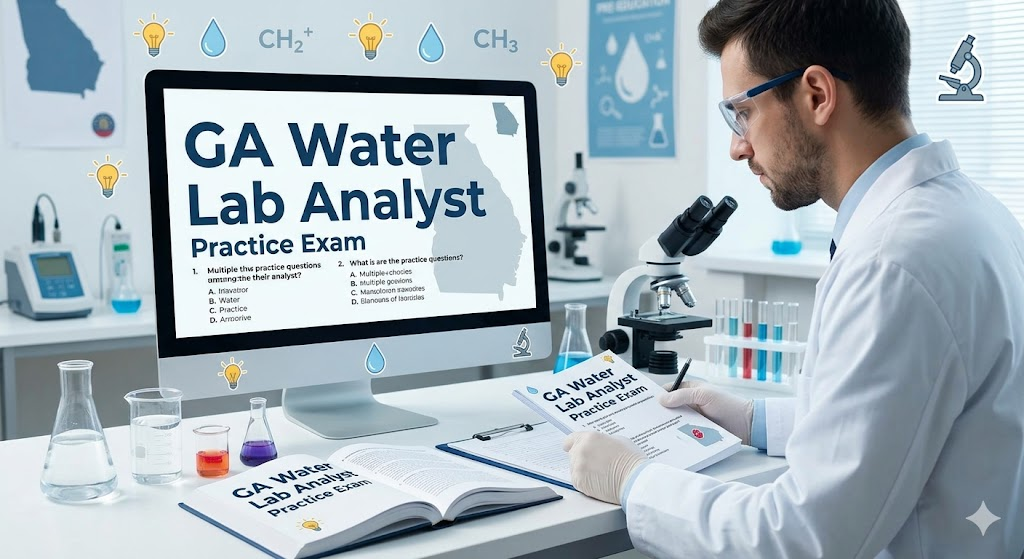
Additional Information
What the Course Entails and Exam Details
Preparing for this exam involves mastering a diverse range of foundational and advanced topics crucial for accurate water analysis. Training courses and self-study resources typically cover:
Water Quality Regulations and Compliance Standards (e.g., Safe Drinking Water Act)
Fundamental Chemical and Microbiological Principles for Water Testing
Proper Water Sampling Techniques and Preservation Procedures
Common Analytical Methods for Contaminants (e.g., chlorine residual, pH, turbidity, hardness, coliforms)
Operation, Calibration, and Maintenance of Laboratory Equipment
Implementation of Quality Assurance and Quality Control (QA/QC) Practices
Interpretation and Accurate Reporting of Analytical Results
Strict Adherence to Laboratory Safety Protocols
Comprehensive courses, often recommended prerequisites for those without relevant degrees, provide deep-dive instruction and often include hands-on experience in simulated lab settings to ensure practical proficiency.
What to Expect in the Final Exam
The final assessment is a comprehensive, proctored written examination, typically administered computer-style. Expect a series of multiple-choice questions designed to thoroughly evaluate your understanding across all key subject areas. While specific exam parameters can vary, candidates should generally anticipate:
Format: Primarily multiple-choice questions.
Question Count: Typically ranging from 50 to 100 questions.
Time Limit: Usually several hours to complete the test.
Passing Score: Set by the licensing board, often around 70% or higher.
Specific Rules: Administered through an official exam vendor like PSI, requiring prior eligibility approval. Specifics regarding calculator usage or reference materials allowed should be confirmed via the official candidate handbook or board information.
Exact duration, number of questions, and the current passing score are determined by the relevant licensing board, so it's imperative to consult official guidelines for the most current specifics.
How to Study and Exam Centers
Structured and dedicated preparation is essential for success:
Enroll in Training: Consider official training programs for foundational knowledge and practical skills, especially if you lack relevant background or the 27-hour course is required for your eligibility path.
Study Guides and Manuals: Thoroughly review comprehensive study guides, official manuals, and pertinent textbooks.
Practice Tests: Utilize practice exams and mock tests, including relevant questions found on platforms such as Examzify, to assess your knowledge, understand the question format, and manage your time effectively.
Focus on Core Areas: Dedicate quality study time to key topics, prioritizing understanding over simple memorization, particularly for complex analytical methods and QA/QC principles. Flashcards can be useful for memorization of definitions and formulas.
Exam Registration and Locations: Once eligible and approved by the board, you will typically schedule your computer-based exam through PSI. PSI has multiple authorized test centers across Georgia, making it convenient to find a location and time that works for you. Check PSI's website or candidate services for specific center locations and scheduling procedures after receiving eligibility notice.
Job Opportunities from the Course
Achieving GA Water Lab Analyst certification opens doors to various rewarding career paths within the environmental and public utility sectors. Potential job titles include:
Drinking Water Laboratory Analyst
Water Quality Analyst / Specialist
Environmental Laboratory Technician
Quality Assurance / Quality Control Specialist (Water)
Water Compliance Officer / Specialist
Water Treatment Operator (roles where lab analyst certification is required or beneficial)
Laboratory Supervisor (with appropriate experience)
These essential roles are found in municipal water utilities, county public works departments, state environmental agencies (e.g., Georgia Environmental Protection Division), private water companies, and commercial laboratories, allowing certified professionals to make significant contributions to maintaining safe drinking water across the state.
Frequently Asked Questions
Reviews
5.0
Based on 0 reviews
Leave a Review
No reviews yet. Be the first to review!