
Georgia Septic Installer Practice Test
$69.00
- Buy to unlock unlimited access to all Quiz questions and Answers in this Quiz.
- After purchase you can print a PDF of the whole quiz at any point. The PDF will contain the questions and the correct answers.
About this Exam
The Georgia Septic Installer certification is a mandatory requirement for individuals and companies who wish to install, modify, repair, or service on-site sewage management systems within the state. Administered by the Georgia Department of Public Health (DPH) and local County Environmental Health Offices, this certification ensures that all septic work adheres to strict health and safety standards to protect public health and the environment. This exam is designed for aspiring septic contractors and professional installers seeking to obtain their state license and build a career in this essential trades sector.
Ready to test your knowledge?
Buy Now to Access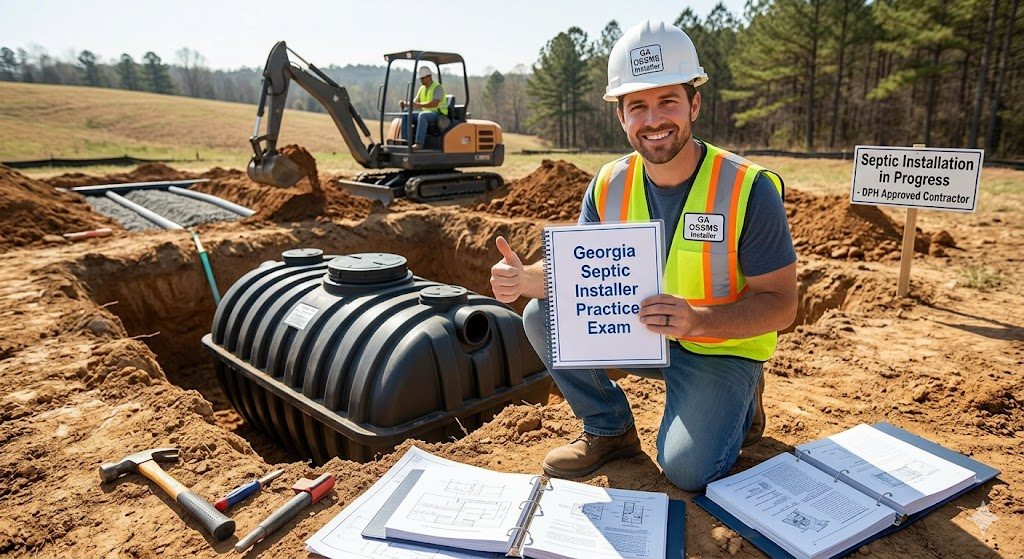
Additional Information
What the Course Entails and Exam Details
Preparation for the exam primarily involves a thorough study of the Georgia Department of Public Health’s extensive resource, the "Manual for On-Site Sewage Management Systems." While there is no mandatory pre-license course, this comprehensive manual serves as the de facto syllabus.
Key topics and core sections covered in your preparation should include:
Rules and Regulations (Section A): A detailed understanding of the legal frameworks, permitting processes, and regulatory authority governing on-site sewage systems in Georgia.
Soil Information (Section C): Fundamentals of soil classification, testing methods (like percolation and absorption tests), and how soil characteristics affect system design and performance.
Pretreatment (Section D): The science and mechanics of septic tanks, including their design, baffles, and function in separating solids and liquids.
Effluent Distribution and Dosing Devices (Section E): Mechanisms for moving treated effluent from the tank to the dispersal field, including distribution boxes, pumps, and dosing tanks.
Dispersal Systems (Section F): Design, installation, and troubleshooting of various drainfield types, from traditional gravel trenches to innovative chamber and drip irrigation systems.
Operations and Maintenance (Section L): Proper maintenance procedures to ensure long-term system functionality.
What to Expect in the Final Exam
The Georgia Septic Installer exam is a crucial final step to certification. It is not an online test; instead, it is a proctored, closed-book exam administered locally.
Key specifics of the examination include:
Format: The exam typically consists of multiple-choice and true-false questions that directly assess knowledge from the official DPH Manual.
Duration: The exam is designed to be completed within a specific timeframe, often requiring candidates to arrive early to begin the testing process.
Passing Score: To successfully earn certification, you must achieve a minimum score of 70%.
Administration: The tests are administered by your local County Environmental Health Office.
Fees: There is a $50 fee per exam, payable to the local office. Be sure to check with your specific county for accepted payment methods.
Requirements: You must provide a valid photo ID and complete the "Septic Installer Application" (notarized ahead of time) to sit for the exam.
How to Study and Exam Centers
Preparation is paramount for the Georgia Septic Installer exam. Follow these strategies to build your knowledge and confidence:
Master the Manual: Your primary study guide is the Georgia DPH "Manual for On-Site Sewage Management Systems." Download the latest version from the official DPH website and study it methodically, paying specific attention to the key sections for installers.
Utilize Practice Tests: Use resources like the "Georgia Septic Installer Practice Test" title to familiarize yourself with the type of questions you will encounter. Mock exams can help identify gaps in your understanding and improve your test-taking speed and accuracy.
Take Notes and Highlight: Create flashcards, summaries, and highlighted sections within the manual.
Consult Your Local Health Department: Your County Environmental Health Office is not just the exam center; they are a valuable resource for clarification and guidance.
Apprenticeship: Practical experience working as an apprentice under a certified master septic installer is highly beneficial and often recommended.
Finding a Testing Center
To take the exam, do not look for a Pearson VUE or online portal. Instead:
Contact Your Local Office: Locate the Environmental Health Office for the Georgia county where you live or primarily intend to work.
Schedule and Apply: Coordinate directly with them to submit your application and schedule your specific exam date.
Job Opportunities from the Course
Earning your Georgia Septic Installer certification opens the door to a variety of specialized career paths and business opportunities within the state’s thriving construction and sanitation industries.
Specific job titles and career paths this certification unlocks include:
Certified Septic Installer: The primary role of designing and installing on-site sewage systems.
Septic System Contractor: Managing larger projects, coordinating crews, and handling client contracts.
Septic Installation Technician: A vital team member focused on the physical installation of systems.
Septic Company Owner/Operator: Establishing your own business to provide installation and repair services.
Environmental Health Specialist (County Level): Working with regulatory bodies to enforce standards and conduct inspections.
Septic System Inspector: Specializing in pre-purchase property inspections to assess existing systems.
Septic Repair and Maintenance Professional: Concentrating on troubleshooting, fixing, and maintaining systems for longevity.
Frequently Asked Questions
Reviews
5.0
Based on 0 reviews
Leave a Review
No reviews yet. Be the first to review!