
GPSTC Family Violence Practice Test
$69.00
- Buy to unlock unlimited access to all Quiz questions and Answers in this Quiz.
- After purchase you can print a PDF of the whole quiz at any point. The PDF will contain the questions and the correct answers.
About this Exam
Welcome to your comprehensive guide for the GPSTC Family Violence certification path! This rigorous and specialized training is designed for law enforcement officers, investigators, first responders, social workers, legal professionals, and victim advocates who are committed to understanding and effectively addressing the complex dynamics of family and domestic violence. The certification exam ensures candidates possess the critical knowledge, empathy, and investigative skills required to respond to incidents, support victims, and uphold justice in accordance with relevant laws and best practices. Passing this test demonstrates a professional’s dedication to public safety and sensitive community service. This practice test is a vital step in your successful preparation, mimicking the final exam experience and reinforcing key concepts.
Ready to test your knowledge?
Buy Now to Access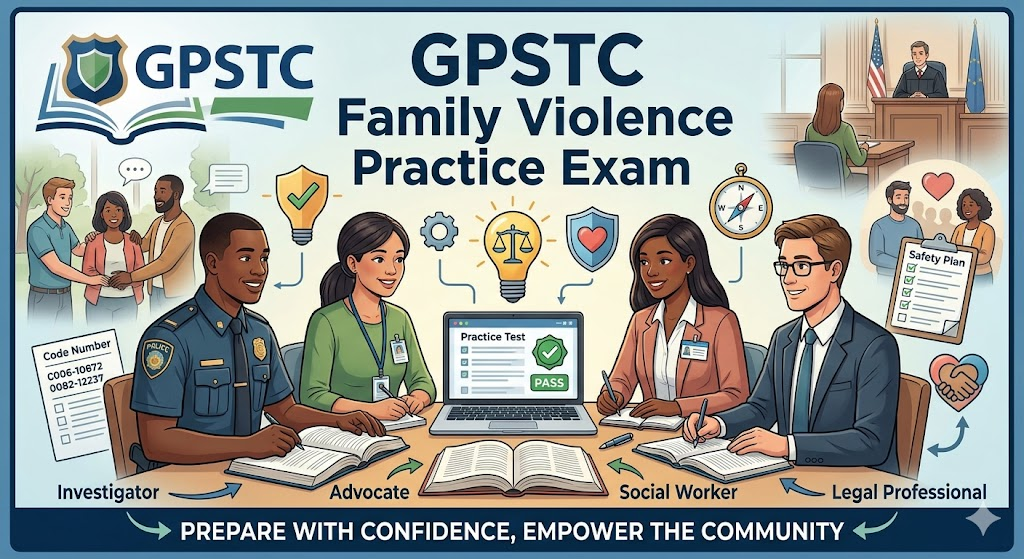
Additional Information
What the Course Entails and Exam Details
The comprehensive GPSTC Family Violence curriculum equips participants with a deep understanding of several critical areas. Core topics typically include:
Understanding Abuse Dynamics: Explores the physical, emotional, and psychological patterns within abusive relationships.
Trauma-Informed Response: Approaches interactions with sensitivity, understanding the impact of trauma on victims and witnesses.
Legal Frameworks & Georgia Laws: Provides detailed knowledge of relevant Official Code of Georgia Annotated (O.C.G.A.) sections pertaining to family violence.
Investigative Techniques: Covers evidence collection, crime scene management, and effective interviewing strategies for both victims and suspects.
Safety Planning & Resources: Focuses on victim safety, community resource referral, and protective order processes.
Ethical Considerations & Safety Officer Conduct: Addresses professional responsibilities and the unique challenges faced in these high-stakes cases.
The final examination assesses comprehensive understanding through multiple-choice questions, scenario-based evaluations, and potentially, practical application exercises depending on the specific program. It aims to evaluate both cognitive knowledge and decision-making abilities.
What to Expect in the Final Exam
You should expect the final exam to be a rigorous assessment of your knowledge and ability to apply family violence concepts. While specific details can vary by course iteration and jurisdiction:
Format: The exam typically consists of a set number of multiple-choice questions designed to test your understanding of theory, legal statutes, and proper procedures. There may also be scenario-based components where you must apply your knowledge to hypothetical situations.
Passing Score: The passing requirement is often substantial, typically requiring a score of 70% to 80% or higher. For full certification programs, achieving mastery across all domains may be necessary.
Time Limit: A defined time limit will be provided, demanding efficient but thorough thought on each question or scenario.
Specific Rules: You will be expected to adhere to all exam protocols, potentially including restrictions on materials and required identification. The environment will be structured to maintain academic integrity and fair testing. Check your specific course guidelines for precise time limits, scoring, and materials permitted.
How to Study and Exam Centers
Effective preparation is key. Leverage the following strategies to excel:
Utilize This Practice Test: Treat this practice exam as a diagnostic tool. Analyze your correct and incorrect answers to identify strengths and weaknesses. Use it to build stamina and familiarity with the likely question style and content focus. Repeat the test periodically.
Review All Course Materials: Thoroughly study the student manuals, relevant code sections, presentations, and any supplemental materials provided during your training.
Create Flashcards & Study Guides: Condense key definitions, legal requirements, and essential procedural steps into easy-to-review study aids.
Practice Scenarios: Discuss and analyze hypothetical cases with colleagues or study partners, applying the legal and practical knowledge you’ve gained. Consider "what if" situations.
Seek Clarification: Reach out to instructors or subject matter experts for any concepts you find challenging.
Exam Centers & Registration:
The GPSTC Family Violence final exam is typically administered through the Georgia Public Safety Training Center’s established procedures. The method can include:
On-Site Testing: For many courses, the final exam is scheduled at the training facility immediately following instruction, such as the main GPSTC campus in Forsyth, Georgia, or authorized regional locations.
Online Portals: Some components or certifications may utilize secure online testing platforms, requiring you to have a verified account and follow strict proctoring guidelines.
Ensure you register for your exam through the official GPSTC student portal or follow the specific instructions provided at the completion of your course training. Physical testing locations and specific online access will be detailed at that time.
Job Opportunities from the Course
A GPSTC Family Violence certification is highly respected and demonstrates critical specialized knowledge. This credential enhances career prospects and opens doors to a variety of impactful roles, such as:
Specialized Law Enforcement Officer
Detective / Investigator (Family Violence Unit)
Victim Advocate (within police departments or social services)
Child Protective Services Special Investigator
Domestic Violence Task Force Member
Correctional/Jail Officer (specialized knowledge useful in classification & support)
Paralegal/Legal Assistant (specializing in family/domestic cases)
Community Social Worker / Counselor (specialized focus)
Public Safety Communications Officer (handling sensitive calls)
Security & Loss Prevention Roles (in settings sensitive to domestic issues)
Program Coordinator for Domestic Violence Agencies
Completing this certification demonstrates a powerful commitment to community welfare and professional excellence in a challenging but vital area of public service.
Frequently Asked Questions
Reviews
5.0
Based on 0 reviews
Leave a Review
No reviews yet. Be the first to review!