
GPSTC Guide to Elder Abuse, Neglect, and Missing Persons Practice Test
$69.00
- Buy to unlock unlimited access to all Quiz questions and Answers in this Quiz.
- After purchase you can print a PDF of the whole quiz at any point. The PDF will contain the questions and the correct answers.
About this Exam
The GPSTC Guide to Elder Abuse, Neglect, and Missing Persons is a critical, specialized certification program designed primarily for law enforcement officers, emergency medical personnel, fire services, and other public safety professionals within the state of Georgia.
Its paramount goal is to equip these first responders and investigators with the essential knowledge and skills needed to effectively recognize, investigate, and report instances of abuse, neglect, and exploitation involving at-risk adults, including the elderly. This training is vital for creating a protective network for some of Georgia's most vulnerable citizens and ensuring a coordinated, compassionate response to these complex cases.
By achieving this certification, professionals demonstrate a commitment to understanding the unique challenges of the aging population and mastering the specific legal and procedural framework required to protect them.
Ready to test your knowledge?
Buy Now to Access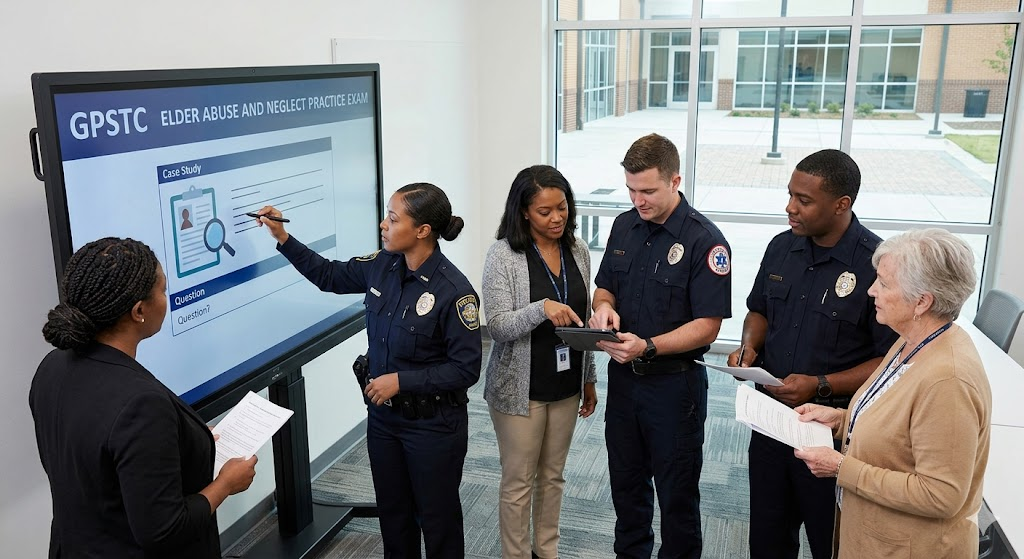
Additional Information
What the Course Entails and Exam Details
The course and the corresponding exam provide a comprehensive overview of the dynamics, legal requirements, and best practices for dealing with at-risk adult populations. The curriculum typically covers, but is not limited to, the following core topics:
Understanding Vulnerable Populations: The aging process, cognitive impairments such as dementia and Alzheimer's, and the dynamics of caregiver burnout.
Legal Definitions and Georgia Law: Precise legal definitions of physical abuse, emotional abuse, sexual abuse, neglect, financial exploitation, and self-neglect under the Official Code of Georgia Annotated (O.C.G.A.), particularly the "Protection of Disabled Adults and Elder Persons" Act.
Identifying Indicators: Learning the physical, behavioral, and environmental "red flags" and signs that suggest various forms of mistreatment.
Mandated Reporting Requirements: A deep dive into the roles and responsibilities of mandated reporters in Georgia, including who must report, what must be reported, the timeline for reporting, and legal protections.
Investigative Techniques: Special considerations and effective strategies for interviewing at-risk adult victims, witnesses, and potential abusers, as well as evidence collection.
Missing Persons: Best practices for handling reports of missing adults, especially those with cognitive impairments, including activation of alert systems like the Mattie's Call.
Multidisciplinary Approach: Understanding the roles of and how to collaborate with other agencies, including Adult Protective Services (APS), Healthcare Facility Regulation (HFR), and the Long-Term Care Ombudsman.
Exam Details: The final examination for the course tests your comprehension and ability to apply this knowledge. The definitive format and specifications, including the number of questions, passing score, and time limit, are provided within the Georgia Public Safety Training Center (GPSTC) learning management system upon enrollment in the course. It is designed to ensure you possess a high degree of competence to operate in the field.
What to Expect in the Final Exam
When you arrive at the point of the final exam for the GPSTC Elder Abuse, Neglect, and Missing Persons certification, you can expect a rigorous evaluation focused on realistic scenario-based questions. The exam is structured to simulate real-world situations a first responder might encounter.
Typically, the exam will be multiple-choice and will be administered through GPSTC's secure online portal. You will be presented with a series of cases or questions, and your task will be to determine the correct legal, procedural, and ethical action based on Georgia law and the training you received. The questions often test your ability to differentiate between various types of abuse and recall the precise reporting procedures and timelines.
Expect the exam to be "closed-book," meaning you cannot use your notes or course materials. The passing score is set by GPSTC and must be met to receive certification and POST credit (if applicable). Pay close attention to the instructions provided at the beginning of the exam, which will detail all specific rules, time constraints, and required procedures.
How to Study and Exam Centers
Preparation is key to succeeding on the GPSTC exam. Effective study strategies include:
Take Practice Exams: Utilize the official practice test and other reputable practice questions. This is your single best way to become familiar with the question style and manage your time.
Master the O.C.G.A.: Have a comprehensive understanding of the specific sections of Georgia law that relate to elder abuse, neglect, and exploitation. Focus on definitions and reporting requirements.
Review Course Material Thoroughly: Go over the lecture notes, participant manuals, and any provided case studies multiple times.
Create Flashcards: Use flashcards for key terms, legal definitions, and mandatory reporting timeframes.
Form a Study Group: Discussing scenarios and legal interpretations with colleagues can provide new perspectives and solidify your understanding.
Exam Centers: The final, proctored exam is primarily accessed online through the GPSTC Access Student Portal. Authorized students can log in and take the exam after completing all prerequisite coursework. In some instances, for specific on-campus training iterations, the exam may be administered at physical GPSTC training facilities, such as the main campus in Forsyth, Georgia, or designated satellite academy locations. Always confirm the exact testing requirements and location through your GPSTC account and course documentation.
Job Opportunities from the Course
Earning the GPSTC Elder Abuse, Neglect, and Missing Persons certification signals a high level of specialized training that is valuable in many public safety and social service career paths in Georgia.
This certification unlocks and enhances job opportunities such as:
Law Enforcement Officer: Police officers and sheriff's deputies with this training are preferred candidates for specialized units focused on vulnerable victims or criminal investigations.
Detective/Investigator: This certification is a significant asset for professionals dedicated to investigating crimes of financial exploitation, abuse, and neglect.
Adult Protective Services (APS) Caseworker: APS agencies seek individuals with a thorough understanding of the legal framework and investigative procedures for protecting at-risk adults.
Emergency Medical Technician (EMT)/Paramedic: First responders with this training can better identify, document, and report suspected abuse in the field, making them more effective in their role.
Healthcare Facility Inspector/Investigator: Roles within the Healthcare Facility Regulation (HFR) division require this specialized knowledge to audit and investigate allegations of misconduct in care facilities.
Victim Advocate: This training is essential for professionals working within the justice system to support and advocate for elder abuse victims.
911 Dispatcher/Public Safety Communications Officer: This certification helps dispatchers better recognize the subtle indicators of abuse and neglect when taking calls.
Compliance and Training Officer: Law enforcement and healthcare organizations require officers with this certification to lead internal training and ensure compliance with mandated reporting laws.
Frequently Asked Questions
Reviews
5.0
Based on 0 reviews
Leave a Review
No reviews yet. Be the first to review!