
Group Counseling Practice Test
$69.00
- Buy to unlock unlimited access to all Quiz questions and Answers in this Quiz.
- After purchase you can print a PDF of the whole quiz at any point. The PDF will contain the questions and the correct answers.
About this Exam
The Group Counseling Practice Test is an essential preparatory tool designed for aspiring mental health professionals, including counselors, social workers, and therapists. This assessment is specifically created to evaluate an individual's readiness for final licensure or certification exams that heavily feature group therapy dynamics and modalities. It provides a realistic simulation of the types of questions and critical thinking required in the professional field. By taking this practice test, candidates can build their confidence and identify areas needing further study. Mastering group counseling principles is vital for anyone looking to facilitate healing and growth in a group setting. This test is the perfect stepping stone to ensure professional success.
Ready to test your knowledge?
Buy Now to Access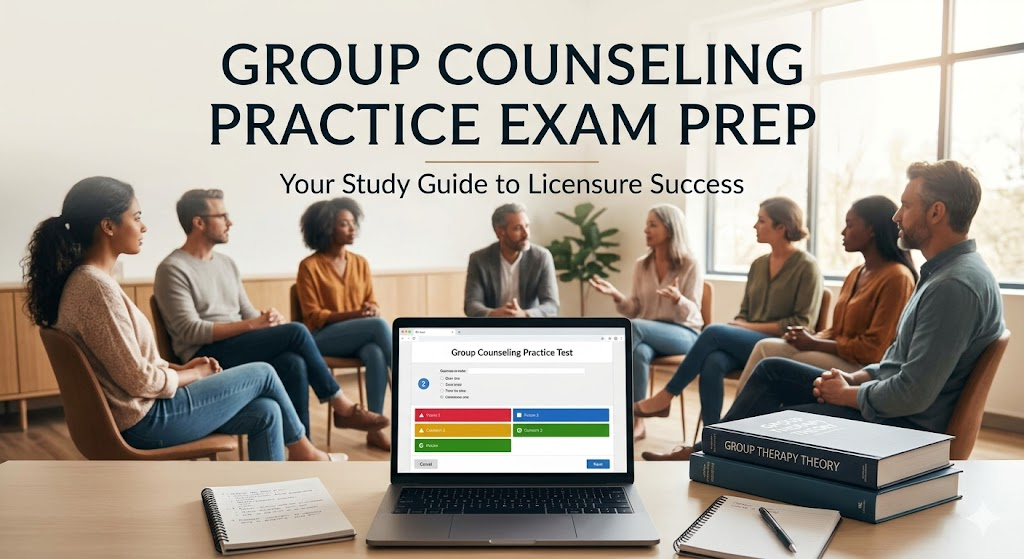
Additional Information
What the Course Entails and Exam Details
This comprehensive practice test covers the fundamental core topics essential for effective group counseling. The curriculum simulated in this exam is aligned with major professional counseling standards.
Key theoretical frameworks and skills tested include:
The diverse theoretical orientations underpinning group counseling, such as Yalom’s therapeutic factors.
A deep understanding of the distinct stages of group development, from forming and storming to performing and terminating.
Crucial ethical and legal issues unique to the group context, with a special emphasis on confidentiality.
The various types of groups, including psychoeducational, task, support, and psychotherapy groups.
Practical leadership styles, essential facilitation skills, and effective conflict resolution techniques.
Techniques for addressing complex group dynamics and managing challenging member behaviors.
What to Expect in the Final Exam
While this is a practice tool, it is modeled after the format of leading professional licensure examinations. This ensures a realistic and valuable preparatory experience.
Candidates should expect a rigorous multiple-choice format featuring scenario-based questions. These scenarios are designed to test not just rote memorization but the complex application of group theory to real-world situations. The exam typically consists of 100 to 150 questions. Users are generally given a simulated time limit of two to three hours to complete the assessment, mimicking the pressure of actual testing environments. To demonstrate a strong command of the material and readiness for the actual certification, a passing score of 75% or higher on this practice test is recommended.
How to Study and Exam Centers
An effective study strategy is crucial for success. Candidates should begin with a thorough review of core group counseling textbooks and authoritative resources. We highly recommend focusing on key concepts, stages of group development, and ethical guidelines.
Creating a structured study plan that includes regular practice sessions is vital. Leverage this practice test repeatedly to identify specific knowledge gaps. Once identified, dedicate focused time to revisiting those weak areas in your study materials. Simulate real exam conditions by timing yourself during practice attempts to build mental endurance.
Regarding testing locations, this practice exam is conveniently administered entirely online through a secure, user-friendly testing portal. This flexibility allows you to study and take the test from any location with internet access, accommodating your busy schedule. This practice environment perfectly prepares you for final professional exams that are often held at proctored centers like Pearson VUE or Prometric.
Job Opportunities from the Course
Achieving proficiency in group counseling through this preparation opens doors to a wide range of rewarding career paths in the mental health field. Group work is an increasingly integral part of therapeutic services.
Successful individuals who go on to achieve licensure or certification can pursue the following career opportunities:
Licensed Mental Health Counselor (LMHC)
Licensed Clinical Social Worker (LCSW)
Licensed Professional Counselor (LPC)
Certified Alcohol and Drug Abuse Counselor
School Counselor (in elementary, middle, or high school settings)
Clinical Director in residential treatment facilities
Inpatient or Outpatient Group Facilitator for hospitals and clinics
Community Mental Health Center Counselor
Marriage and Family Therapist (LMFT) engaging in multi-family groups
Frequently Asked Questions
Reviews
5.0
Based on 0 reviews
Leave a Review
No reviews yet. Be the first to review!