
Hawaii Automobile Safety Inspector Practice Exam
$69.00
- Buy to unlock unlimited access to all Quiz questions and Answers in this Quiz.
- After purchase you can print a PDF of the whole quiz at any point. The PDF will contain the questions and the correct answers.
About this Exam
The Hawaii Automobile Safety Inspector certification is a mandatory credential for mechanics and technicians who wish to legally perform state-required periodic motor vehicle inspections (PMVI) in the state of Hawaii. This certification ensures that inspectors possess the necessary knowledge and skills to accurately assess vehicle safety components, ensuring they meet the standards set by the Hawaii Department of Transportation (HDOT). This program is specifically designed for automotive professionals currently working in the industry who intend to become official inspectors at licensed safety inspection stations throughout the islands.
Ready to test your knowledge?
Buy Now to Access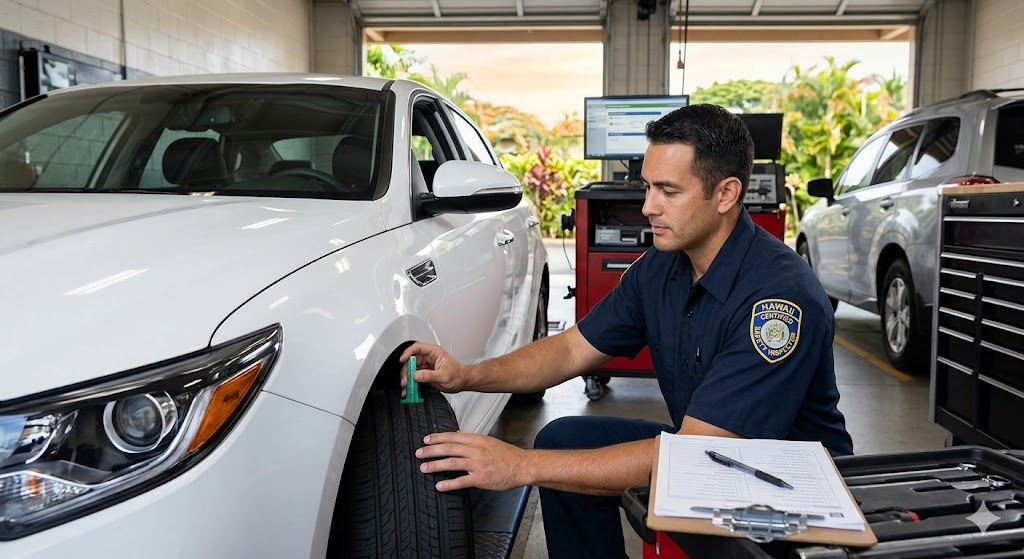
Additional Information
What the Course Entails and Exam Details
This practice exam and the underlying certification course focus heavily on the official Hawaii Administrative Rules and the specific inspection procedures outlined in the PMVI manual. The core topics covered include a comprehensive understanding of the vehicle systems relevant to safety inspections.
You will need to master the inspection criteria for steering and suspension systems, braking systems, tires and wheels, lighting and electrical systems (including headlights, tail lights, and turn signals), glazing material (windows and windshields), body components, and required safety equipment like seatbelts and mirrors. The training emphasizes identifying defects and applying the specific pass/fail criteria mandated by Hawaii state law.
What to Expect in the Final Exam
The official final exam for the Hawaii Automobile Safety Inspector certification generally consists of a written, multiple-choice section. The questions are designed to test your comprehension of the inspection regulations, procedural steps, and your ability to correctly diagnose vehicle defects based on the official guidelines.
While specific requirements may vary slightly by testing flow, candidates are typically required to achieve a passing score of at least 80% on the written portion. The exam is usually timed, and candidates must complete it within the allotted period, which often ranges from one to two hours. In some cases, a practical demonstration of inspection skills might be required in addition to the written test, depending on the specific program administrator.
How to Study and Exam Centers
The most effective way to prepare for this exam is to thoroughly study the official Hawaii Motor Vehicle Inspection Manual and relevant sections of the Hawaii Administrative Rules (specifically Title 19). Utilize practice exams to familiarize yourself with the types of questions asked and to identify areas where you need further review. Creating flashcards for specific pass/fail criteria, such as minimum brake pad thickness or allowable tire wear, can also be highly beneficial.
The actual certification exams are usually administered through authorized testing locations, which often include local Hawaii community colleges (such as Honolulu Community College) or specific, HDOT-approved training providers. It is recommended to contact your local community college's continuing education department or the Hawaii Department of Transportation for the most current list of authorized testing centers and schedules.
Job Opportunities from the Course
Obtaining your Hawaii Automobile Safety Inspector certification is a critical step for career advancement in the automotive service industry within Hawaii.
This certification is required for, and unlocks, the following job opportunities:
Certified Safety Inspector (PMVI Inspector): Legally inspect passenger vehicles, trucks, and other motorized vehicles at licensed stations.
Lead Automotive Technician: Enhance your qualifications for senior technician roles that require performing or supervising safety inspections.
Service Manager: Broaden your understanding of state compliance regulations, essential for managing a repair shop or dealership service department.
Fleet Maintenance Inspector: Qualify to perform mandatory safety inspections for corporate or government vehicle fleets.
Frequently Asked Questions
Reviews
5.0
Based on 0 reviews
Leave a Review
No reviews yet. Be the first to review!