
Hawaii Beauty Operator Practice Exam
$69.00
- Buy to unlock unlimited access to all Quiz questions and Answers in this Quiz.
- After purchase you can print a PDF of the whole quiz at any point. The PDF will contain the questions and the correct answers.
About this Exam
The Hawaii Beauty Operator licensure is a mandatory certification for professionals aiming to practice cosmetology, hair design, or other beauty operator services in the State of Hawaii. This exam, regulated by the Hawaii Board of Barbering and Cosmetology under the Department of Commerce and Consumer Affairs (DCCA), ensures that candidates possess the essential knowledge and skills to provide beauty services safely and effectively to the public. It is designed for students who have completed the required hours at an accredited beauty school and are ready to take the final step toward their professional license.
Ready to test your knowledge?
Buy Now to Access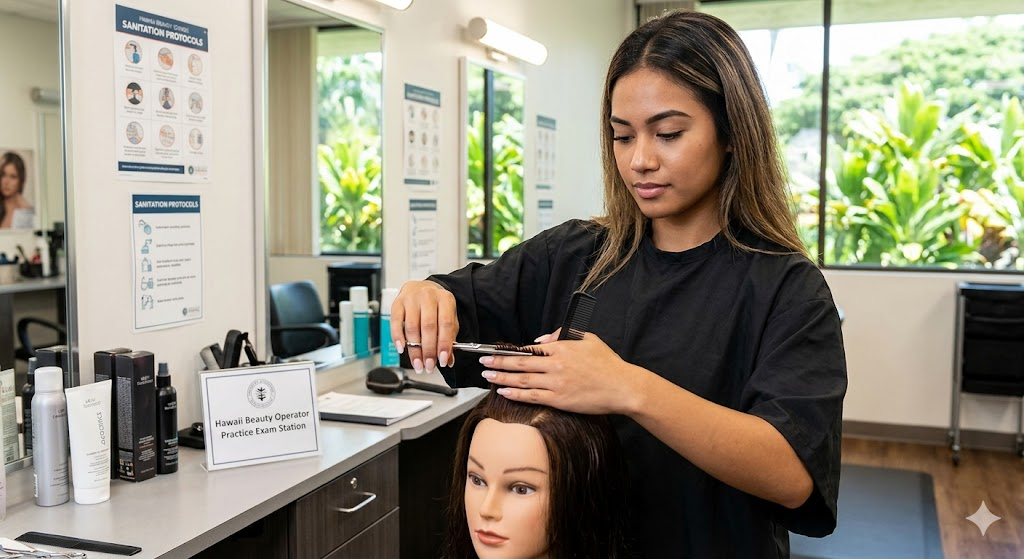
Additional Information
What the Course Entails and Exam Details
This comprehensive licensure process assesses candidate competency across a broad spectrum of cosmetology topics. The curriculum preceding the exam typically covers theoretical knowledge and practical applications, including infection control, chemical services, hair styling, skin care, and nail care.
The written (theory) portion of the exam primarily covers:
Rules and Regulations: Hawaii State laws, Board rules, and safety protocols.
Safety and Sanitation: Disinfection procedures, first aid, and equipment sterilization.
General Anatomy and Physiology: Basic structure and function of the skin, hair, and nails.
Chemical Services: Principles of hair coloring, chemical waving, and relaxing.
Hair Styling and Cutting: Techniques for cutting, shaping, and styling hair.
Skin and Nail Care: Basic treatments, disorders, and safety standards for manicuring and esthetics.
What to Expect in the Final Exam
To obtain a license, candidates must pass both a practical exam and a written (theory) exam.
The Theory (Written) Exam:
Format: The theory exam is typically a computer-based, multiple-choice test.
Time Limit: Candidates are usually given approximately 2 hours to complete the examination.
Passing Score: A passing score is generally required to be 70% or higher.
Administered By: The Hawaii DCCA contracts with testing services, such as Prometric, to administer the theory exam.
The Practical Exam:
Format: This section is a hands-on examination where candidates demonstrate their skills on a mannequin or a live model.
Topics: You will be evaluated on techniques such as haircutting, thermal styling, chemical application, and safety procedures.
Grading: Evaluation is based on specific criteria for efficiency, accuracy, safety, and infection control protocols.
How to Study and Exam Centers
Effective preparation requires a combination of reviewing theoretical concepts and mastering practical skills.
Study Strategies:
Practice with Purpose: Utilize simulated Hawaii Beauty Operator practice exams to familiarize yourself with the question format and identify areas needing improvement.
Review Your Textbooks: Revisit the core cosmetology textbooks (like Milady or Pivot Point) used in your beauty school program, focusing on bolded terms, summaries, and review questions.
Focus on State Laws: Pay special attention to the Hawaii state-specific rules and regulations provided by the Board, as these are critical for the written exam.
Practice Hands-on Techniques: For the practical exam, practice all required services repeatedly on a mannequin, adhering strictly to timing limits and sanitation standards.
Exam Centers:
Theory Exam: The computerized written exam is typically administered at Prometric testing centers throughout Hawaii, with locations in Honolulu and other major islands.
Practical Exam: The practical exam is coordinated separately, often held at specific designated testing sites or beauty schools approved by the state board. Candidates must check the Hawaii DCCA website for current testing schedules and locations.
Job Opportunities from the Course
Successfully passing the Hawaii Beauty Operator exam and obtaining your license opens doors to numerous rewarding career paths in the dynamic beauty industry.
Potential Career Paths and Job Titles:
Cosmetologist
Hairstylist
Hair Color Specialist
Salon Manager
Salon Owner
Makeup Artist
Nail Technician (depending on specific licensing pathways)
Beauty School Instructor
Manufacturer Educator or Sales Representative
Frequently Asked Questions
Reviews
5.0
Based on 0 reviews
Leave a Review
No reviews yet. Be the first to review!