
Hawaii Insurance Adjuster License Practice Exam
$69.00
- Buy to unlock unlimited access to all Quiz questions and Answers in this Quiz.
- After purchase you can print a PDF of the whole quiz at any point. The PDF will contain the questions and the correct answers.
About this Exam
Embarking on a career as a claims adjuster in Hawaii is an exciting and potentially lucrative path, but it requires thorough preparation to navigate the unique state regulations.
The first crucial step to achieving your goal is understanding and preparing for the Hawaii Insurance Adjuster License Practice Exam.
This practice exam is specifically designed for aspiring insurance professionals looking to get licensed in Hawaii, simulating the structure, difficulty, and content of the real licensing test.
It serves as an invaluable tool to gauge your current knowledge, identify areas for improvement, and build the confidence needed to succeed on exam day.
By taking this comprehensive practice test, you're not just reviewing material – you're actively preparing for your future career, ensuring you're ready for the state's specific requirements.
It is for anyone who is committed to passing the Hawaii Insurance Adjuster Licensing Exam on their first try and is seeking the most effective way to prepare.
Ready to test your knowledge?
Buy Now to Access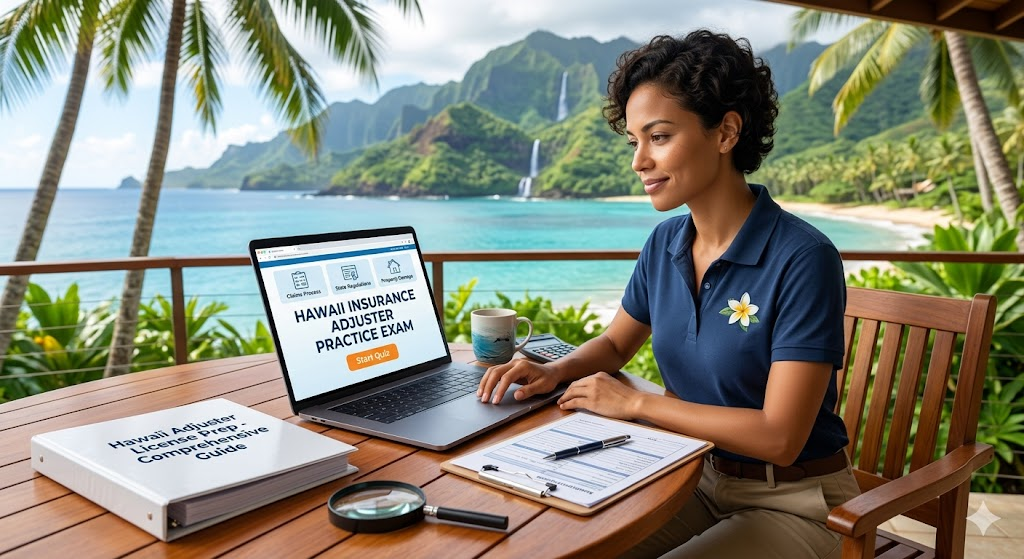
Additional Information
What the Course Entails and Exam Details
Preparing for the Hawaii insurance adjuster license involves more than just passing a single test; it encompasses a comprehensive body of knowledge about general insurance principles and specific Hawaii regulations.
The pre-licensing education (often called a "course") you'll likely take to meet state requirements covers a wide array of topics essential for this role.
While this practice exam is not a substitute for the required education, its content reflects exactly what you need to know.
Key areas covered typically include:
General Insurance Concepts: Fundamentals like risk management, contract law principles (offer, acceptance, consideration), and different types of coverage (property, casualty, liability).
Hawaii-Specific Laws & Regulations: In-depth knowledge of Hawaii's insurance statutes, regulatory authority, licensing procedures, unfair claims settlement practices, and consumer protection laws. This is perhaps the most critical section for success on both the practice and actual exam.
Property and Casualty Insurance: Specifics about various property (homeowners, commercial property) and casualty (auto, liability) policies, coverage details, exclusions, and endorsements.
Claims Handling Procedures: Understanding the entire life cycle of a claim, from initial reporting and investigation to evaluation, negotiation, and settlement.
Adjusting Practices & Procedures: Practical knowledge about investigating losses, estimating damages (both property and personal injury), understanding valuations, and working effectively with policyholders and companies.
Ethics: Upholding professional standards, avoiding conflicts of interest, and ensuring fair and honest dealing in all aspects of claims adjusting.
Think of the practice exam as a targeted way to test your understanding across all these core topics before the final challenge.
What to Expect in the Final Exam
When you finally sit for the actual Hawaii Insurance Adjuster License Exam, you should expect a format very similar to what you'll encounter in comprehensive practice tests.
While specific details like question count or passing score might fluctuate slightly over time, the fundamental structure remains consistent.
Exam Format: The exam is typically comprised of a set number of multiple-choice questions, which may include both direct knowledge checks and scenario-based questions that require application of principles.
Passing Score: Though exact requirements can vary and are determined by the Hawaii Department of Commerce and Consumer Affairs (DCCA), a passing score is typically set around 70% to 75%.
Time Limit: You will be given a specific amount of time to complete the exam, which commonly ranges from 2 to 3 hours. This duration is generally considered sufficient if you are well-prepared, but it’s important to manage your time effectively during the test.
Specific Rules:
Expect a proctored environment, whether you take the test online (if allowed) or at a physical location.
It is generally a closed-book exam, so you cannot bring in any reference materials or study guides.
Certain items might be prohibited from the testing area, so make sure to review the official rules provided by the testing vendor (such as Prometric or Pearson VUE) beforehand.
It's always highly recommended to check the official DCCA website or the testing provider's candidate handbook for the absolute latest, specific details regarding score requirements, time limits, and registration procedures just before you schedule your exam.
Knowing what to expect visually and structurally will significantly reduce test anxiety.
How to Study and Exam Centers
Preparation is the cornerstone of success, and there are specific, actionable steps you can take to maximize your study efforts for both the practice and final exams.
Utilize High-Quality Study Materials: Invest in reputable pre-licensing education, study guides, and online resources specifically tailored to the Hawaii insurance adjuster license requirements. Look for materials that break down complex topics, provide clear explanations, and include plenty of examples.
Take Multiple Practice Exams: This is perhaps the single most effective way to prepare. Regularly take the Hawaii Insurance Adjuster License Practice Exam to simulate the real testing environment. Aim for variety in the types of practice questions you expose yourself to.
Analyze Your Results Thoroughly: After each practice exam, carefully review every question you missed and those you got right. Understand why the correct answer is correct and why your chosen answer was incorrect. Pay particular attention to questions that require application of concepts, not just rote memorization.
Focus on State-Specific Laws: Don't underestimate the importance of Hawaii-specific regulations. Dedicate significant study time to understanding the nuances of local insurance statutes, regulatory procedures, and fair claims settlement guidelines. This is often the differentiator between passing and failing.
Develop a Study Schedule: Be disciplined with your preparation. Create a realistic study plan that allocates time for reading, reviewing materials, taking practice tests, and revising difficult concepts consistently over a period of weeks or months, depending on your schedule and familiarity with the subject.
Simulate Exam Conditions: For some practice sessions, strictly adhere to the time limit and minimize distractions. This helps you get accustomed to the pressure of the actual exam and practice time management.
Join Study Groups or Seek Mentorship: Connecting with others studying for the same exam or finding an experienced adjuster to mentor you can provide valuable insights, motivation, and different perspectives on complex topics.
Regarding Exam Centers: You cannot simply walk in anywhere to take this exam.
How to Take the Exam: The final licensing exam is not typically administered online in an open format, though online proctoring might be an option provided by the official testing vendor in some instances. The standard approach involves registering and taking the exam through a recognized testing provider.
Exam Centers: The actual Hawaii Insurance Adjuster Exam is generally conducted at designated testing centers managed by authorized companies like Prometric or potentially others.
You will typically find physical testing locations across major Hawaiian islands, ensuring accessibility.
To find specific center locations, available dates, and detailed registration instructions, you should visit the website of the Hawaii DCCA or the official testing provider contracted by the state for this purpose.
Always consult the latest information directly from official sources to ensure you are scheduling at an authorized center.
With consistent effort and strategic preparation using tools like this practice exam and focusing on state-specific knowledge, you're positioning yourself for a successful and rewarding career in Hawaii's thriving insurance industry. Good luck!
Job Opportunities from the Course
Successfully preparing for and passing the Hawaii Insurance Adjuster Licensing Exam unlocks a wide range of career opportunities within the insurance sector.
Becoming a licensed adjuster is a versatile and essential role that can lead to diverse and fulfilling career paths.
Here are some of the key job titles and roles you could pursue:
Insurance Adjuster: A broad term for professionals who investigate insurance claims, determine liability, and negotiate settlements on behalf of an insurance company or an individual. This is a common starting point and can lead to various specializations.
Claims Adjuster: Similar to an insurance adjuster, focusing specifically on the evaluation and resolution of insurance claims.
Independent Adjuster: Work for independent adjusting firms and handle claims for multiple different insurance companies on a contract basis. This role offers flexibility and potentially higher earning potential, especially during catastrophe events.
Staff Adjuster: Employed directly by a single insurance carrier to handle claims exclusively for that company. Offers stability, benefits, and a structured career path within one organization.
Claims Representative: A customer-facing role where you might handle initial claim reports, guide policyholders through the process, and sometimes process smaller claims.
Claims Investigator: Focuses specifically on complex or suspicious claims, conducting detailed investigations into circumstances, potential fraud, and liability details.
Catastrophe Adjuster: Specializes in handling a high volume of claims in the aftermath of large-scale natural disasters (like hurricanes or major storms, which are relevant to Hawaii). These adjusters often travel extensively.
Property Adjuster: Specializes in adjusting claims related to damage or loss of physical property, such as homes, commercial buildings, or personal belongings.
Casualty Adjuster: Handles claims involving personal injury, liability for damage to others' property, or other non-property related losses.
Field Adjuster: Travels to the scene of a claim to inspect damage, interview witnesses, gather evidence, and meet with policyholders in person.
Desk Adjuster: Manages and processes claims primarily from an office or remote setting, utilizing documentation, photos, and communication tools to evaluate and settle claims.
Risk Manager: Some experienced adjusters transition into risk management roles, helping companies identify, assess, and mitigate potential financial losses.
Insurance Investigator: A specialized role focused on investigating fraudulent insurance claims across various lines of business.
The skills and knowledge you acquire through your pre-licensing education and confirmed by passing the Hawaii Insurance Adjuster Exam are highly sought after by insurance carriers, independent adjusting firms, risk management departments, and other related organizations across the Hawaiian islands and beyond.
Start preparing today with this comprehensive practice exam and take the first critical step toward your dynamic new career as a licensed Hawaii Insurance Adjuster!
Frequently Asked Questions
Reviews
5.0
Based on 0 reviews
Leave a Review
No reviews yet. Be the first to review!