
Hawaii Motorcycle Practice Test
$69.00
- Buy to unlock unlimited access to all Quiz questions and Answers in this Quiz.
- After purchase you can print a PDF of the whole quiz at any point. The PDF will contain the questions and the correct answers.
About this Exam
The Hawaii Motorcycle Practice Exam is your essential first step towards experiencing the unmatched freedom of riding on the Aloha State’s scenic roads and highways.
This examination is specifically designed for individuals who are preparing to obtain their Hawaii Motorcycle Instruction Permit or add a Class 2 endorsement to their existing driver's license.
It validates that prospective riders possess the critical theoretical knowledge required to operate a motorcycle safely and responsibly within Hawaii's unique traffic ecosystem.
While many dream of riding through the mountains of Maui or along the coast of Oahu, this written test ensures they understand the rules before they begin their practical training on a learner's permit.
Passing this exam is a mandatory milestone, focusing on safety protocols, state laws, and risk-reduction techniques that protect both the rider and other road users.
Ready to test your knowledge?
Buy Now to Access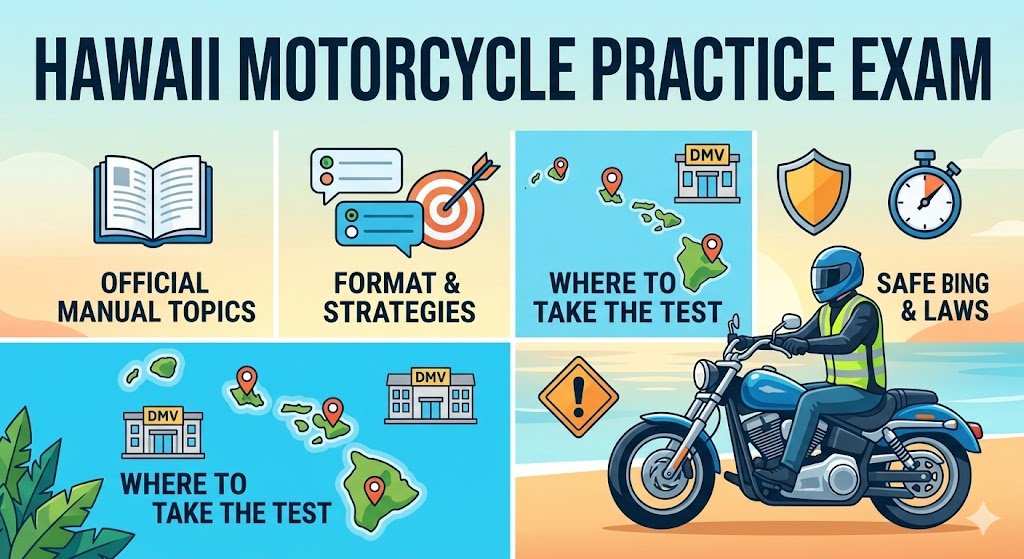
Additional Information
What the Course Entails and Exam Details
This examination is not based on general knowledge but is derived directly from the official Hawaii Motorcycle Operator Manual, a resource you must study thoroughly.
The material covers a wide spectrum of specialized safe-riding concepts tailored to two-wheeled and three-wheeled vehicle operations, ensuring you understand how motorcycles behave differently than cars.
The core domains you must master include defensive riding strategies, proper lane positioning for visibility and safety, and the crucial techniques for effective braking and turning in various weather conditions.
You will also be tested on critical skills such as how to safely share the road with commercial vehicles, negotiating intersections, handling mechanical emergencies, and transporting passengers or cargo.
A significant portion of the test focuses on Hawaii-specific traffic laws, road signs, and the severe legal and physical consequences of impaired riding due to alcohol or drugs.
What to Expect in the Final Exam
When you sit for the final examination at a driver licensing center, you can expect a computer-based knowledge test that generally consists of around 25 to 30 multiple-choice questions.
To pass, you must demonstrate a high proficiency in the material, requiring a minimum score of 80 percent, which means correctly answering at least 20 or 24 questions depending on the specific question count.
Hawaii county regulations generally allow applicants up to one hour to complete the examination, providing ample time if you have prepared adequately, though there is no timer on our recommended practice resources to help you focus on accuracy.
The final exam is a closed-book assessment, meaning no manuals, cheat sheets, or cellular devices are permitted during the testing session.
Passing this knowledge portion immediately qualifies you to proceed to the vision screening and, upon success, grants you the instruction permit necessary to begin legal street practice before the skills test.
How to Study and Exam Centers
The most effective way to prepare is to dedicate focused time to reading and understanding the official Hawaii Motorcycle Operator Manual, treating it as your primary textbook.
Once you have reviewed the manual, leverage the power of multiple-choice practice tests, like the Hawaii Motorcycle Practice Exam, which are modeled after the actual testing format.
These practice sessions help you identify your weak points, familiarize yourself with the phrasing of questions, and build the confidence necessary for the final testing day.
You must take the official examination in person at an authorized Driver Licensing Center operated by your specific county; it is not available to take through third-party vendors or standard online portals.
It is highly recommended to schedule an appointment in advance through your county's online system, such as AlohaQ for Honolulu, at major locations including Kapalama or Kapolei on Oahu, Hilo or Kona on the Big Island, and standard offices on Maui and Kauai.
Job Opportunities from the Course
Food or Goods Delivery Rider (specifically in dense tourist areas where mopeds or motorcycles offer superior mobility)
Motorcycle Tour Guide (leading guided scenic rides for tourists across the islands, requiring additional specialized permits)
Fleet Maintenance Messenger (delivering parts or documents for automotive and transportation companies quickly)
Professional Motorcycle Safety Instructor (a career path unlocked after gaining significant riding experience and license longevity)
Law Enforcement Officer - Motorcycle Unit (specialized police roles that require a pristine riding record and endorsement)
Motorcycle Dealership Test Rider or Sales Specialist (using technical riding knowledge to assist customers)
On-Demand Courier Specialist (providing expedited delivery of urgent legal or medical documents across urban centers)
Frequently Asked Questions
Reviews
5.0
Based on 0 reviews
Leave a Review
No reviews yet. Be the first to review!