
Hawaii State Workers Compensation (WC) License Practice Test
$69.00
- Buy to unlock unlimited access to all Quiz questions and Answers in this Quiz.
- After purchase you can print a PDF of the whole quiz at any point. The PDF will contain the questions and the correct answers.
About this Exam
The Hawaii State Workers Compensation (WC) License certification is a specialized credential designed for insurance professionals, claims adjusters, and risk management specialists operating within the Aloha State.
This exam ensures that professionals possess a deep, localized understanding of Hawaii’s unique labor laws and compensation statutes.
Whether you are an aspiring claims adjuster looking to enter the insurance industry or an established producer expanding your local expertise, this certification proves you are equipped to handle the legal and ethical responsibilities of workers' compensation in Hawaii.
Earning this license signals to employers and clients that you are a trusted, knowledgeable authority on protecting both workers and businesses.
Ready to test your knowledge?
Buy Now to Access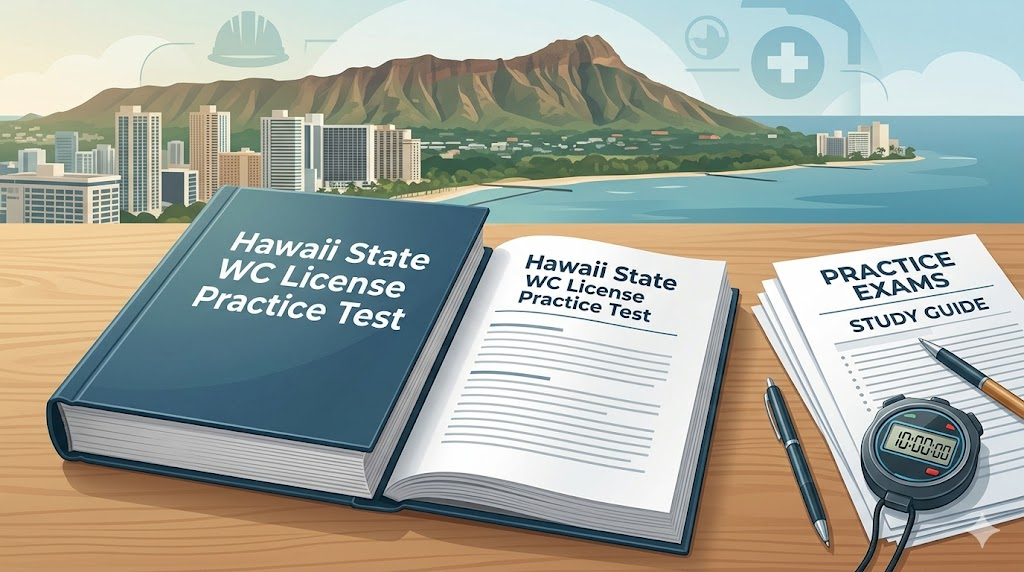
Additional Information
What the Course Entails and Exam Details
Preparing for this license involves diving into the specific framework of the Hawaii Workers' Compensation Law, primarily focusing on Chapter 386 of the Hawaii Revised Statutes.
The syllabus covers a broad spectrum of core topics essential for daily operations in the field.
You will study the definitions of compensable injuries, occupational diseases, and employer liability.
The course material delves heavily into the types of benefits provided, including medical treatments, temporary and permanent disability compensation, and death benefits for dependents.
Additionally, you will learn about the claims process, mandatory employer insurance requirements, penalties for non-compliance, and the dispute resolution processes overseen by the Disability Compensation Division (DCD).
What to Expect in the Final Exam
The Hawaii Workers Compensation License exam is a computerized, multiple-choice test designed to strictly evaluate your knowledge of state laws and insurance principles.
You can expect to face between 50 to 100 questions depending on the exact licensing tier you are pursuing, with a strict time limit typically set around two hours.
To pass, candidates generally need to achieve a minimum score of 70% to 75%.
The questions will range from direct terminology definitions to complex scenario-based inquiries where you must apply Chapter 386 regulations to hypothetical workplace injury cases.
You will not be allowed to bring outside reference materials, so a comprehensive understanding and memorization of the statutes is absolutely required.
How to Study and Exam Centers
Success on this exam relies heavily on consistent, targeted study strategies rather than last-minute cramming.
Start by thoroughly reading the Hawaii Department of Labor and Industrial Relations (DLIR) guidelines and utilizing state-approved pre-licensing educational materials.
Taking multiple practice exams is the most effective way to gauge your readiness; it helps familiarize you with the testing format and highlights any knowledge gaps regarding state-specific statutes.
When you are ready to test, exams are typically administered through authorized third-party testing providers like Pearson VUE or Prometric.
You can easily schedule your exam online to be taken at specific physical testing centers located in Honolulu and across the neighboring islands.
Some providers may also offer a highly secure, proctored online testing option, allowing you to take the exam from the comfort of a quiet room in your home.
Job Opportunities from the Course
Achieving this certification unlocks a wealth of rewarding career paths within the insurance and corporate sectors.
You can pursue a role as a Workers' Compensation Claims Adjuster, directly investigating and managing injury claims for insurance carriers.
It also qualifies you for positions as an Insurance Producer or Broker, where you can confidently sell specialized commercial policies to Hawaii businesses.
Other lucrative roles include becoming a Corporate Risk Manager, ensuring a company's internal compliance with state safety and labor laws.
Additionally, you might work as a Rehabilitation Coordinator or a Loss Control Consultant, utilizing your expertise to help injured workers return to the workforce and advising employers on how to minimize workplace hazards.
Frequently Asked Questions
Reviews
5.0
Based on 0 reviews
Leave a Review
No reviews yet. Be the first to review!