
Hawaii Substitute Teacher Practice Exam
$69.00
- Buy to unlock unlimited access to all Quiz questions and Answers in this Quiz.
- After purchase you can print a PDF of the whole quiz at any point. The PDF will contain the questions and the correct answers.
About this Exam
Want to be a substitute teacher in sunny Hawaii? Get ready to support students and schools! This guide focuses on preparation, including valuable practice, to help you navigate the process of becoming a Hawaii Department of Education (DOE) substitute teacher. Mastering essential classroom skills and understanding DOE policies is key to success. For aspiring substitute teachers, utilizing a practice exam is a crucial resource designed to assess your readiness and build confidence for real-world classroom challenges. Designed for potential substitute teachers, this practice builds familiarity with common scenarios, instructional methods, and the overall educational landscape in Hawaii, paving the way for a rewarding career in supporting the state’s keiki.
Ready to test your knowledge?
Buy Now to Access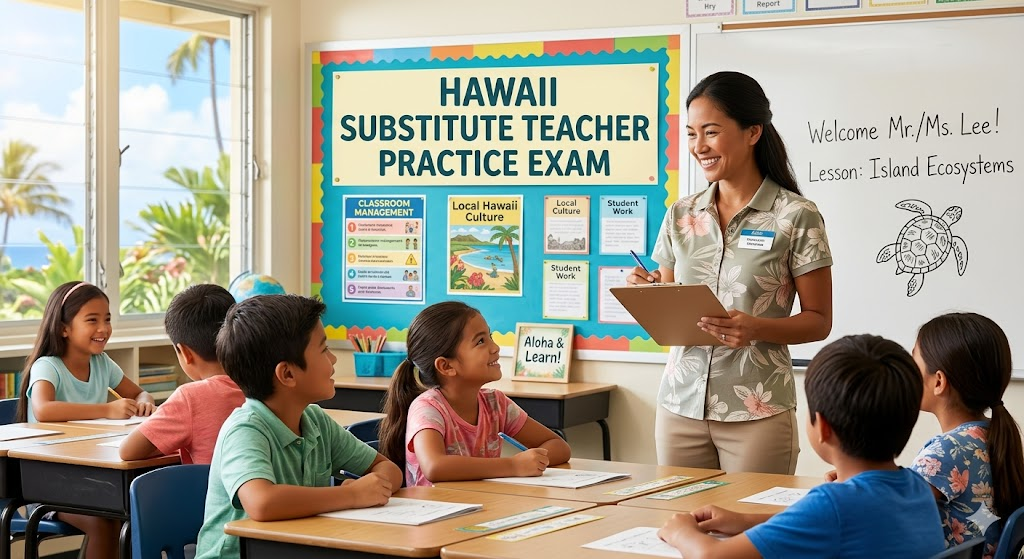
Additional Information
What the Course Entails and Exam Details
To work as a substitute teacher for the Hawaii Department of Education, individuals typically need to complete specific training, which often comes in the form of an online substitute teacher course or workshop provided by the DOE or approved institutions. This required course or preparation material generally covers core topics essential for effective substitute teaching:
Classroom Management Techniques: Strategies for creating positive learning environments, handling student behavior, and maintaining an organized classroom.
Instructional Delivery: Basic teaching methods, understanding lesson plans, and effectively presenting curriculum material across various subjects and grade levels.
Understanding Diverse Learners: Insight into different learning styles, special education awareness, and cultural sensitivity crucial for Hawaii's diverse student population.
School Policies & Procedures: Essential information regarding DOE rules, safety protocols, attendance, confidentiality, and legal responsibilities.
Professional Conduct & Ethics: Guidelines for maintaining professionalism, appropriate communication with students and staff, and ethical considerations.
While there may not be one single official state "practice exam," the official training course usually includes assessment components, and finding or creating practice questions based on these topics is highly recommended for preparation. Many preparation materials, including practice exams you might find, structure their content into multiple-choice questions or case studies reflecting these key areas.
What to Expect in the Final Exam
As part of the official substitute teacher training course, you can typically expect a final assessment or quiz at the end of the modules. While not a large state licensure exam, this final course quiz is a crucial step to demonstrate your understanding and complete the training requirement:
Format: The final assessment is generally delivered online and consists primarily of multiple-choice questions. These questions are designed to test your knowledge of the material covered throughout the training course.
Passing Score: To successfully complete the training, you will typically need to achieve a specific passing score, which is often around 80% or higher. Some courses may allow multiple attempts, while others might have restrictions, so it is important to check the specific course rules.
Time Limits: There might be time limits for completing the entire assessment or individual questions/sections, designed to ensure efficient completion.
Rules: Standard assessment rules regarding integrity apply, and you should complete the test honestly without unauthorized assistance. Specific rules about retakes, access to course materials during the test, and technical requirements will be detailed within the training platform.
Therefore, preparing with practice questions that mimic this format is highly beneficial in preparing you for the actual course assessment.
How to Study and Exam Centers
Effective preparation, including leveraging practice materials, will significantly increase your chances of success. Here are actionable study strategies:
Practice Frequently: Actively seek out and utilize [Hawaii Substitute Teacher Practice Exam] questions. Consistent practice helps identify weak areas and builds confidence.
Review Training Materials Thoroughly: Carefully read and understand all the content provided in the official DOE substitute teacher training modules.
Take Notes: Jot down key points, policies, and instructional strategies as you study. Summarizing information helps with retention.
Simulate Exam Conditions: When using practice exams or questions, try to answer them within a realistic timeframe to build speed and stamina.
Understand Explanations: When reviewing practice answers, understand why a particular answer is correct and others are not, rather than just memorizing answers.
Review Hawaii DOE Policies: Familiarize yourself with relevant Hawaii DOE policies and guidelines beyond the course content, particularly regarding student conduct and safety.
Regarding exam centers, as the final assessment is usually an integrated part of the online substitute teacher training course, you will typically complete the "exam" online through the same portal where you took the training, allowing for flexibility and convenience from your own computer. You won't generally need to visit specific physical Pearson VUE centers or authorized schools specifically for this course assessment.
However, the overall process for becoming a substitute teacher may involve visiting certain physical locations for steps like fingerprinting (often required as part of the background check) and submitting official application documents. Information regarding where to go for these administrative steps will be provided during the application process through the Hawaii DOE website or local district offices.
Job Opportunities from the Course
Successfully completing the substitute teacher training and necessary requirements opens up opportunities to work directly with students and contribute to the Hawaii education system. Potential job titles and career paths include:
Substitute Teacher (Elementary School): Teaching and supervising young students in various subjects for individual classrooms on a temporary basis.
Substitute Teacher (Middle School/High School): Delivering instruction and managing older students across different subject areas, which may require specific subject knowledge depending on the assignment.
Special Education Substitute Teacher: Providing crucial support in special education settings, requiring extra sensitivity and understanding of diverse needs (often in high demand).
Long-Term Substitute Teacher: Filling teaching positions for extended periods (weeks or months), often involving more consistent planning and student engagement than daily subbing, and can be an excellent way to gain deeper experience.
Specialized Subject Substitute: For those with relevant expertise, opportunities may exist for substitute teaching in specific subjects like music, art, physical education, or career & technical education.
Becoming a substitute teacher is a rewarding role in itself and can also serve as a vital stepping stone towards a full-time teaching career or further professional development within the educational field in Hawaii. Building experience and positive relationships in schools through subbing can significantly enhance your prospects for future education-related roles.
Remember, thorough preparation is your key to success. Good luck on your journey to becoming a valuable substitute teacher in Hawaii!
Frequently Asked Questions
Reviews
5.0
Based on 0 reviews
Leave a Review
No reviews yet. Be the first to review!