
Hazardous Waste Operations (HAZWOP) Practice Test
$69.00
- Buy to unlock unlimited access to all Quiz questions and Answers in this Quiz.
- After purchase you can print a PDF of the whole quiz at any point. The PDF will contain the questions and the correct answers.
About this Exam
The Hazardous Waste Operations and Emergency Response (HAZWOP) certification is a vital credential for individuals who work on or around sites with hazardous materials or who are responsible for emergency response actions. Mandated by OSHA in the United States and recognized across various global industries, this certification ensures that personnel possess the knowledge and skills necessary to identify potential hazards, utilize protective equipment correctly, implement safety and decontamination procedures, and respond safely to incidents involving dangerous substances.
This comprehensive exam is designed for a broad audience, including general site workers, equipment operators, technicians, specialists, supervisors, managers, and emergency response personnel across diverse sectors such as environmental remediation, manufacturing, chemical handling, construction, utilities, and public safety. Whether you are entering the field or seeking a required annual refresher, the HAZWOP qualification represents a commitment to safety and regulatory compliance.
Ready to test your knowledge?
Buy Now to Access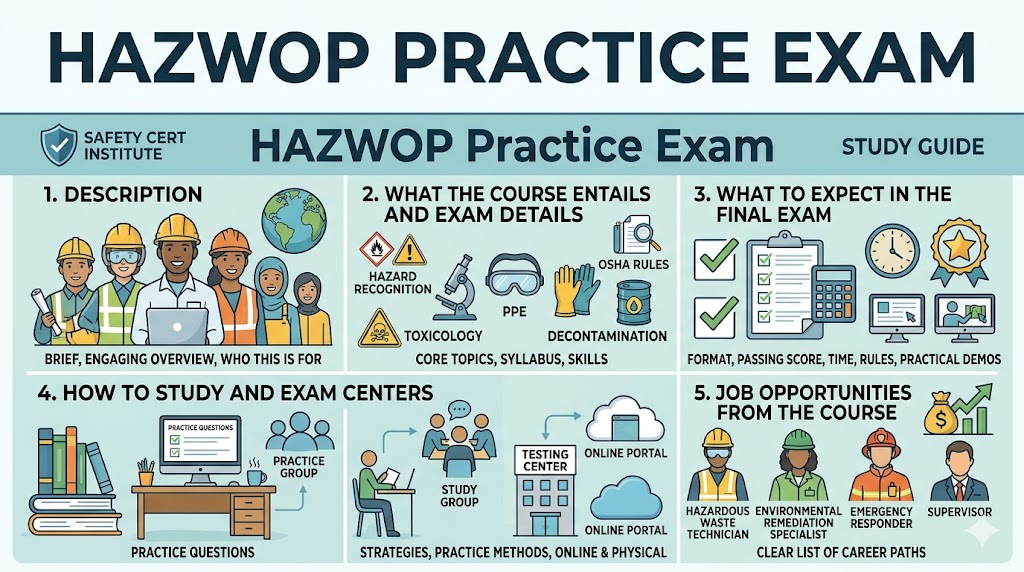
Additional Information
What the Course Entails and Exam Details
A typical HAZWOP course is comprehensive and covers a diverse range of critical safety and operational topics, typically following the specific standard levels (e.g., 40-hour, 24-hour, or 8-hour annual refresher). The curriculum and the final exam assess understanding across many essential areas, including:
Hazard recognition and risk assessment.
Toxicology and the potential health effects of chemical exposure.
OSHA/EPA regulatory requirements and specific HAZWOP standards.
Selection, use, and inspection of Personal Protective Equipment (PPE) from Level A to D.
Decontamination protocols and equipment.
Safe work practices at hazardous sites.
Air monitoring, surveillance techniques, and specific instrumentation usage.
Emergency response planning, execution, and spill containment procedures.
Incident command structures and communication.
Confined space entry safety and rescue.
Fire protection and prevention at hazardous sites.
Medical surveillance programs.
The details of the exam itself—its exact structure, number of questions, time limit, and passing score—can vary depending on the specific accredited training provider you choose. However, the core knowledge expected is standardized by the overarching safety regulations. Ensure you obtain the specific syllabus and exam information from your chosen program.
What to Expect in the Final Exam
While exact details are training provider-dependent, you can expect the final HAZWOP exam to thoroughly test your knowledge and application of the entire course curriculum. Here is what to anticipate:
Format: The primary format of the exam is typically multiple-choice questions. This style allows for comprehensive coverage of the wide range of topics in a efficient testing manner. Some programs may also include true/false questions or, less commonly, short answer/application scenarios within the main body.
Practical Assessment: Crucially, many initial HAZWOP certifications (especially the 40-hour level) include a mandatory practical, hands-on component as part of the overall assessment process. This is not just a written test, but a demonstration of your ability to correctly don and doff different levels of PPE, execute decontamination, or manage simulated spill responses. Be prepared to show what you know, in addition to testing your knowledge on a screen or paper.
Passing Score: A strong passing grade is generally required to achieve certification. While typical passing scores in the safety industry are often around 70-80%, the exact requirement is determined by each training provider’s standards and any specific state or industry variations.
Time Limit: A time limit is usually enforced for the written portion of the exam to ensure testing efficiency. The specific duration will vary with the number of questions. Practical demonstrations are often structured but may not have the same rigid time limit as the written test itself.
Specific Rules: Standard testing protocols apply. The written exam is typically closed-book. For the practical, adherence to precise safety procedures and instructor guidance is paramount. Your performance in the practical component is often as critical as, or a prerequisite for, the written exam's completion.
How to Study and Exam Centers
Successfully preparing for the HAZWOP certification and passing the comprehensive exam requires a structured approach and practical application of knowledge. Consider the following actionable study strategies:
Thorough Course Review: The most critical step is a diligent and comprehensive review of your course material. Take detailed notes during lectures, engage with interactive content, and study all provided text and resources. Focus on regulatory standards, PPE specifications, the principles of toxicology, and all emergency response and decontamination protocols.
Utilization of Practice Resources: Training providers typically provide quizzes and practice questions throughout the course. Active participation in these and seeking out reputable, comprehensive HAZWOP practice tests can familiarize you with the question style and highlight areas where you need further review.
Hands-on Practice is Key: Especially for the initial certifications requiring a practical demonstration, dedicate sufficient time to practicing your physical skills. This includes correctly selecting, inspecting, donning (putting on), and doffing (taking off) all required PPE, as well as practicing simulated spill control or decontamination sequences. Utilize class time and any available practice sessions effectively.
Study Groups and Instructor Consultation: If possible, form study groups to discuss key concepts and practice skills together. Don't hesitate to reach out to your course instructors for clarification on complex regulatory points or practical techniques.
Stay Updated: Regulatory standards can evolve. Ensure you are studying from the most current material and are aware of any relevant updates, particularly when preparing for a refresher course.
For the exam itself, you will typically complete the written portion through the online portal or testing system of your chosen accredited training provider, or in-person at their specific training facility.
Online Portals: Many HAZWOP courses are available through recognized online training platforms. The final written exam for these courses is usually taken through the same secure online system upon completion of the learning modules.
Physical Testing Centers: Some training providers operate physical centers where both initial in-person instruction and final written exams are conducted. This is particularly relevant for initial 40-hour certifications, which frequently include required hands-on practical training and assessment components, which are naturally carried out at a physical training facility.
Approved Training Facilities and Authorized Schools: You must take your HAZWOP training and exam through an accredited, reputable program and authorized training facilities. Be wary of unauthorized or substandard offerings, as a non-OSHA compliant course will not meet the requirements. Check with OSHA guidelines for approved training paths and utilize authorized schools.
Job Opportunities from the Course
A HAZWOP certification unlocks a clear path to many essential and well-compensated career opportunities across a range of vital industries. The specific job titles and career paths available include:
Hazardous Materials Technician
Hazardous Waste Technician / Specialst
Environmental Remediation Worker / Specialist
Emergency Response Personnel (Firefighters, Paramedics, etc.) with specific roles
Environmental Cleanup Specialist
Chemical Spill Response Technician / Team Leader
Incident Commander (with additional leadership training)
Site Supervisor / Manager (with 40-hour supervisor training)
Health and Safety Officer (with general safety experience)
Manufacturing Process Operator handling hazardous chemicals
Waste Site Laborer / General Operator
Industrial Hygienist Assistant / Technician
Asbestos and Lead Abatement Worker (with supplementary certifications)
Oil Spill Cleanup Responder / Technician
Confined Space Rescue Team Member (with appropriate additional training)
Environmental Consultant Assistant / Technician
The skills and knowledge gained from HAZWOP training are essential and widely valued, making certified professionals highly sought after in roles focused on environmental protection, public safety, and occupational health.
We hope this study guide provides you with a clear roadmap to successfully complete your HAZWOP course and pass your practice and final exams. Remember, this certification is a crucial step towards ensuring your safety and the safety of others in challenging and important work environments. Study diligently, embrace the practical training, and you will be well-prepared for your certification and the fulfilling career opportunities it unlocks! Good luck!
Frequently Asked Questions
Reviews
5.0
Based on 0 reviews
Leave a Review
No reviews yet. Be the first to review!