
HazMat First Responder Operational (FRO) Practice Test
$69.00
- Buy to unlock unlimited access to all Quiz questions and Answers in this Quiz.
- After purchase you can print a PDF of the whole quiz at any point. The PDF will contain the questions and the correct answers.
About this Exam
The HazMat First Responder Operational (FRO) level certification is a vital credential for individuals who provide initial response to hazardous materials incidents. It equips first responders—such as firefighters, emergency medical services (EMS) personnel, and law enforcement officers—with the critical knowledge and skills to defensively protect themselves, the public, and the environment from a safe distance without direct contact. If your career involves responding to dynamic emergencies involving potential hazardous materials, this certification is often a mandatory and essential component of your professional development.
Ready to test your knowledge?
Buy Now to Access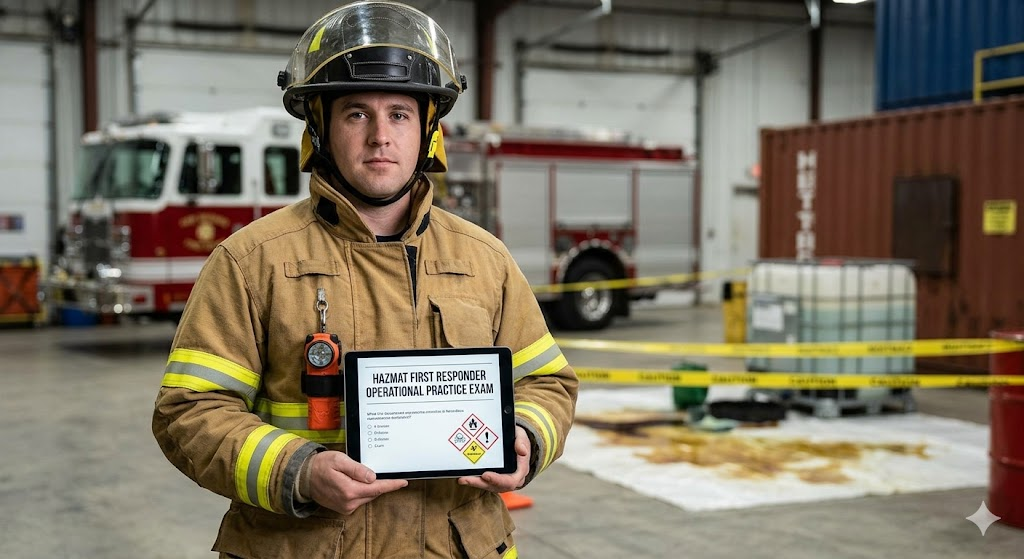
Additional Information
What the Course Entails and Exam Details
Courses designed for HazMat First Responder Operational level provide in-depth training on several core operational competencies. Key areas covered often include standard operating procedures (SOPs), the identification and assessment of a hazardous materials incident, and understanding the physical and chemical properties of hazardous substances. The syllabus extensively focuses on defensive control techniques, such as containment and confinement strategies. Participants also master the correct procedures for scene management, proper utilization of personal protective equipment (PPE), initial decontamination activities for personnel and equipment, and crucial notification and documentation protocols required when handling complex incidents.
What to Expect in the Final Exam
The final exam for the HazMat First Responder Operational level typically consists of multiple-choice questions designed to thoroughly test a candidate's comprehension of the course materials and principles. While specific formats can vary based on the training provider and the specific standard the certification adheres to (like NFPA requirements), the exam aims to evaluate real-world application. Candidates must demonstrate proficiency in identifying hazardous symbols, understanding material properties, and applying defensive response tactics. Expect a designated time limit, often requiring diligent pace to complete all questions, and a minimum passing score (commonly 70% or higher) is necessary to achieve certification.
How to Study and Exam Centers
To effectively prepare for the HazMat First Responder Operational final exam, rigorous study is key. Start by utilizing a dedicated study guide article like this one and consistently engage with practice tests to simulate the exam environment and identify weak areas. Familiarize yourself with standard resources, such as the Emergency Response Guidebook (ERG) and your organization's specific Standard Operating Procedures (SOPs). Candidates often have multiple avenues for taking the exam, including online testing portals offered by accredited training institutions or fire academies. Additionally, exams are often administered in conjunction with authorized training programs at designated physical testing centers within fire departments or state-recognized training facilities.
Job Opportunities from the Course
Earning a HazMat First Responder Operational certification opens diverse career pathways in public safety and industrial sectors. This crucial credential qualifies you for positions that are often required to have advanced levels of hazardous materials response capabilities. Specific job titles enhanced by this certification include:
Municipal Firefighter
Industrial Firefighter
Emergency Medical Technician (EMT) or Paramedic
Law Enforcement Officer (especially for scene security during HazMat incidents)
Emergency Management Professional
Industrial Safety Officer / EHS Coordinator
Environmental Remediation Specialist
Hazardous Materials Transport Specialist
Frequently Asked Questions
Reviews
5.0
Based on 0 reviews
Leave a Review
No reviews yet. Be the first to review!