
Healthcare Law and Ethics Practice Exam
$69.00
- Buy to unlock unlimited access to all Quiz questions and Answers in this Quiz.
- After purchase you can print a PDF of the whole quiz at any point. The PDF will contain the questions and the correct answers.
About this Exam
A certification in Healthcare Law and Ethics equips professionals with the critical knowledge needed to navigate the complex legal and moral landscape of the healthcare industry.
It is designed for a broad range of individuals, including healthcare administrators, nurses, physicians, medical assistants, compliance officers, and students aiming to enter the field.
This practice exam serves as a comprehensive study tool to prepare you for the actual certification test, ensuring you have the confidence and understanding to make sound decisions and ensure regulatory compliance.
Success on this exam demonstrates your commitment to patient welfare, legal responsibility, and ethical professional conduct.
Ready to test your knowledge?
Buy Now to Access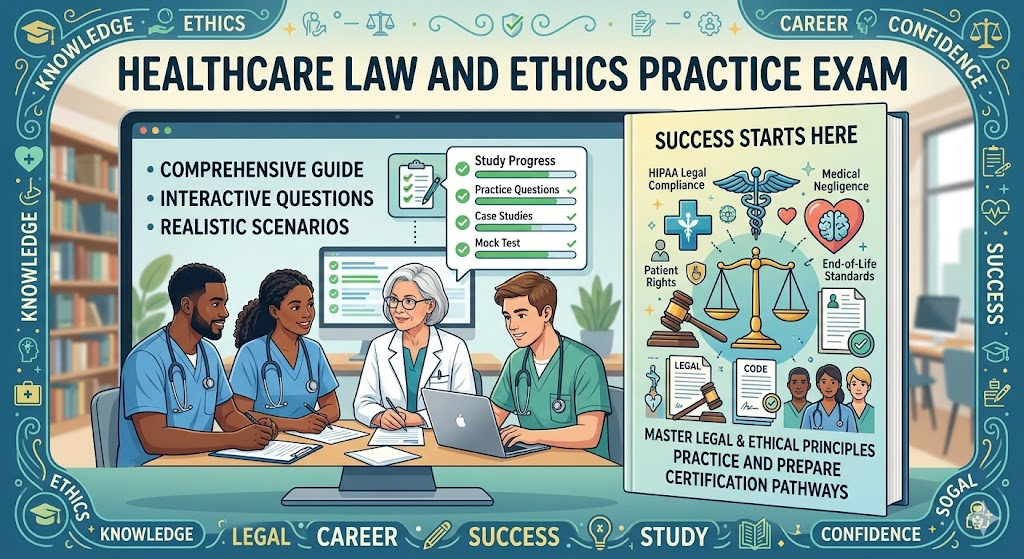
Additional Information
What the Course Entails and Exam Details
The course and exam typically cover a comprehensive syllabus, ensuring a deep understanding of core concepts.
Patient Rights and Consent: Understanding the legal rights of patients, the principles of informed consent, and the processes for respecting patient autonomy.
Confidentiality and Privacy: Deep knowledge of laws like HIPAA, managing sensitive medical records, and respecting patient privacy in all interactions.
Medical Negligence and Liability: Grasping the legal definitions of negligence, malpractice, duty of care, and potential professional liabilities.
Ethical Frameworks and Issues: Applying key ethical principles (beneficence, non-maleficence, justice, autonomy) to real-world medical dilemmas, including end-of-life care, resource allocation, and advanced directives.
Regulatory Compliance: Understanding federal, state, and institutional regulations, fraud prevention, and professional conduct codes.
Healthcare Laws and Regulation: Reviewing major legal precedents and current laws that impact healthcare delivery, organizational policies, and provider-patient relationships.
What to Expect in the Final Exam
While specific details can vary by accrediting body, most final exams share a similar structure.
Format: Typically, the exam is computer-based and consists of multiple-choice questions, scenario-based questions, or case study analyses.
Time Limit: You can expect a set amount of time, usually ranging from 90 to 180 minutes, to complete all sections.
Passing Score: The required passing score is set by the specific certification provider, but it often reflects a high standard of competence in the subject matter.
Rules: Standard testing rules apply, including presenting valid identification, no use of unauthorized materials (notes, books, phones), and completing the test in a secure environment, whether online or at a testing center.
How to Study and Exam Centers
Effectively preparing for the Healthcare Law and Ethics exam requires a multi-faceted approach.
Actionable Study Strategies: Engage in a comprehensive study plan using official textbooks, relevant courses, online study guides, flashcards, and group discussion.
Practice Methods: Utilize practice exams extensively.
This is where this practice tool becomes invaluable, simulating the format, structure, and type of questions you will encounter.
Analyze your results, focus on areas for improvement, and practice timed conditions.
Apply case study analysis to enhance your critical thinking in ethical scenarios.
Where and How to Take the Exam: The actual certification exam can be taken in different formats, depending on the accrediting organization.
Many providers offer online proctored exams through secure platforms, allowing you to take the test from a location that meets technical and security requirements.
Alternatively, you may be required or prefer to take the exam at specific authorized testing centers or approved physical test locations, such as those provided by Pearson VUE, local colleges, or specialized schools.
Consult the website of your specific certification provider for precise details on registration, acceptable testing conditions, and a list of physical locations or instructions for online testing.
Job Opportunities from the Course
A certification in Healthcare Law and Ethics opens doors to diverse and rewarding career paths.
Specific job titles and career opportunities unlocked or enhanced by this expertise include:
Healthcare Administrator (e.g., Hospital Administrator, Nursing Home Administrator, Practice Manager)
Compliance Officer (Ensuring legal and regulatory adherence within a healthcare organization)
Risk Manager (Mitigating potential legal liabilities and improving patient safety)
Medical Ethicist / Bioethics Consultant (Providing guidance on difficult ethical dilemmas)
Health Information Management (HIM) Specialist (Particularly in areas related to privacy/HIPAA)
Patient Advocate (Representing patient rights within healthcare systems)
Regulatory Affairs Specialist (Navigating government approvals and product regulations in relevant industries)
Healthcare Policy Analyst (Shaping future healthcare laws and regulations)
Specialized Paralegal or Legal Assistant (Working in healthcare law firms)
Clinical Manager with added expertise for improved decision-making
Frequently Asked Questions
Reviews
5.0
Based on 0 reviews
Leave a Review
No reviews yet. Be the first to review!