
Heart Failure Nursing Certification Practice Test
$69.00
- Buy to unlock unlimited access to all Quiz questions and Answers in this Quiz.
- After purchase you can print a PDF of the whole quiz at any point. The PDF will contain the questions and the correct answers.
About this Exam
Achieving a Heart Failure Nursing Certification is a significant milestone for registered nurses dedicated to providing exceptional care to patients with complex cardiac conditions.
This specialized certification validates your advanced knowledge, clinical expertise, and commitment to the heart failure patient population.
It is designed specifically for licensed Registered Nurses (RNs) who practice in environments where they frequently manage patients diagnosed with heart failure, such as cardiology units, heart failure clinics, or intensive care settings.
Earning this credential distinguishes you as an expert in the field, showcasing your ability to improve patient outcomes and navigate intricate treatment plans.
Ready to test your knowledge?
Buy Now to Access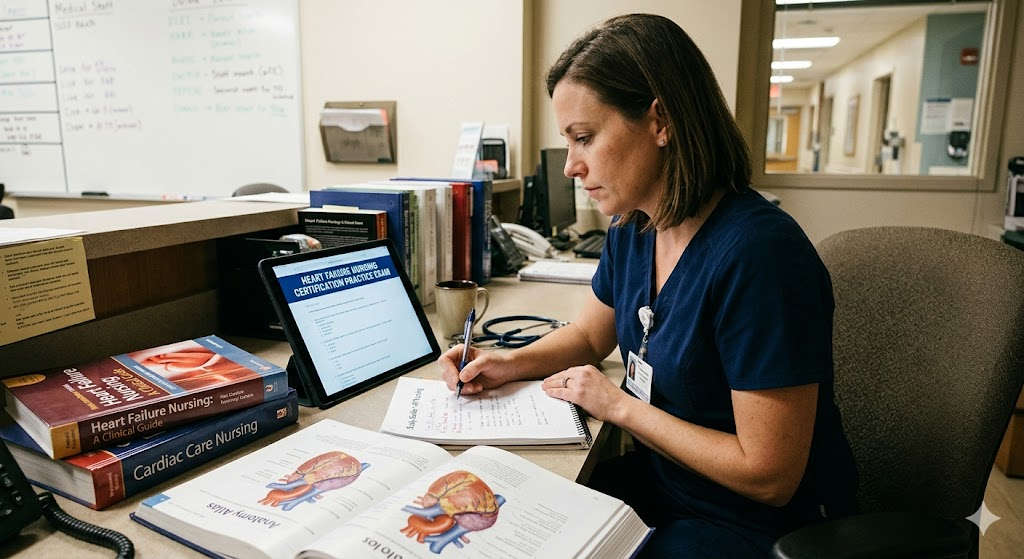
Additional Information
What the Course Entails and Exam Details
This certification exam covers a comprehensive spectrum of topics critical to expert heart failure management.
Candidates must demonstrate proficiency in the pathophysiology of heart failure, including the different types, stages, and underlying causes.
A significant portion of the syllabus is dedicated to patient assessment, diagnostic testing analysis, and pharmacological management, ensuring you understand the latest guidelines for medications such as beta-blockers, ACE inhibitors, and diuretics.
The exam also tests your knowledge of non-pharmacological interventions, device therapies (like ICDs and CRT), lifestyle modifications, and crucial patient education strategies.
Furthermore, you will encounter questions regarding symptom management, palliative care principles, and the psychosocial aspects of living with chronic heart failure.
What to Expect in the Final Exam
The final certification exam is typically administered in a computer-based format.
You can expect a challenging set of multiple-choice questions, which often include complex clinical scenarios that require the application of critical thinking rather than simple recall.
While exact details can vary by certifying body (such as the American Association of Critical-Care Nurses - AACN), the exam is generally timed, requiring you to complete all questions within a specified period, often around two to three hours.
The passing score is determined statistically to ensure a consistent standard of competency.
Specific rules, such as ID requirements and prohibited items, will be strictly enforced at the testing site, emphasizing the professional nature of the examination.
How to Study and Exam Centers
Preparation is paramount, and utilizing a targeted study strategy is essential for success.
Begin by thoroughly reviewing the official candidate handbook and the detailed test blueprint provided by the certifying organization.
Invest in recognized review courses, textbooks, and, most importantly, high-quality practice exams, like the one indicated in this guide, to familiarize yourself with the question style and manage your time effectively.
Forming study groups with colleagues or utilizing online nursing forums can provide valuable support and diverse perspectives on complex topics.
The actual examination is held at secure, proctored testing facilities, often managed by major vendors such as Pearson VUE, which have numerous centers globally.
When you are ready, you will register through the certifying body’s website and schedule your appointment at a convenient local center or, if offered, via a secure remote proctoring option.
Job Opportunities from the Course
Acquiring your Heart Failure Nursing Certification can significantly enhance your career trajectory and open doors to specialized, in-demand roles.
Hospitals and clinics prioritize certified nurses for leadership positions due to their proven expertise.
Potential job titles and career paths this certification unlocks include:
Heart Failure Clinic Coordinator
Cardiology Case Manager
Acute Care Cardiac Nurse Specialist
Cardiac Transplant Coordinator
Lead Heart Failure Nurse Clinician
Cardiac Rehabilitation Specialist
Home Health Heart Failure Specialist
Frequently Asked Questions
Reviews
5.0
Based on 0 reviews
Leave a Review
No reviews yet. Be the first to review!