
HFD Code of Conduct Practice Test
$69.00
- Buy to unlock unlimited access to all Quiz questions and Answers in this Quiz.
- After purchase you can print a PDF of the whole quiz at any point. The PDF will contain the questions and the correct answers.
About this Exam
The HFD Code of Conduct Practice Test is an essential study tool designed to help current and aspiring fire department personnel prepare for the critical assessment of their understanding of professional standards and ethics. The code of conduct is the cornerstone of trust, integrity, and safety within any fire service, and a comprehensive assessment is often a key part of the recruitment process, training academy curriculum, or periodic personnel reviews. This practice test is specifically crafted to familiarize individuals with the types of questions, scenarios, and core principles that will be evaluated, ensuring they approach the final assessment with confidence and a clear grasp of expected behaviors. It is designed for recruits, firefighter applicants, current firefighters, officers, and all personnel within a Fire Department (HFD).
Ready to test your knowledge?
Buy Now to Access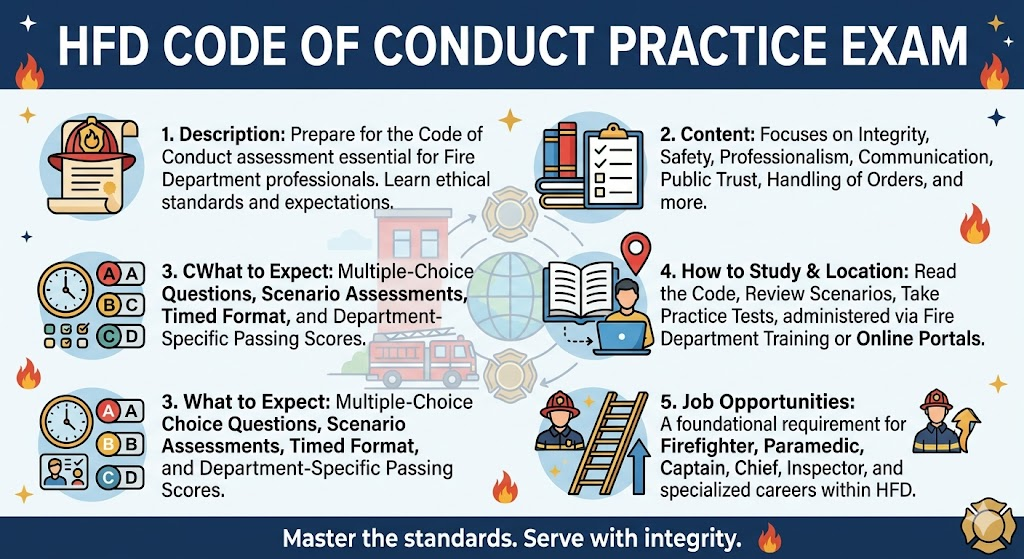
Additional Information
What the Course Entails and Exam Details
While the exact structure can vary slightly depending on the specific HFD, the foundational topics are consistent and universally critical to professional fire service. Understanding and applying these principles is what this preparation prepares you for. Common core areas covered include:
Ethical Standards: Honesty, integrity, and fair dealing in all interactions.
Professionalism: Demeanor, uniform, and conduct both on and off duty.
Safety Protocols: Adherence to safety rules and operating procedures.
Communication: Clarity, respect, and effectiveness in team and public interactions.
Respect and Dignity: Fair treatment of colleagues and the public, prohibiting harassment or discrimination.
Adherence to Orders: The importance of following legitimate instructions.
Conflict of Interest: Avoiding situations where personal interests conflict with department duty.
Public Relations: Maintaining the positive reputation and public trust.
Handling of Property & Equipment: Responsibility for department resources.
Confidentiality: Maintaining the security of sensitive information.
What to Expect in the Final Exam
Final assessments on a Code of Conduct typically use clear and illustrative question formats to gauge not just knowledge, but practical understanding and application.
Format: The final exam often consists of a combination of question types. You should expect multiple-choice questions that test specific definitions and guidelines, as well as true/false statements. Significantly, scenario-based questions are very common. These present realistic, work-related situations and require you to select the most appropriate course of action or determine which principle has been violated.
Questions: The practice test mirrors this, providing similar question types to build familiarity.
Passing Score: Requirements are determined by the individual Fire Department. However, a strong score reflecting a comprehensive understanding of all ethical and conduct requirements is generally required for recruitment or advancement.
Time Limit: Assessments are typically timed, reflecting the need for fire personnel to make sound, ethical decisions efficiently. Practice with the timed element to improve your speed and decision-making under pressure.
Rules: The final assessment will have clear rules regarding unauthorized materials, a quiet environment, and adherence to integrity, just as the code itself demands.
How to Study and Exam Centers
Effectively preparing for your HFD Code of Conduct assessment involves a mix of thorough study, practical application, and simulation:
Study the Actual Code: Your most critical resource is the official Code of Conduct document provided by your HFD. Read and re-read it until you have a thorough, nuanced understanding of every point, definition, and expectation.
Analyze Scenarios: Practice with scenario-based study questions. Think through how the code applies in each situation and discuss them with colleagues or instructors if possible. The key is applying the principles in real-world contexts.
Take This Practice Test: Use the HFD Code of Conduct Practice Test to familiarize yourself with the question types, build your knowledge base, and identify areas where you need further review. Treat it as a genuine simulation.
Discuss with Mentors: Talk to experienced firefighters and officers. Ask them about challenging situations and how they applied the code. Learning from real-world experience is invaluable.
Take Training Seriously: Pay close attention during all department-sponsored training on ethics, conduct, and professional standards.
Where to Take the Exam: Most final Code of Conduct assessments are administered internally by the specific Fire Department. This can occur in secure on-site computer labs, designated testing centers within a training academy, or through secure online portals accessible only by department members or registered recruits. Check with your department’s Human Resources or Training Division for precise instructions and locations. This is typically not an exam taken at generic centers like Pearson VUE.
Job Opportunities from the Course
Successfully completing and consistently adhering to a robust Code of Conduct is not only a job requirement but also the foundation for a fulfilling and impactful career within the fire service. Passing the assessment is an essential step on paths including:
Firefighter: The essential entry-level role, with the code guiding all actions on the front line.
Paramedic / Emergency Medical Technician (EMT): Providing medical care demands the highest standards of professional conduct.
Fire Captain: Leading a crew requires exemplary conduct as well as supervision of others.
Fire Chief: The highest leadership position, responsible for the entire department and its ethical climate.
Fire Inspector: Ensuring safety standards requires integrity and clear professional interactions.
Fire Investigator: Determining fire causes demands objectivity, professionalism, and strict adherence to protocol.
Battalion Chief: overseeing multiple fire stations and officers.
Specialized Unit Personnel: Roles in Hazmat, Technical Rescue, Aviation, and more, all demand specialized skills and unwavering conduct.
Administrative & Support Roles within the Fire Department: Personnel in areas such as dispatch, public education, and administration also must adhere to professional standards.
Adhering to a strong Code of Conduct is not just a test you pass; it's a commitment to a standard of service and life that defines a dedicated fire service professional. Good luck with your study and your practice test!
Frequently Asked Questions
Reviews
5.0
Based on 0 reviews
Leave a Review
No reviews yet. Be the first to review!