
History of Microbiology Practice Exam
$69.00
- Buy to unlock unlimited access to all Quiz questions and Answers in this Quiz.
- After purchase you can print a PDF of the whole quiz at any point. The PDF will contain the questions and the correct answers.
About this Exam
This History of Microbiology Practice Exam serves as an essential preparatory resource for students delving into the fascinating origins of the life sciences.
It is specifically meticulously designed for undergraduate biology students, aspiring microbiologists, and professionals preparing for standardized tests that include early biological concepts.
This practice module bridges the gap between raw historical knowledge and the analytical skills required to pass comprehensive examinations.
Ready to test your knowledge?
Buy Now to Access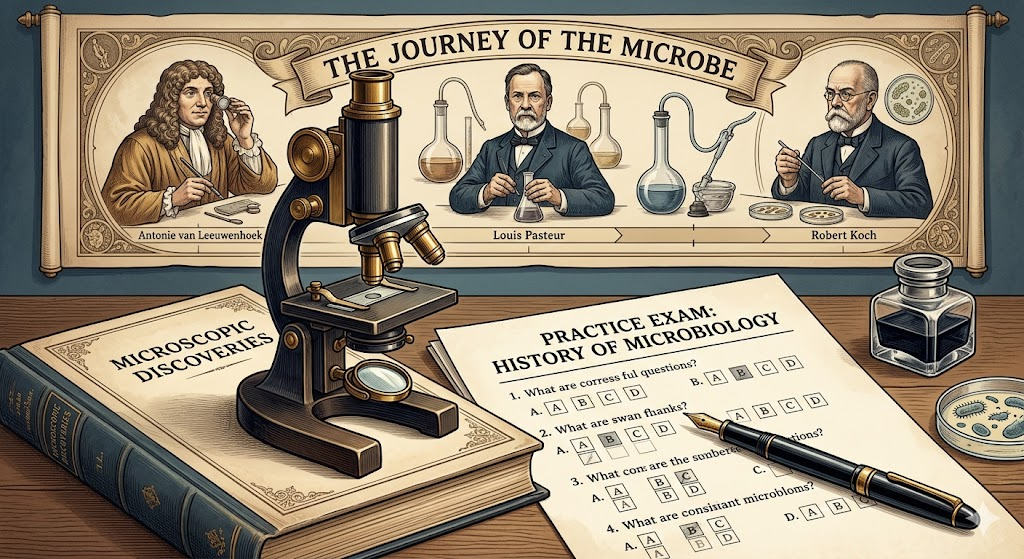
Additional Information
What the Course Entails and Exam Details
The History of Microbiology curriculum explores the foundational discoveries and the key scientists who ultimately shaped our modern understanding of microscopic life.
Key areas covered include the complete rejection of Spontaneous Generation theory and the subsequent formation of the Germ Theory of Disease.
Students will also review the massive contributions of pivotal figures such as Antonie van Leeuwenhoek, Louis Pasteur, Robert Koch, and Joseph Lister.
The practice exam specifically measures your recall and comprehension of these essential historical milestones and early scientific methodologies.
What to Expect in the Final Exam
While formats may vary by institution, candidates should expect a standard academic testing environment predominantly composed of multiple-choice questions.
A standard final examination covering this historical content typically ranges between 60 and 90 minutes.
A passing score of 70% or higher is generally required by most academic programs to demonstrate proficiency in this subject.
The official final exam will likely prohibit the use of external aids, including textbooks, personal notes, or mobile devices during the testing period.
How to Study and Exam Centers
To prepare effectively, you must utilize this practice exam repeatedly to simulate real test conditions and identify your specific knowledge gaps.
We strongly encourage creating detailed timelines of major discoveries and using flashcards for key historical figures and their experiments to enhance memorization.
The official final examination for a History of Microbiology course is typically administered directly through your university’s or college's testing center.
In many modern cases, tests may also be delivered securely online via authorized institutional learning management systems or monitored via services like Respondus.
Job Opportunities from the Course
Mastery of foundational microbiological concepts provides the critical background knowledge necessary for a wide variety of career paths in the biological sciences.
While this historical course is usually a foundational step rather than a standalone qualification, it is essential for moving into specialized roles such as: Laboratory Technician, Research Assistant, Microbiology Educator, Public Health Officer, and Quality Control Specialist (specifically in the Food or Pharmaceutical Industries).
Frequently Asked Questions
Reviews
5.0
Based on 0 reviews
Leave a Review
No reviews yet. Be the first to review!