
Hockey and Canadian Nation Practice Test
$69.00
- Buy to unlock unlimited access to all Quiz questions and Answers in this Quiz.
- After purchase you can print a PDF of the whole quiz at any point. The PDF will contain the questions and the correct answers.
About this Exam
Welcome to your study guide for the Hockey & Canadian Nation Practice Exam. This practice test is a comprehensive educational resource designed for students, educators, history buffs, and dedicated hockey fans alike. If you are pursuing academic studies in Canadian history or cultural studies, or simply seek to solidify your understanding of how deeply ice hockey is interwoven into the fabric of Canadian identity, this resource is for you.
This practice test doesn't just assess knowledge; it serves as a robust preparation tool for anyone studying the fascinating symbiotic relationship between Canada as a nation and its official national winter sport. Mastering this material demonstrates a nuanced understanding of a crucial pillar of Canadian heritage and cultural expression. Whether you're a high school student preparing for a relevant course module, a university student studying Canadian culture, or a professional aiming to validate your cultural expertise, this guide and practice exam are vital steps in your journey.
Ready to test your knowledge?
Buy Now to Access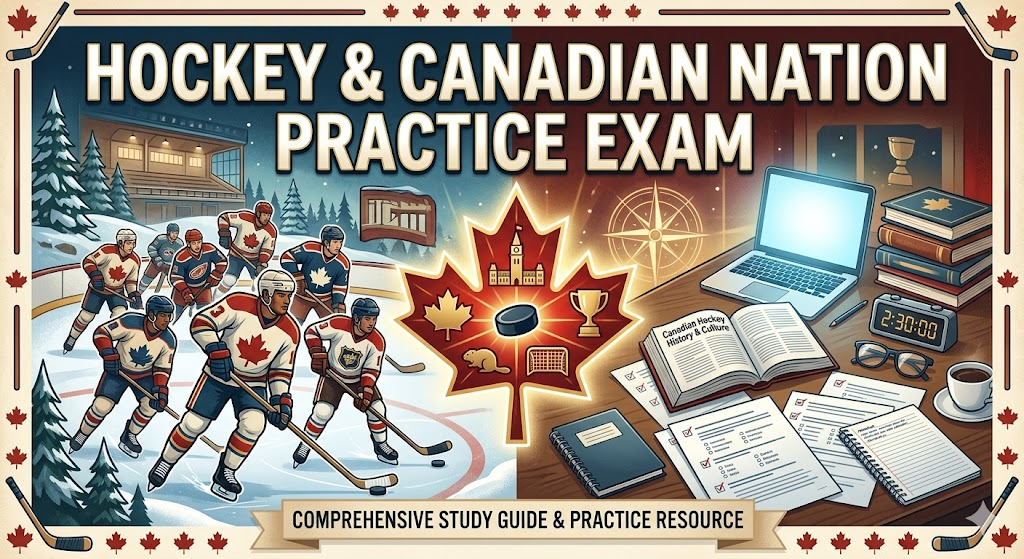
Additional Information
What the Course Entails and Exam Details
The Hockey & Canadian Nation course—for which this practice exam provides indispensable preparation—explores the historical, societal, and symbolic significance of hockey within Canada. The course material, and by extension, this practice test, usually covers the following core topics and syllabus areas:
Historical Evolution of the Game in Canada: Tracing the sport’s earliest origins from various stick-and-ball games, its consolidation in 19th-century Canada, and its expansion into professional and amateur leagues.
The Symbiotic Relationship with Canadian Identity: Investigating how hockey has been used and perceived as a defining element of what it means to be Canadian, exploring themes of national pride, community, and global representation.
Key Moments and Figures: Examining pivotal events in Canadian hockey history, from the "Original Six" era and the establishment of major leagues to legendary matches (like the 1972 Summit Series and Olympic victories) and iconic players and builders of the game.
Regional and Cultural Impact: Analyzing the diverse roles hockey plays in different parts of Canada and among various communities, including the game's relationship with French-English dynamics, regional rivalries, and the experience of diverse populations within the sport.
Societal and Economic Dimensions: Exploring the cultural rituals, societal debates, and significant economic impact surrounding the game, from grassroots involvement to professional commercialization and its influence on Canadian values and policy.
Understanding this wide scope of knowledge is essential for succeeding in the final exam.
What to Expect in the Final Exam
Details regarding the final exam for which this practice test prepares you will vary depending on the specific institution or educational body administering it. However, a final exam assessing proficiency in this subject typically possesses certain characteristics. The final exam, which this practice test mirrors, often requires registration and is typically administered at specific times by educational institutions or authorized testing bodies. Here is what you can commonly expect:
Exam Format: The test is usually a comprehensive, written assessment. It will contain a significant multiple-choice question section, designed to efficiently evaluate your foundational knowledge across all key historical and cultural topics. Additionally, it may feature short answer and potentially brief essay questions, which require a deeper, analytical exploration of core themes and specific events.
Passing Score Requirements: Passing scores are determined by the specific course, program, or certifying entity, but examples commonly range from a minimum of 70% to 80% to demonstrate substantial competence. This practice exam should be utilized with a goal of achieving high scores to ensure confidence for the actual assessment.
Time Limits: You should expect a timed exam. The final assessment could have a total duration of 2 to 3 hours, divided to reflect the weight of different sections.
Specific Rules: Standard academic integrity rules strictly apply. You should be prepared to present valid, government-issued photo identification and to take the exam without any prohibited resources (books, phones, unauthorized notes, etc.). Detailed registration and rules will be provided by your educational platform or test provider. This practice test itself does not convey official certification but is an essential preparation step towards that goal.
How to Study and Exam Centers
How to Study
Effectively preparing for the final exam requires dedication and a strategic approach. Consider the following actionable study methods:
Leverage the Practice Exam: Utilize the Hockey & Canadian Nation Practice Exam as a vital, realistic preparation tool. Mimic the exam environment by timing your attempts, analyzing your results to identify knowledge gaps, and actively studying the correct answers and associated concepts.
Study Key Historical Milestones: Create a detailed timeline of Canadian hockey history. Focus on specific dates, figures, and events, particularly those that are widely recognized as culturally defining moments. Active recall via flashcards for players, teams, and key historical facts is highly effective.
Review Cultural Significance: Deeply explore the themes covered in section 2. Read relevant historical accounts, academic articles, and perhaps even watch impactful documentaries or match highlights. Understand why certain players or events had such a large impact on Canadian society.
Engage in Discussion: Form study groups or find online forums to discuss and debate core themes with peers or mentors. Articulating your understanding of how hockey and Canadian nationhood intersect will strengthen your grasp of the material.
Consult Primary Sources: Where possible, examine primary sources like archival newspaper clippings, vintage photographs, or memoirs of key historical figures to gain a richer perspective.
Exam Centers and Administration
For information regarding the actual final exam, you must consult the guidelines of the specific university, college, high school, or educational platform that administers your course or qualification. There are various ways this type of comprehensive exam is typically delivered:
Educational Institution Platforms: Most often, if this assessment is part of an academic program, it will be taken via a secure online learning platform or in a physical classroom or proctored testing center at the institution.
Authorized Testing Centers: Some specialized certifications or high-stakes assessments are administered through third-party, secure physical testing hubs (e.g., specific authorized test delivery partners, though not typically a major generic provider like Pearson VUE for a very niche subject). Ensure you check with your proctor or program coordinator.
Secure Online Portals: Remote proctoring is becoming increasingly common. The final exam could be taken on your computer through a secure platform, requiring a webcam and microphone for supervision.
Always follow the official registration procedures and look for information regarding specific locations, available dates, and approved formats. Ensure you fulfill all registration prerequisites.
Job Opportunities from the Course
Achieving a high level of expertise in this area, validated by this knowledge base and any relevant academic achievement or certification, does not always translate into a single, direct job title. However, the comprehensive cultural understanding, critical analysis, and research skills honed in this field are highly valued in diverse, impactful career paths:
Canadian Studies Researcher: Conduct academic or institutional research into Canadian history, identity, and cultural heritage, particularly focused on social and sports-related themes.
Sports Journalist (Cultural Focus): Report and provide in-depth analysis on the cultural and societal aspects of hockey and sports, for diverse media outlets in Canada and beyond.
Museum Curator or Exhibit Developer: Specialize in historical or sports museums, managing collections or developing engaging exhibits on Canadian hockey history and culture.
Heritage Site Interpreter: Educate and guide visitors at historical sites or within programs related to Canadian social history, integrating the pivotal role of hockey.
Educational Program Developer: Create curriculum materials, public programs, or learning resources for educational institutions, community groups, or media organizations, focused on Canadian culture and heritage.
Cultural Relations Officer: Work in government agencies or non-profits organizations to promote and analyze Canadian culture and its global expression.
Content Writer/Editor (Cultural Niche): Produce high-quality, engaging content for publishers, marketing teams, or online platforms, focusing on sports history, Canadian society, and identity.
Successful completion of the relevant course and exam demonstrates significant expertise and critical thinking. It showcases a strong understanding of a profound aspect of Canadian society, which can open doors to exciting career paths. Use this practice test to solidify your knowledge and prepare for success.
Frequently Asked Questions
Reviews
5.0
Based on 0 reviews
Leave a Review
No reviews yet. Be the first to review!