
HOLT Electricians Practice Exam
$69.00
- Buy to unlock unlimited access to all Quiz questions and Answers in this Quiz.
- After purchase you can print a PDF of the whole quiz at any point. The PDF will contain the questions and the correct answers.
About this Exam
The HOLT Electricians Practice Exam is a comprehensive study guide and assessment tool meticulously designed for individuals preparing to obtain their professional electrical licenses, such as Journeyman, Master Electrician, or Electrical Contractor certifications.
This resource serves as an intensive simulated experience, aiming to replicate the style, structure, and depth of the actual competency examinations administered across various jurisdictions.
It is an essential resource for electrical apprentices finishing their training, seasoned electricians aiming for advanced licensure, and anyone dedicated to mastering the National Electrical Code (NEC) and essential electrical principles.
By successfully navigating this practice exam, candidates gain not only a clearer understanding of the material but also the confidence and speed required to excel in the high-stakes environment of the real final licensing test.
Ready to test your knowledge?
Buy Now to Access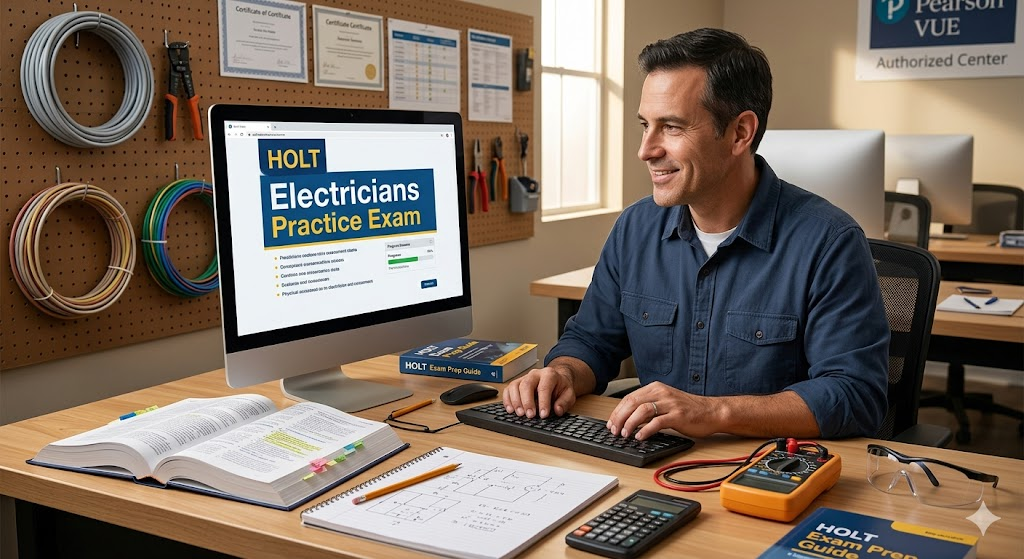
Additional Information
What the Course Entails and Exam Details
This extensive preparation material doesn't just present questions; it serves as a detailed learning guide, typically covering a broad range of core concepts that are fundamental to professional electrical work and licensure exams.
The core curriculum and exam simulations encompass:
National Electrical Code (NEC): Deep dives into understanding the code's structure, navigating various articles, and applying code regulations to diverse real-world scenarios. This is a primary focus area, including key sections on wiring methods, equipment, occupancy requirements, and specialized systems.
Electrical Theory: Comprehensive coverage of fundamental electrical principles, including Ohm's Law, DC and AC theory, series and parallel circuits, voltage, current, resistance, power, and magnetism.
Electrical Calculations: Detailed practice in essential calculations crucial for designing and installing electrical systems safely, covering areas like residential, commercial, and industrial load calculations, conductor sizing, conduit fill, grounding calculations, and voltage drop.
Grounding and Bonding: Intensive focus on the principles and requirements for effective grounding and bonding to ensure safety from electrical shock and fire.
Motors, Transformers, and Controls: Understanding the operational theory, calculations, and code requirements for installing and maintaining motors, transformers, and electrical control systems.
Lighting and Equipment: Knowledge of standard practices for installing various types of lighting fixtures, appliances, and other specialized electrical equipment.
Blueprint Reading & Safety Protocols: While often theoretical in nature, these sections may touch upon interpreting electrical diagrams and essential safety procedures, including personal protective equipment (PPE) and lockout/tagout practices.
The "course" aspect in this context generally refers to the self-paced, iterative learning process facilitated by the HOLT materials. The exam itself typically consists of multiple-choice questions with detailed answer explanations provided, which act as a powerful learning tool. The specific length and structure are designed to reflect the real exams you will encounter.
What to Expect in the Final Exam
It is critical to distinguish the HOLT Electricians Practice Exam (your preparation tool) from the actual final licensing exam you will eventually take.
The HOLT Practice Exam is your simulation; here is what you can typically expect in the standard, formal professional/state licensing exams (such as Journeyman or Master) that this course prepares you for:
Format: The final exam is almost always entirely or predominantly comprised of multiple-choice questions. It aims to test your ability to recall information, solve calculations, and, most importantly, accurately and quickly navigate and apply the National Electrical Code.
Focus Areas: A significant portion of the exam will test your facility with the NEC. You will face questions derived from various articles and be required to provide the correct code reference or apply the code to a given situation. Electrical theory and complex calculations are other major components.
Passing Score: Requirements vary significantly by state, local jurisdiction, or specific examination board. However, a score between 70% and 75% is typically considered a passing grade. Always verify the current passing score with your local licensing authority.
Time Limit: Real exams are timed, and this is where preparation with a simulated tool like the HOLT Practice Exam proves invaluable. You should expect several hours (sometimes up to four or six) to complete the entire exam. Managing your time effectively is crucial.
Reference Materials: Most formal electrical licensing exams are open book, specifically allowing you to bring and reference your official, soft-bound edition of the National Electrical Code. However, strict rules usually prohibit any electronic devices, annotated books (other than basic bound editions), or unapproved materials. The HOLT Practice Exam trains you exactly for this speed-driven NEC referencing environment.
Location & Proctoring: The actual exam will be administered at a designated, secure testing location and will be strictly proctored by authorized personnel. Some areas may offer proctored online exams under very specific conditions, but in-person testing remains very common.
How to Study and Exam Centers
How to Study
Maximize your preparation with the HOLT materials and general best practices:
Active Practice: This is not about passive reading. Do as many practice questions and full-length simulated exams as possible. Focus on doing the problems, not just reading the answers.
Understand, Don't Just Memorize: When you get a question wrong, use the detailed explanations and code references provided by HOLT to understand why the correct answer is right and why yours was wrong. Refer back to the corresponding sections in the NEC and your study materials.
Master the NEC: Since the real exam is largely a code-speed test, practice navigating the National Electrical Code. Learn the main divisions, articles, tables, and annexes. Become proficient at finding information quickly and accurately under pressure.
Focus on Weaker Areas: Use the practice results to identify the specific topics (e.g., motor calculations, grounding, specific NEC articles) where you are struggling. Dedicate extra study time to those areas.
Simulate Exam Conditions: Periodically take a full practice exam under timed, "exam-like" conditions – in a quiet space, with only the allowed reference materials (like the NEC), and without interruptions.
Build Your Own Reference: Consider using a blank codebook for highlighting key areas or adding simple, allowed index tabs during your study sessions (check your specific local rules first, but general tabs are often okay and very helpful).
Group Study: Collaborate with other aspiring electricians. Explaining concepts to others and having them explain topics to you can reinforce understanding and introduce new perspectives.
Rest and Review: Consistency is key. Study regularly in manageable sessions, but also prioritize adequate rest. Review material you've already covered frequently to keep it fresh.
Exam Centers
The HOLT materials are primarily a study resource, often accessed online or purchased as digital products/books; you don't take the practice exam at a physical center. For the actual final professional or state licensing exam, however, you will need to schedule a spot at an authorized testing center.
Licensing Board Information: Your absolute first step for scheduling and location information is to visit the official website of your state's electrical licensing board or equivalent local department. They will explicitly list their approved testing providers and centers.
Common Testing Vendors: Many professional electrical exams are administered by third-party testing vendors with network of locations across the country. Companies like PSI, Pearson VUE, or specialized state testing services are very common choices. You will usually have to register with the testing provider and find a convenient center through their online portal.
Specific Program Information: If the HOLT material is part of a larger training program or apprenticeship (as shown in search results, Mike Holt Enterprises often partners with specific entities), your program instructors or coordinators will guide you on the exact procedure, required prerequisites, and official test booking.
Schedule in Advance: As licensing exams are taken for professional qualifications, slots can fill up quickly. Register and schedule your actual exam date well in advance once you feel fully prepared.
Job Opportunities from the Course
Passing your formal electrical licensing exam (for which the HOLT Practice Exam prepares you) is a pivotal step that unlocks numerous fulfilling and well-paying career paths.
A successful score on your licensing exam can pave the way to diverse opportunities and specialized roles such as:
Licensed Journeyman Electrician: Work under the guidance of a Master Electrician, performing a wide range of electrical installations, maintenance, and repairs.
Licensed Master Electrician: Take on supervisory roles, manage projects, and oversee other electricians. Master licensure often allows you to pull permits and run your own electrical projects.
Electrical Contractor: Establish and run your own business, bidding on projects, managing staff, and being responsible for all electrical work.
Maintenance Electrician: Ensure the continued operation of electrical systems within commercial buildings, industrial facilities, or specific properties.
Industrial Electrician: Specialize in the complex electrical systems found in factories, manufacturing plants, and industrial settings.
Residential Wireman: Focus on the electrical needs of single-family homes, multi-unit buildings, and residential renovations.
Electrical Inspector: Work for government bodies or private firms, verifying that electrical work complies with the National Electrical Code and local regulations.
Control Systems Technician: Focus on the specialized wiring and programming required for automated systems, building controls, and industrial automation.
Solar PV (Photovoltaic) Installer/Technician: Apply your electrical skills within the rapidly growing renewable energy sector.
Telecommunications Technician: While often distinct, licensed electrical skills can open doors into specialized data and communication network installations.
Electrical Design and Consulting: Use your deep code knowledge and theoretical understanding to assist engineers and architects in designing electrical systems.
We understand that preparing for professional licensure can be a daunting process, but with the right resources and dedicated study, you can succeed. Utilize the HOLT Electricians Practice Exam to its fullest, stay committed, and you will be well on your way to a rewarding career as a licensed electrician!
Frequently Asked Questions
Reviews
5.0
Based on 0 reviews
Leave a Review
No reviews yet. Be the first to review!