
Home Inspection State Practice Exam
$69.00
- Buy to unlock unlimited access to all Quiz questions and Answers in this Quiz.
- After purchase you can print a PDF of the whole quiz at any point. The PDF will contain the questions and the correct answers.
About this Exam
The Home Inspection State Exam is a crucial stepping stone for aspiring professionals looking to build a rewarding career in real estate and construction oversight.
This certification test is designed specifically for individuals seeking official state licensure to operate as professional home inspectors.
By passing this examination, candidates prove their competency and readiness to evaluate the safety, structural integrity, and overall condition of residential properties.
Whether you are transitioning from a general construction background or starting an entirely new career path, this exam validates your expertise and builds immediate trust with future clients and real estate agents.
Ready to test your knowledge?
Buy Now to Access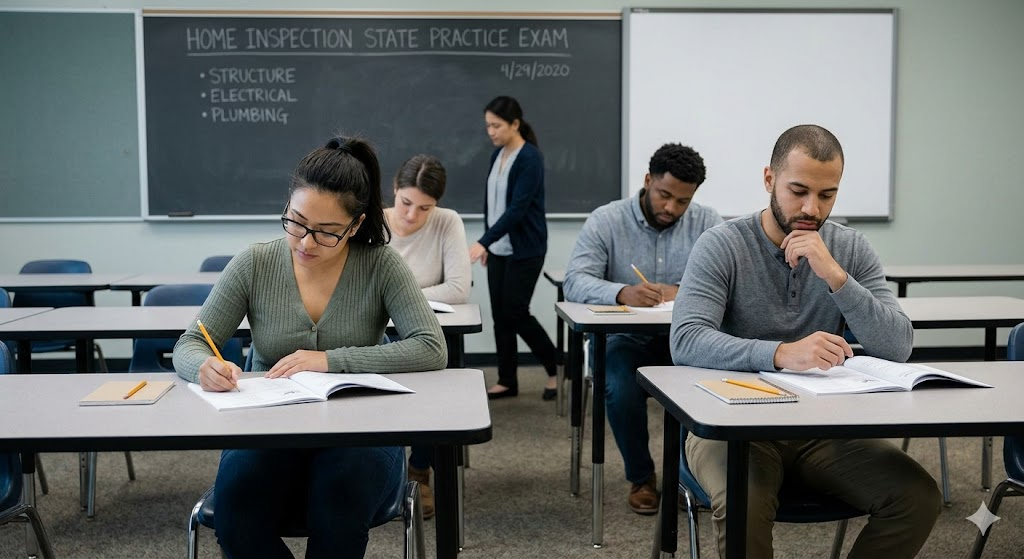
Additional Information
What the Course Entails and Exam Details
Preparing for the home inspection exam requires a deep dive into the complex systems that make up a residential property.
The core syllabus covers a broad spectrum of structural and mechanical topics to ensure inspectors can identify both obvious defects and hidden hazards.
Students will thoroughly study roofing systems, exterior siding, and structural foundations to understand how buildings withstand the elements over time.
Additionally, the curriculum entails detailed overviews of interior components, including plumbing networks, electrical panels, and heating, ventilation, and air conditioning (HVAC) systems.
Candidates also learn the critical ethical standards, state-specific building codes, and safety protocols necessary for conducting legal and accurate property inspections.
What to Expect in the Final Exam
When sitting for the official state exam, candidates should be prepared for a rigorous, comprehensive assessment of their technical knowledge.
The exam format typically consists of 150 to 200 multiple-choice questions designed to test both theoretical knowledge and practical scenario analysis.
Test-takers are generally given a strict time limit of around four hours to complete the entire assessment.
Passing score requirements vary slightly by jurisdiction, but most states require a minimum score of 70% to 75% to successfully earn licensure.
The testing environment is highly regulated, operating as a closed-book exam with strict rules prohibiting the use of smartphones, unauthorized calculators, or outside reference materials.
How to Study and Exam Centers
Success on the home inspection exam relies heavily on a structured and consistent study strategy.
Candidates are highly encouraged to take multiple timed practice exams to build test-day stamina and become familiar with the phrasing of multiple-choice questions.
Creating digital or physical flashcards is an excellent actionable method for memorizing complex electrical codes and plumbing terminology.
When you are ready to take the test, you will need to register through your state's approved testing provider.
Exams are typically administered at authorized physical testing centers, such as Pearson VUE or PSI facilities, which offer secure, proctored environments.
Some states now also offer the option to take the exam via secure, proctored online portals from the comfort of your own home, provided you meet strict webcam and software requirements.
Job Opportunities from the Course
Earning your home inspector certification opens the door to a wide variety of lucrative and stable career paths in the real estate and construction sectors.
Here are the specific job titles and career paths this certification unlocks:
Licensed Residential Home Inspector
Commercial Property Inspector
Independent Inspection Business Owner
Construction Quality Control Consultant
Municipal Building Code Official
Real Estate Appraiser Assistant
Insurance Claims Adjuster/Inspector
Historic Home Preservation Consultant
Frequently Asked Questions
Reviews
5.0
Based on 0 reviews
Leave a Review
No reviews yet. Be the first to review!