
Hospital Orientation Practice Test
$69.00
- Buy to unlock unlimited access to all Quiz questions and Answers in this Quiz.
- After purchase you can print a PDF of the whole quiz at any point. The PDF will contain the questions and the correct answers.
About this Exam
Welcome to your comprehensive guide for the Hospital Orientation Practice Exam. This critical step is designed for a diverse range of healthcare professionals, from new nursing staff and physicians to administrative personnel and technicians, entering a hospital environment. The orientation ensures that every team member is fully prepared, informed, and aligned with essential hospital protocols, safety standards, and patient care philosophies before they begin their crucial work. Think of this practice exam not just as a hurdle, but as a valuable tool to solidify your knowledge and boost your confidence for the actual orientation assessment. It's your first opportunity to demonstrate your commitment to excellence and safety within your new healthcare home.
Ready to test your knowledge?
Buy Now to Access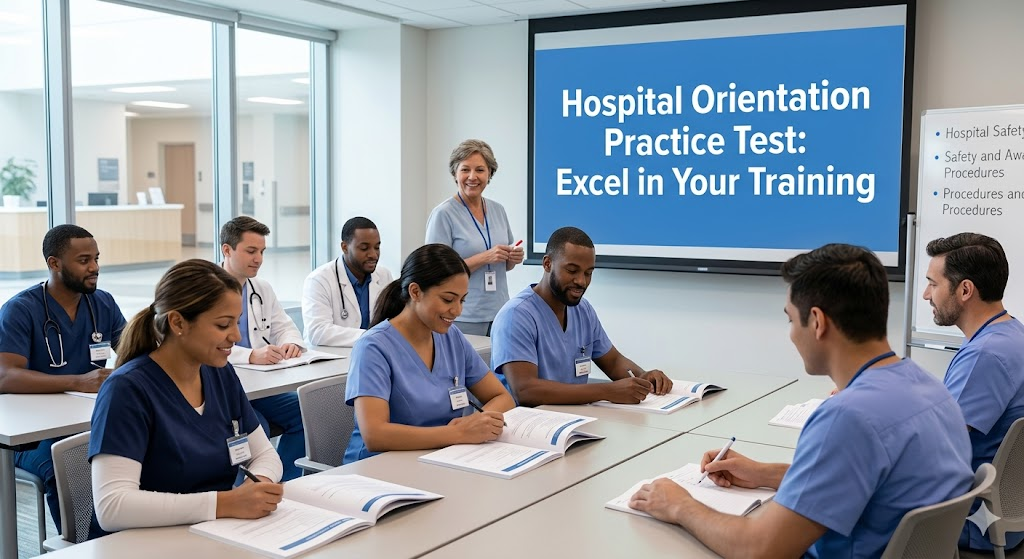
Additional Information
What the Course Entails and Exam Details
Hospital orientation courses are comprehensive, covering a broad spectrum of topics essential for safe and effective hospital operations. Through this preparation, you will delve into:
Patient Safety Protocols: Understanding and implementing measures to prevent patient harm, including medication safety, fall prevention, and correct patient identification.
Infection Control Measures: Mastering proper hand hygiene, sterilization techniques, and containment procedures crucial for preventing healthcare-associated infections.
HIPAA Compliance and Patient Privacy: Learning the intricate details of safeguarding sensitive patient health information and maintaining strict confidentiality.
Emergency Procedures: Familiarizing yourself with hospital codes (like Code Blue, Code Red), evacuation routes, and response protocols for various emergencies.
Cultural Competency and Communication: Developing skills for respectful and effective communication with diverse patient populations and colleagues, enhancing teamwork and patient satisfaction.
Hospital Policies and Ethics: Reviewing core organizational policies, ethical guidelines, and reporting structures.
Healthcare Technology: An introduction to the Electronic Health Record (EHR) systems and other essential medical technology specific to your institution.
While specific course content and exam details can vary significantly between hospitals and regional healthcare systems, they are always structured to reflect the most current standards in safety and regulatory compliance.
What to Expect in the Final Exam
The actual Hospital Orientation assessment is usually a written or computer-based test designed to gauge your understanding of the orientation material. Here is what you can commonly expect:
Format: The predominant format is multiple-choice questions, which efficiently test recall and application of key facts and procedures. Some exams may include true/false, matching, or brief scenario-based questions that require critical thinking.
Passing Score: To successfully complete orientation, you will typically need to achieve a specific passing score, often ranging from 75% to 85% or higher, reflecting the high standards for safety and compliance. Retakes may be permitted depending on hospital policy.
Time Limit: You will generally be allocated a reasonable amount of time to complete the exam, often ranging from one to two hours, allowing you to carefully read and consider each question.
Specific Rules: The exam is usually proctored or administered via secure online systems, and specific rules regarding resources (typically no open books or external devices) will be clearly stated. Your focus and integrity are paramount.
The exact number of questions and time allowed can differ, so it's best to check with your specific human resources department or orientation coordinator for precise details.
How to Study and Exam Centers
Preparation is key to succeeding in your Hospital Orientation Exam. Here are proven strategies to help you excel:
Review Orientation Materials: Actively engage with all orientation presentations, handbooks, and online modules provided by your hospital. Take diligent notes on key concepts and protocols.
Utilize Practice Resources: Seek out official practice tests, quizzes, and sample questions often available through your hospital’s learning management system or from external educational providers specializing in healthcare orientation.
Collaborate with Peers: Form study groups with fellow new hires. Discussing scenarios and quizzing each other can significantly enhance understanding and retention.
Focus on Scenarios: Pay special attention to scenario-based questions in practice materials, as these simulate real-world situations you will encounter and test your ability to apply knowledge effectively.
Manage Your Time: When practicing, time yourself to simulate the exam conditions and build your confidence in answering questions within the allotted time.
Understand the 'Why': Don't just memorize rules; understand the rationale behind safety protocols, infection control measures, and ethical guidelines. This deeper understanding will make recall and application much easier.
As for where to take the exam, this is entirely dependent on your hospital's specific procedures:
Hospital Facilities: The most common setting for the final orientation exam is on-site at the hospital, either in dedicated computer labs, training rooms, or sometimes through a proctored session within a specific department.
Online Portals: Many modern hospitals leverage secure online learning platforms or employee portals, allowing you to complete orientation modules and the final exam conveniently from home or any location with internet access, within a specified timeframe.
The hospital’s human resources or training department will provide clear instructions on scheduling and accessing your orientation materials and exam, guiding you through every step of this essential process.
Job Opportunities from the Course
Successfully completing your hospital orientation is the gateway to a multitude of vital roles within the healthcare system. While not a certification itself that unlocks new job titles externally, passing your orientation is mandatory for starting your career in the position you were hired for. It’s the final check before you begin making a difference in:
Registered Nurse (RN) positions across all specialties (ICU, ER, Med-Surg, Pediatrics, etc.)
Licensed Practical/Vocational Nurse (LPN/LVN) roles
Certified Nursing Assistant (CNA) or Patient Care Technician (PCT) positions
Physician and Resident positions in various departments
Allied Health roles (Respiratory Therapist, Physical Therapist, Occupational Therapist, Pharmacist, etc.)
Radiology and Medical Laboratory Technician positions
Hospital Administration and Clerical roles (Admissions, Scheduling, Medical Records, etc.)
Support Services positions (Housekeeping, Food Services, Maintenance, etc., all critical for patient environment and safety)
Passing this exam signifies you are prepared to contribute safely and effectively to the hospital's mission, ensuring your career journey in healthcare begins on the solid foundation of knowledge and preparedness.
Frequently Asked Questions
Reviews
5.0
Based on 0 reviews
Leave a Review
No reviews yet. Be the first to review!