
HST/C Precision Standard 4 – Pharmacology Principles & Medication Administration Practice Test
$69.00
- Buy to unlock unlimited access to all Quiz questions and Answers in this Quiz.
- After purchase you can print a PDF of the whole quiz at any point. The PDF will contain the questions and the correct answers.
About this Exam
The HST/C Precision Standard 4 – Pharmacology Principles & Medication Administration exam is a standardized industry certification designed primarily for students in Career and Technical Education (CTE) health science pathways. This exam validates that a candidate possesses foundational, entry-level knowledge of pharmacology and the critical skills required for safe medication administration. It is an ideal credential for individuals aiming to begin their careers as direct care professionals, such as medication aides or pharmacy technicians, ensuring they have the competence to protect patient safety.
Ready to test your knowledge?
Buy Now to Access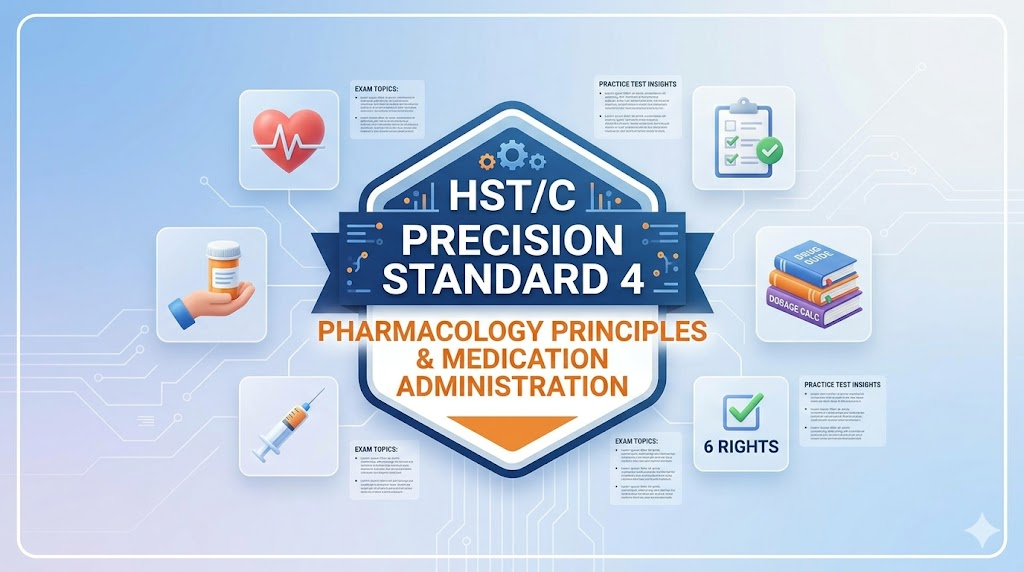
Additional Information
What the Course Entails and Exam Details
This certification course is structured around the critical knowledge and skills necessary to prepare, administer, and document medications safely. It combines theoretical pharmacology with practical, scenario-based application.
The core domains covered include:
Foundational Pharmacology: Introduction to drug terminology, sources of drugs, drug legislation, and the foundational principles of pharmacokinetics (how the body processes drugs, including absorption, distribution, metabolism, and excretion).
Drug Classifications: Understanding major drug classes, their indications (why they are given), expected therapeutic effects, potential side effects, and common adverse reactions.
Medication Orders and Documentation: Interpreting physician orders accurately, understanding standard medical abbreviations, and mastering the process of documenting medication administration in a Medication Administration Record (MAR).
Safety and Errors: Prioritizing patient safety, recognizing the importance of error reporting, and understanding how to prevent common medication errors.
The Six Rights of Medication Administration: A comprehensive mastery of the critical checkpoints that must be verified before every single dose: Right Patient, Right Medication, Right Dose, Right Route, Right Time, and Right Documentation.
What to Expect in the Final Exam
The final HST/C Standard 4 exam is a computer-based, timed assessment that is delivered in a proctored environment. It focuses on validating a candidate's cognitive understanding of the technical standards.
Exam Format: The test consists primarily of multiple-choice questions. It includes knowledge-based questions (e.g., matching a drug class to its function) and application-based scenarios (e.g., deciding the correct action after a specific patient scenario).
Time Limit: Candidates are typically given 60 to 90 minutes to complete the entire exam.
Passing Score: While specific passing scores can vary slightly by state or institution utilizing the standard, a typical passing benchmark ranges from 70% to 80%.
How to Study and Exam Centers
Preparation is key to succeeding in this rigorous technical exam. We recommend a multi-faceted study strategy to ensure comprehensive understanding.
Actionable Study Strategies:
Focus on the Six Rights: Do not just memorize them; understand the clinical rationale for each one. Practice walking through a simulation where you verify each "right" in a complex scenario.
Create Drug Class Flashcards: Organize your study by classification (e.g., Antibiotics, Analgesics, Antihypertensics). For each class, list key terms, intended effects, and one or two critical side effects to watch for.
Practice MAR Reading: Get comfortable reading sample Medication Administration Records and physician order sheets to quickly identify inconsistencies.
Use Practice Tests: Regularly taking timed practice exams will help you become familiar with the multiple-choice format and improve your time management skills.
Exam Centers: The HST/C Precision Standards are often delivered through the YouScience/Precision Exams platform. These exams are typically taken online at authorized testing locations, which are usually the high schools, technical colleges, or CTE centers where the health science course is taught. You should coordinate with your instructor or program administrator to find out the specific testing schedule and proctoring procedures for your location.
Job Opportunities from the Course
Earning the HST/C Precision Standard 4 certification in Pharmacology Principles & Medication Administration unlocks a variety of entry-level career paths in the high-demand health support sector. This credential tells employers you are ready to work safely from day one.
Specific job titles and career paths this certification unlocks include:
Certified Medication Aide (CMA)
Medication Technician (Med Tech)
Certified Nursing Assistant (CNA) with Medication Endorsement
Home Health Aide (HHA) with medication responsibilities
Patient Care Technician (PCT)
Pharmacy Technician (foundational knowledge)
Assisted Living Facility Caregiver
Frequently Asked Questions
Reviews
5.0
Based on 0 reviews
Leave a Review
No reviews yet. Be the first to review!