
Hunter-Ed Certification Practice Exam
$69.00
- Buy to unlock unlimited access to all Quiz questions and Answers in this Quiz.
- After purchase you can print a PDF of the whole quiz at any point. The PDF will contain the questions and the correct answers.
About this Exam
The Hunter-Ed Certification is the official hunter safety course recognized by many state wildlife agencies across the United States and Canada. This comprehensive program is designed to educate new and existing hunters on the essential skills and ethical practices required for a lifetime of safe hunting.
Completing this course and passing the final, official exam is often a legal requirement for purchasing a hunting license, especially for those born after a certain date or first-time licensees. The certification process ensures that all hunters share a foundational understanding of safety, law, and conservation.
Ready to test your knowledge?
Buy Now to Access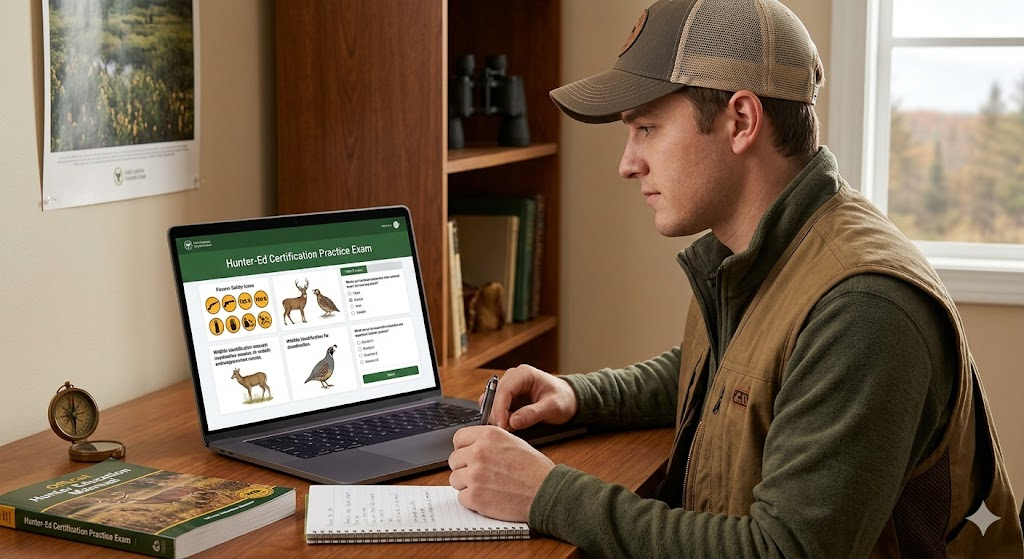
Additional Information
What the Course Entails and Exam Details
The core topics and skills covered in the extensive Hunter-Ed course, which you can expect to encounter in practice and final exams, include:
Firearm Safety: Detailed instruction on the safe handling, loading, and storing of various types of firearms (rifles, shotguns, handguns). Key rules like TAB-K (Treat every firearm as loaded, Always point muzzle in safe direction, Be sure of your target and what is beyond, Keep finger off trigger until ready to fire) are heavily emphasized.
Bowhunting & Treestand Safety: Specific rules for archery equipment and extensive guidelines for the proper use and safety precautions when hunting from elevated treestands.
Wildlife Conservation and Management: Understanding the role of hunters in conservation, wildlife habitat principles, and the science behind sustainable hunting.
Wildlife Identification: Learning key physical and behavioral characteristics to distinguish common game species and identify protected animals.
Hunter Ethics and Responsibility: Exploration of ethical considerations, respect for landowners, public perception of hunters, and the importance of following hunting regulations.
Survival Skills & First Aid: Basic outdoor survival techniques, map and compass use, first aid for common field injuries, and preparation for outdoor emergencies.
The official final state exam is a comprehensive assessment of these crucial topics. Thoroughly engaging with the course materials and utilizing high-quality practice exams are essential steps in preparing to meet the required knowledge standard. Practice exams will help you become familiar with the structure of questions and the key principles that are likely to be tested on the official examination.
What to Expect in the Final Exam
While the specific details can vary by state, you can typically expect the final official Hunter-Ed exam to follow this format:
Format: The final exam is almost always a comprehensive written test, typically featuring multiple-choice or true/false questions.
Passing Score: Most jurisdictions require a high passing score, commonly 80% or higher, to demonstrate adequate knowledge and receive your certification card.
Time Limits: Fully online, self-paced versions of the final exam may not have a strict time limit. However, state-specific proctored final exams, sometimes required for in-person or combined courses, often have designated time windows.
Delivery & State Specifics: Depending on the regulations in your specific state, the official final exam can be integrated into an all-online course taken from home, or you may be required to register for and attend an in-person, proctored exam and/or a field day that includes a practical skills evaluation.
Rules: Proctored exams must be taken at authorized centers under supervision. Fully online exams are often accessible anytime through state-approved provider websites. Retake policies for official exams can be specific, so a thorough review of course materials is strongly encouraged before your first attempt. Always consult your official state wildlife agency website for the most accurate and up-to-date details on your specific state's hunter education and final exam requirements.
How to Study and Exam Centers
Effective preparation is key to succeeding on the official Hunter-Ed final exam.
How to Study:
Engage Fully with Official Materials: Work through every chapter and lesson of the state-approved Hunter-Ed course materials, including text, videos, animations, and practice quizzes.
Utilize Practice Exams: Practice is invaluable. Use multiple resources to find high-quality [Hunter-Ed Certification Practice Exams] to simulate the test environment, get familiar with question styles, and identify areas where your understanding needs improvement. Review both correct and incorrect answers to reinforce your knowledge.
Review Key Rules & Formulas: Memorize safety protocols (like TAB-K), common hunting regulations, and wildlife identification traits. Make flashcards or summaries.
Get Hands-on Experience: If you are a beginner, especially if your state requires a field day, safely practice practical skills like firearm handling and outdoor navigation under the supervision of a certified instructor or an experienced, ethical mentor.
Exam Centers:
Authorized Platforms: For states with fully online certification, you can complete the course and take the official final exam directly through state-approved online providers and their integrated portals.
State Wildlife Agency Websites: Regardless of the type of course you take, the primary and most accurate source for official information on hunter education requirements, authorized exam providers, and the location/dates of any mandatory in-person field days or proctored exams is your state's wildlife or natural resources agency website. They typically list authorized locations, which can include community centers, shooting ranges, outdoor education facilities, and sometimes even specific high schools or colleges. Registration for any required in-person sessions must be done through official state-sanctioned channels.
Practice exams themselves are not the official certification mechanism and do not require a specific official center.
Job Opportunities from the Course
While the primary goal of the Hunter-Ed Certification is to promote safety and ethical hunting, achieving it is a significant step that opens doors and is often a foundational requirement or a desired credential for numerous career paths within the outdoor, wildlife, and natural resource industries. Note: Most of the full-time careers listed below require substantial further education, training, and professional experience.
Potential career opportunities where this certification is relevant or beneficial include:
Hunter Safety Instructor (Volunteer or occasionally Paid roles within state programs)
Conservation Officer or Wildlife Game Warden (this certification is a foundational requirement, but full roles often demand a college degree, training academy, and rigorous application process)
Wildlife Technician (entry-level state or federal roles, sometimes require degree or relevant coursework)
Hunting Guide or Outfitter (may require state licenses, insurance, extensive experience, and other certifications like first aid)
Range Safety Officer or Instructor (at shooting ranges, outdoor clubs)
Wildlife Biologist Assistant (supporting full biologists, often requires degree)
Outdoor Recreation Coordinator or Leader
Shooting Sports Instructor
Roles with State/Federal Wildlife & Natural Resource Agencies (in education, outreach, and resource management)
Positions with outdoor equipment manufacturers, outfitters, or specialty outdoor retail stores (knowledge of safety and ethical hunting principles is a significant asset)
Completing your Hunter-Ed Certification represents your commitment to safe and responsible outdoor recreation. Study diligently, utilize all practice resources, and look forward to a fulfilling life as a knowledgeable and ethical hunter. Good luck!
Frequently Asked Questions
Reviews
5.0
Based on 0 reviews
Leave a Review
No reviews yet. Be the first to review!