
HVAC Journeyman Practice Exam
$69.00
- Buy to unlock unlimited access to all Quiz questions and Answers in this Quiz.
- After purchase you can print a PDF of the whole quiz at any point. The PDF will contain the questions and the correct answers.
About this Exam
The HVAC Journeyman certification is a critical milestone for HVAC professionals, marking the transition from an supervised apprentice to a recognized, competent technician authorized to work independently on residential and commercial systems. This exam is specifically designed to validate your comprehension of fundamental HVAC theory, system operation, safety protocols, and current trade codes. Achieving this licensure demonstrates to employers, clients, and regulatory bodies that you possess the advanced knowledge and practical skills required to diagnose, repair, and install complex heating, ventilation, and air conditioning systems safely and effectively.
Ready to test your knowledge?
Buy Now to Access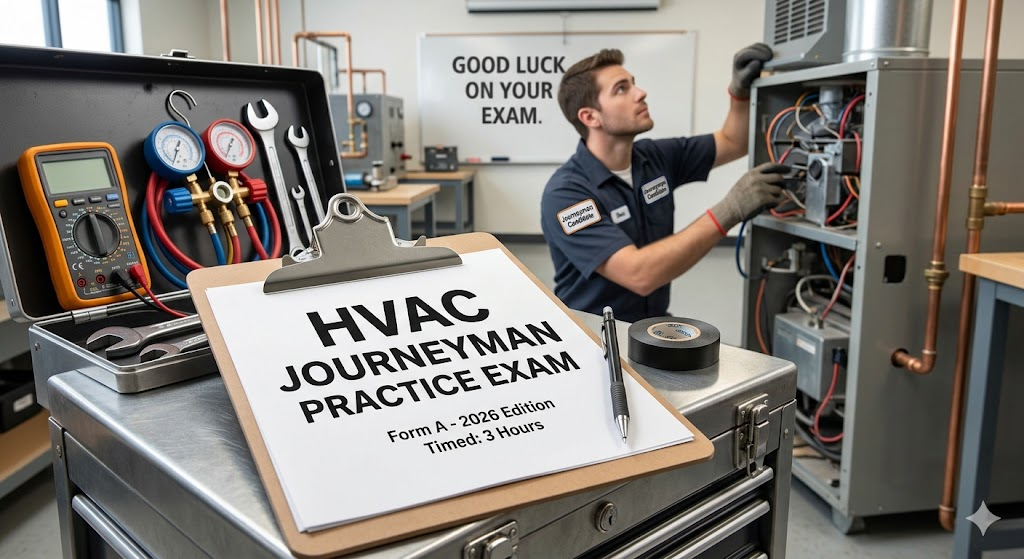
Additional Information
What the Course Entails and Exam Details
This comprehensive course or self-study journey covers a vast array of technical and practical knowledge pillars. While the specific syllabus can vary slightly by jurisdiction or certifying body, the core topics you must master include: Fundamental HVAC theory, encompassing the refrigeration cycle, thermodynamics, and fluid mechanics. Advanced knowledge of electrical systems, including wiring schematics, troubleshooting circuits, motors, and controls. Thorough understanding of varied heating systems such as gas and oil furnaces, heat pumps, and electric heat systems. Mastery of air conditioning and refrigeration principles, load calculations (Manual J), equipment sizing, and proper charging techniques. Safety is paramount, covering OSHA regulations, personal protective equipment (PPE), lockout/tagout procedures, and safe handling of refrigerants (EPA 608 compliance). Furthermore, you must be intimately familiar with the International Mechanical Code (IMC) and specific state or local amendments that dictate installation standards.
What to Expect in the Final Exam
While the format can differ significantly by state or city licensing board, the typical HVAC Journeyman exam is designed to be a challenging assessment of both theoretical knowledge and practical application. Most commonly, the exam consists of a written, multiple-choice section that can range from 100 to over 200 questions. These tests are usually time-limited, often allowing between two and four hours for completion. The passing score is typically set between 70% and 75%. Some jurisdictions may also require a separate practical or hands-on component where you must demonstrate skills such as wiring a control board, diagnosing a faulty component, or performing a specific installation task to code. In many regions, the written exam is "open book," allowing you to reference specific code books like the IMC, but success hinges on your speed and accuracy in locating the correct regulations, not on memorization alone.
How to Study and Exam Centers
Effective preparation for the HVAC Journeyman exam requires a multi-faceted approach. To study efficiently, you should: Dedicate significant time to reviewing your trade textbooks, particularly focusing on theory and system fundamentals. Become a code expert; highlight and tab your code books (e.g., IMC, IFGC) so you can rapidly find references during the exam. Utilize practice exams extensively. Practice tests are invaluable for identifying your knowledge gaps and helping you get comfortable with the exam’s timing and phrasing. Many specialized HVAC training schools and online portals offer dedicated prep courses that provide structured reviews, mock exams, and test-taking strategies. The exam itself is rarely administered directly by a generic school. It is typically scheduled through your state or local licensing board, which often contracts with official third-party testing organizations like Pearson VUE or PSI. Once you meet the prerequisite experience requirements, you will apply to your board to receive authorization to test, after which you can schedule your session at a physical testing center near you.
Job Opportunities from the Course
Earning your HVAC Journeyman license unlocks a wide array of career paths and significant earning potential within the skilled trades. This certification is a prerequisite for advancing your career and holding many specialized roles. Some of the direct job opportunities and paths unlocked by this achievement include:
Licensed HVAC Service Technician
Lead HVAC Installer
Refrigeration Technician
Commercial HVAC Specialist
Maintenance Mechanic/Supervisor
HVAC Facility Manager
Project Manager
Sales Engineer or HVAC Sales Specialist
HVAC Instructor
Entrepreneur (allowing you to operate your own business after gaining master status in many regions)
Frequently Asked Questions
Reviews
5.0
Based on 0 reviews
Leave a Review
No reviews yet. Be the first to review!