
Hydraulic Excavator (HYEX) 12N Practice Test
$69.00
- Buy to unlock unlimited access to all Quiz questions and Answers in this Quiz.
- After purchase you can print a PDF of the whole quiz at any point. The PDF will contain the questions and the correct answers.
About this Exam
Welcome to your definitive guide for preparing for the Hydraulic Excavator (HYEX) 12N qualification exam. This certification, typically associated with the US Army Military Occupational Specialty (MOS) 12N for Horizontal Construction Engineer, confirms a high level of competency and safety awareness in the operation of complex hydraulic excavators (HYEX). This crucial role involves utilizing powerful machinery to complete essential earthmoving and construction tasks, often in demanding environments. This practice test study guide is specifically designed for soldiers currently in Advanced Individual Training (AIT), individuals preparing for unit-specific qualifications, and aspiring construction engineers seeking a robust understanding of the skills and knowledge validated by this important credential.
Ready to test your knowledge?
Buy Now to Access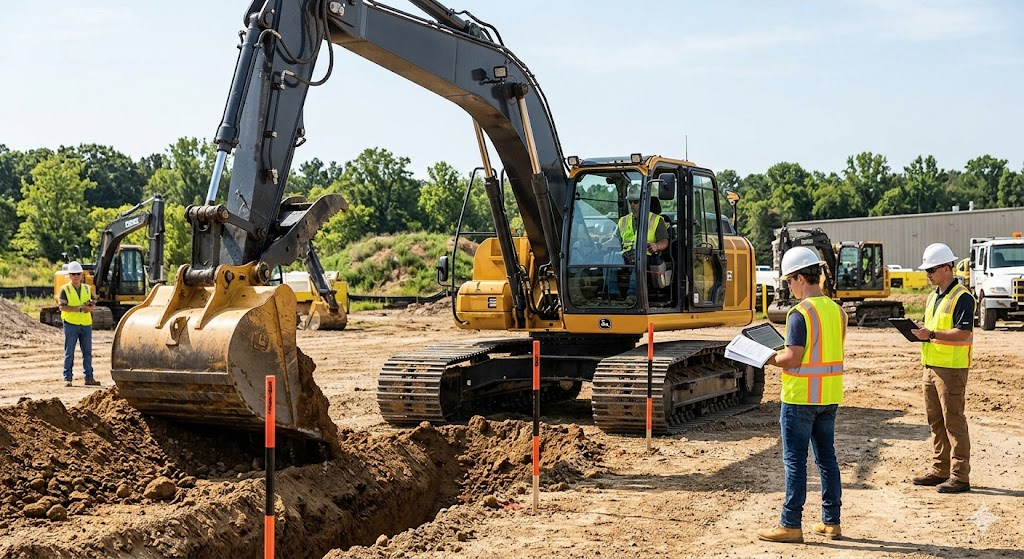
Additional Information
What the Course Entails and Exam Details
Preparation for the final HYEX 12N qualification usually involves intensive Advanced Individual Training (AIT), typically centered at Fort Leonard Wood, Missouri, the home of the Army Engineer Regiment. The training curriculum is comprehensive, often spanning approximately 9 weeks, and integrates both crucial theoretical knowledge and extensive hands-on experience. A potential "practice test" would cover the fundamental knowledge and operational procedures detailed in official military technical manuals (such as TM 5-3805-294-10 for standard hydraulic excavators) and related Army regulations.
The practical aspect of the training and subsequent qualification focuses on developing proficiency in critical excavator operator tasks, including:
Machine Operation & Controls: Full understanding and mastery of all excavator controls, hydraulic systems, and functions for precise movement and efficient operation.
Safety Procedures: Deep knowledge of and unwavering compliance with site safety protocols, including power line avoidance, trench safety, hazard identification, and use of personal protective equipment (PPE).
Preventive Maintenance Checks and Services (PMCS): The ability to perform thorough before-, during-, and after-operation checks and services to ensure the excavator remains operational, safe, and mission-ready. This includes inspecting undercarriages, fluids, structures, and systems.
Operational Techniques: Learning effective methods for key excavator tasks like excavating (digging trenches, foundations, and basins), stockpiling materials, backfilling excavations, lifting operations (using appropriate attachments and procedures), and loading haul vehicles.
Grade Stake and Soil Interpretation: Basic proficiency in reading and interpreting grade stakes for construction layout and understanding different soil types to adapt operation and ensuring stable and safe excavations.
What to Expect in the Final Exam
While the exact structure of the final qualification can vary, it universally involves a rigorous evaluation of both conceptual knowledge and practical ability. The assessment is designed to determine if you can operate a hydraulic excavator safely and effectively on a construction site or in a military environment. A comprehensive final exam typically comprises two main components:
Written (Theory) Examination: Expect a comprehensive written test, likely in a multiple-choice format, designed to evaluate your understanding of essential excavator concepts. Questions are typically drawn from operator manuals, safety guidelines, maintenance procedures, and operational principles. This section often covers topics like:
Reading and interpreting official technical manuals (TMs).
Deep understanding of safety signs, signals, and regulations (OSHA standards, military policies).
Component identification, control functions, and system knowledge (hydraulics, engines, structural elements).
Operational safety (trench safety, slope stability, lifting capacities).
PMCS procedures and maintenance best practices.
Understanding and interpretation of grade and construction stakes.
Soil identification and stability assessment.
Practical (Hands-on) Examination: The core of the qualification is the practical evaluation. This performance-based component requires you to demonstrate proficiency in a variety of fundamental operator tasks under the watchful eye of a certified instructor. Evaluations typically take place on a range of actual hydraulic excavator models (e.g., specific John Deere, Komatsu, or Caterpillar excavators used by the military). Instructors will score you on factors like:
Accuracy and efficiency in performing tasks (e.g., digging a specified trench, leveling an area, loading material).
Proper use of controls and smooth, precise machine movement.
Strict adherence to all safety protocols throughout the entire practical session. This is typically the most critical factor, and severe safety violations can result in immediate failure.
Successful and accurate execution of PMCS steps before and after operation.
Demonstration of proper startup and shutdown procedures, and correct maneuvering of the equipment.
Success in both the written and practical portions, with a particularly high emphasis on consistent, safe operation, is required to earn the HYEX 12N qualification and move forward in your career as an equipment operator.
How to Study and Exam Centers
Effective preparation for the rigorous HYEX 12N qualification exam requires a dedicated and multifaceted study approach. Your training is primarily delivered through the military, with study materials provided. However, active and focused study strategies will maximize your chances of success.
Actionable Study Strategies:
Master the Technical Manuals (TMs): Your primary resource should be the official Army Technical Manual for the specific hydraulic excavator you are training on (e.g., TM 5-3805-294-10 for the John Deere 240D LCR). Read it thoroughly, annotate it, and study it diligently. Pay particularly close attention to operator checks, safety instructions, and maintenance procedures.
Focus on Safety Protocols: Prioritize safety above all else. Review safety regulations, site-specific rules, and the safety sections of the TMs until you can recall key points instinctively. Practice situational safety questions and scenarios.
Engage in Consistent Hands-on Practice: The practical exam is performance-based. Utilize every minute of your practical exercise time effectively. Solicit feedback from your instructors, practice repetitive tasks with precision, and focus on smooth, safe operation. Pay special attention to developing the "muscle memory" needed for control operation.
Learn PMCS Procedures Cold: You must be able to perform every step of the PMCS checklist accurately and confidently. Practice it repeatedly until it becomes routine. Memorize the crucial checklists and the rationale behind each check.
Seek Practice Resources & Review: Utilize any practice materials, study guides, or lesson plans provided during your AIT. Discuss topics with fellow trainees, ask questions of your instructors, and actively participate in review sessions. Look for online resources that might mirror generic heavy equipment operator safety and operation principles to broaden your knowledge, while ensuring they align with military standards.
Practice Grade Stake & Soil Recognition: Familiarize yourself with standard construction grade stake markings and different types of soils, understanding their operational implications and stability characteristics.
Exam Centers: The final qualification for the HYEX 12N and your corresponding MOS credential is almost exclusively administered internally within the military. It is integrated into the training cycle at designated Army training facilities (primarily Fort Leonard Wood for AIT) or within your assigned unit after you have completed initial training. You will receive specific directions from your training cadre or unit leadership regarding the time and location of your qualification exams. If you are a civilian or veteran with related experience looking to obtain equivalent civilian certifications, you would typically follow a different path through private trade schools, operator unions (like the IUOE), or civilian heavy equipment testing centers (e.g., through organizations like NCCER or state-specific certification programs). Military credentials can sometimes provide a streamlined path to these civilian equivalents through programs like Army COOL, which can assist in funding and preparing for civilian-recognized tests.
Job Opportunities from the Course
Successfully earning the HYEX 12N qualification as part of the MOS 12N training opens numerous doors within the military and sets you on a clear path to a potentially lucrative civilian career. The specialized heavy equipment skills you develop are in high demand across both sectors.
Military Roles:
Army Horizontal Construction Engineer (MOS 12N)
Excavator Operator
Construction Foreman / Supervisor (with experience and promotion)
Construction Project Manager (with experience and promotion)
Civilian Roles:
Hydraulic Excavator Operator
Heavy Equipment Operator (broadly across various machines)
Construction Equipment Mechanic (especially with hydraulic expertise)
First-Line Supervisor / Foreman of Construction Trades
Construction Project Manager / Superintendent
Public Works Maintenance Worker
Pipeline Equipment Operator
Excavating and Loading Machine Operator
Crane and Tower Operator (with additional training)
The skills and qualification you earn provide a clear trajectory into a fulfilling and valuable career, whether you choose to serve your country in uniform or apply your expertise in the dynamic civilian construction industry. Good luck in your training and preparation – with dedication and practice, you can succeed!
Frequently Asked Questions
Reviews
5.0
Based on 0 reviews
Leave a Review
No reviews yet. Be the first to review!