
IAC Canine Physical Practice Exam
$69.00
- Buy to unlock unlimited access to all Quiz questions and Answers in this Quiz.
- After purchase you can print a PDF of the whole quiz at any point. The PDF will contain the questions and the correct answers.
About this Exam
The International Association of Canine Practitioners (IAC) Canine Physical Practice (CPP) certification is a unique credential designed for dedicated canine professionals seeking to elevate and formalize their skills in hands-on, non-invasive canine wellness. This comprehensive program bridges the gap between basic canine care and advanced veterinary rehabilitation, focusing on a holistic, preventive, and supportive approach to a dog's physical health. The course and final exam are tailored for a diverse group, including canine massage therapists, hydrotherapists, specialized dog trainers, veterinary assistants, and dedicated pet owners wishing to develop a deep, practical understanding of their companion's physical well-being. By earning the CPP designation, practitioners demonstrate a standardized level of competency in understanding canine anatomy, assessing movement, and applying effective physical techniques to improve comfort, flexibility, and overall quality of life.
Ready to test your knowledge?
Buy Now to Access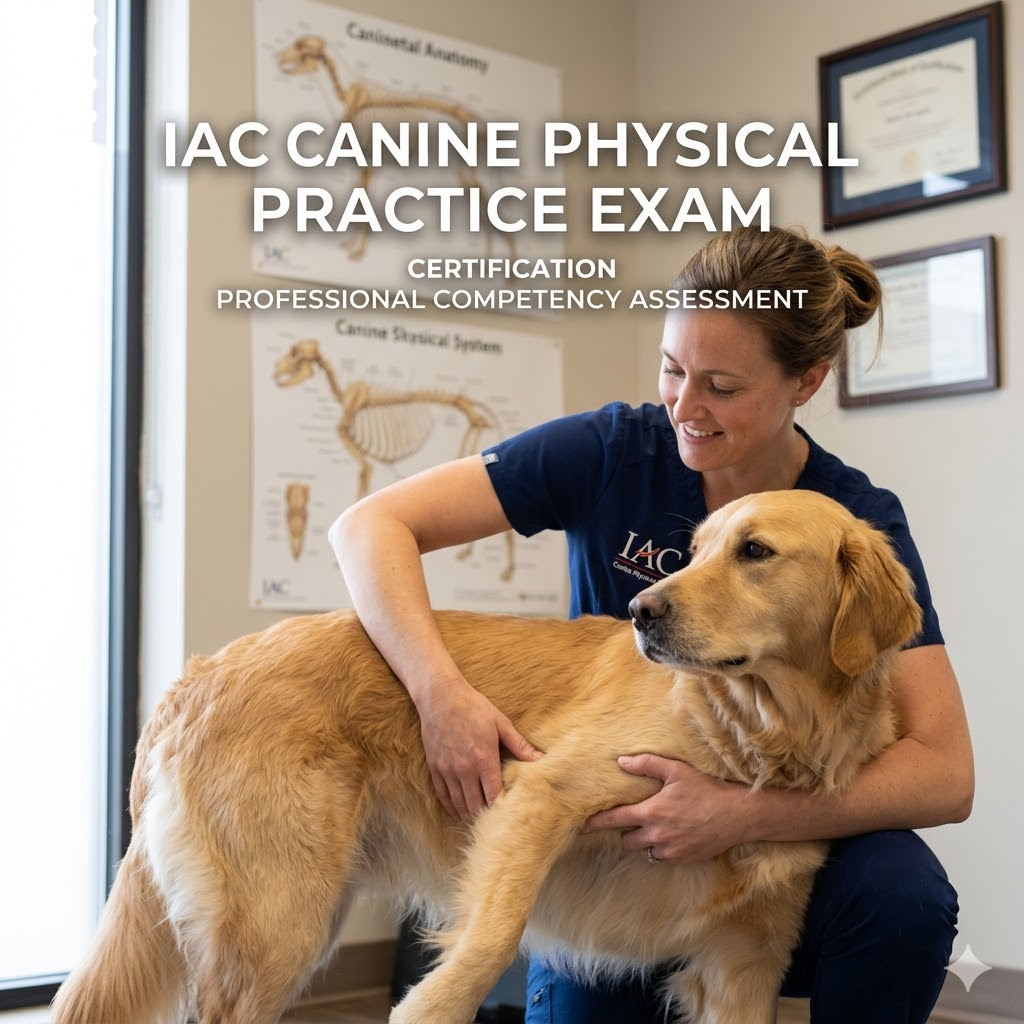
Additional Information
What the Course Entails and Exam Details
The path to the IAC Canine Physical Practice Exam involves completing a rigorous curriculum that balances theoretical knowledge with extensive practical application. The course provides a solid foundation in how a dog’s body functions and how a practitioner can support its movement and health without crossing into licensed veterinary medicine. Key modules and syllabus topics include:
Functional Canine Anatomy and Physiology: A deep dive into the musculoskeletal, nervous, and circulatory systems, understanding how they work together for movement.
Gait and Movement Analysis: Learning to identify normal gait patterns and recognize subtle deviations that may indicate discomfort or imbalance.
Physical Assessment Techniques: Mastering hands-on palpation, checking range of motion, and performing non-diagnostic head-to-tail physical assessments.
Therapeutic Massage and Stretching: Learning various massage modalities and safe stretching techniques to improve circulation, reduce muscle tension, and enhance flexibility.
Injury Prevention and Wellness Strategies: Developing customized physical wellness plans based on a dog's life stage, breed, and activity level.
Client Communication and Business Ethics: Training on how to effectively communicate with owners, educate them on physical wellness, and operate within the scope of practice.
What to Expect in the Final Exam
The IAC Canine Physical Practice Exam is a multi-modal assessment designed to thoroughly test both a candidate's theoretical understanding and their hands-on proficiency. Candidates must demonstrate not just what they know, but how they apply that knowledge to a live animal. The final exam typically consists of two main parts:
Part 1: Written Theory Examination (Online or In-Person)
Format: A closed-book exam containing 100 to 120 multiple-choice questions.
Content: Questions cover all core syllabus areas, focusing on anatomy, physiology, assessment principles, massage/stretch techniques, and injury prevention concepts.
Time Limit: Usually 2 to 2.5 hours.
Part 2: Practical Skills Assessment (In-Person or Video Submission)
Format: A direct evaluation by an authorized IAC examiner or a comprehensive video portfolio demonstrating specific techniques.
Content: Candidates are required to perform a full physical assessment, analyze a dog's gait, and demonstrate a variety of massage and stretching techniques on a live, compliant dog. They will be scored on their handling skills, technique execution, and safety.
Time Limit: Approximately 1 to 1.5 hours.
Passing Score: To earn the certification, a candidate must achieve a minimum score of 75% on the written exam and pass all critical safety and technique components of the practical assessment, often requiring an 80% or higher pass rate.
Retake Policy: Candidates who do not pass have a specified waiting period before they can register to retake the failed portion of the exam.
How to Study and Exam Centers
Preparation for the IAC Canine Physical Practice Exam should be comprehensive and begin well in advance. Success requires a blend of rigorous study and consistent, supervised practice.
Review All Course Material: Re-read textbooks, re-watch lectures, and meticulously study all provided handouts. Focus on understanding the why behind techniques, not just the how.
Create Your Own Study Guide: Convert course content into flashcards for key terms, muscle names, and movement types. Create diagrams to label anatomy.
Practical Practice is Vital: This cannot be overstated. Practice physical assessments and massage techniques on as many different dogs of varying breeds and ages as possible (with owner permission). Have mentors or peers provide feedback.
Form Study Groups: Collaborating with fellow students allows you to discuss complex topics, quiz each other, and practice hands-on techniques on each other's dogs.
Utilize Practice Questions: If the IAC provides sample questions or a practice exam, take advantage of them to familiarize yourself with the question style and manage your time.
Exam Centers: The IAC is designed to be accessible to a global audience of professionals. The written portion of the exam is typically proctored through a secure, designated online testing portal, allowing you to take it from a quiet, approved location. For the critical practical skills assessment, the IAC establishes a network of authorized regional schools, specialized testing clinics, and approved educational partners. These physical centers ensure a standardized and safe environment for demonstration. For candidates in remote areas, a rigorous video submission process with live-streamed, proctored elements may be available on a case-by-case basis.
Job Opportunities from the Course
Upon earning the IAC Canine Physical Practice certification, practitioners have a recognized, professional qualification that sets them apart in the wellness and animal care industries. While distinct from veterinary medicine and advanced veterinary rehabilitation (which are licensed professions), this certification opens doors to several rewarding career paths. Certified individuals can seek employment or start businesses in the following roles:
Certified Canine Massage Therapist: Operating a private practice or working within a wellness center, day care, or training facility.
Canine Wellness Practitioner: Offering a holistic service including physical assessment, specialized exercise planning, and stretching to improve a dog’s well-being.
Rehabilitation Assistant (Non-Veterinary): Working under the direct supervision of a licensed veterinarian or a certified veterinary rehabilitation therapist in a clinical setting, assisting with prescribed, non-invasive physical modalities.
Canine Fitness Trainer: Designing and supervising safe fitness and conditioning programs for pet, sporting, and working dogs.
Specialized Dog Trainer/Handler: Utilizing knowledge of physical practice to enhance training methods for working dogs (e.g., agility, search and rescue, police work), focusing on conditioning and injury prevention.
Canine Hydrotherapy Assistant: Working in a hydrotherapy facility to assist in safe handling and applying physical practice principles in the water.
Wellness Coordinator at a Large Boarding or Daycare Facility: Implementing regular physical assessments and relaxation techniques for kenneled animals.
Frequently Asked Questions
Reviews
5.0
Based on 0 reviews
Leave a Review
No reviews yet. Be the first to review!