
IAI Photography Practice Test
$69.00
- Buy to unlock unlimited access to all Quiz questions and Answers in this Quiz.
- After purchase you can print a PDF of the whole quiz at any point. The PDF will contain the questions and the correct answers.
About this Exam
The IAI Photography certification, provided by the International Association for Identification, is a prestigious credential designed for professionals working within forensic science and law enforcement. This certification validates a photographer's expertise in capturing accurate, high-quality forensic imagery that is essential for criminal investigations and legal proceedings. It is specifically tailored for crime scene investigators, forensic technicians, medicolegal death investigators, and any law enforcement personnel responsible for documenting evidence. Achieving this certification demonstrates a commitment to professional standards and a mastery of the specialized skills required in forensic imaging.
Ready to test your knowledge?
Buy Now to Access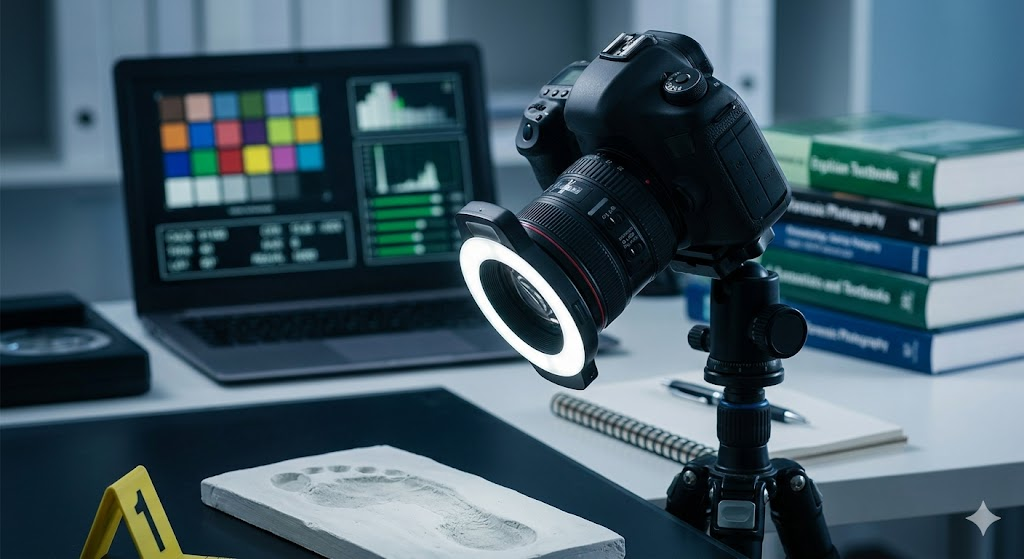
Additional Information
What the Course Entails and Exam Details
The comprehensive study material and curriculum for the IAI Photography certification cover a wide spectrum of essential forensic imaging skills. Candidates are expected to master advanced camera mechanics, including precise control over exposure settings like aperture, shutter speed, and ISO, and understand how these elements affect image quality in various forensic contexts. A significant portion of the syllabus is dedicated to lighting techniques, teaching professionals how to effectively use electronic flash, ambient light, and specialized illumination methods to highlight crucial evidence. The coursework also emphasizes depth of field, composition, and the crucial aspects of technical accuracy in evidence documentation. Crucially, ethical considerations and legal requirements, such as maintaining a proper chain of custody and ensuring image authenticity for admissibility in court, are core components of the training.
What to Expect in the Final Exam
The IAI Photography certification final exam is a rigorous assessment consisting of both a written and a practical component. The written exam is typically computer-based and primarily uses a multiple-choice format to evaluate a candidate’s theoretical knowledge of photographic principles and forensic procedures. It is time-limited, and achieving a passing score—often set around 75% or 80%, depending on the current iteration—is necessary to demonstrate competence. The practical portion is equally critical, requiring candidates to submit a portfolio of forensic photographs that adhere to strict technical guidelines and demonstrate mastery in documenting specific types of evidence, such as latent fingerprints, impressions, and crime scenes. This two-part assessment ensures that certified individuals possess both the conceptual understanding and the hands-on skills needed for exceptional performance in the field.
How to Study and Exam Centers
Effective preparation for the IAI Photography certification involves a dedicated study strategy combining theoretical review and practical skill development. Begin by thoroughly studying the recommended textbooks and official IAI study guides, making comprehensive notes on technical concepts and protocols. Engaging with an IAI Photography Practice Test is one of the most effective ways to familiarize yourself with the written exam's format and identify areas needing improvement. For the practical component, dedicate significant time to photographing a wide range of mock evidence under diverse lighting and environmental conditions, ensuring your work adheres to the specific technical standards outlined by the IAI. Candidates take the written exam at designated physical testing centers or authorized locations, including IAI conferences or approved educational institutions; details are typically provided upon successful application. The portfolio portion is submitted separately for expert evaluation according to the IAI’s specified digital formatting and submission requirements.
Job Opportunities from the Course
Earning the IAI Photography certification significantly enhances your professional credibility and opens doors to a variety of specialized roles in forensic science and law enforcement. Here is a clear list of potential job titles and career paths:
Crime Scene Investigator (CSI)
Forensic Photographer
Forensic Science Technician
Medicolegal Death Investigator
Law Enforcement Officer (Specialized in Evidence Documentation)
Evidence Technician
Private Forensic Consultant
Digital Imaging Specialist in Forensic Labs
Fire Investigator
Traffic Accident Reconstructionist
Frequently Asked Questions
Reviews
5.0
Based on 0 reviews
Leave a Review
No reviews yet. Be the first to review!