
IB Vine Valuation Practice Test
$69.00
- Buy to unlock unlimited access to all Quiz questions and Answers in this Quiz.
- After purchase you can print a PDF of the whole quiz at any point. The PDF will contain the questions and the correct answers.
About this Exam
The IB Vine Valuation certification is designed for professionals and aspiring specialists seeking to excel in the valuation of vineyard properties and wine-related assets. This exam validates a candidate's understanding of the unique factors that influence the value of vineyards, including grape varieties, terroir, production costs, and market dynamics. It is an essential credential for appraisers, vineyard managers, agricultural consultants, and investors looking to demonstrate expertise in this niche agricultural sector. This practice test is a critical step to ensure readiness for the full certification, providing a realistic simulation of the exam experience and helping you identify areas for further study.
Ready to test your knowledge?
Buy Now to Access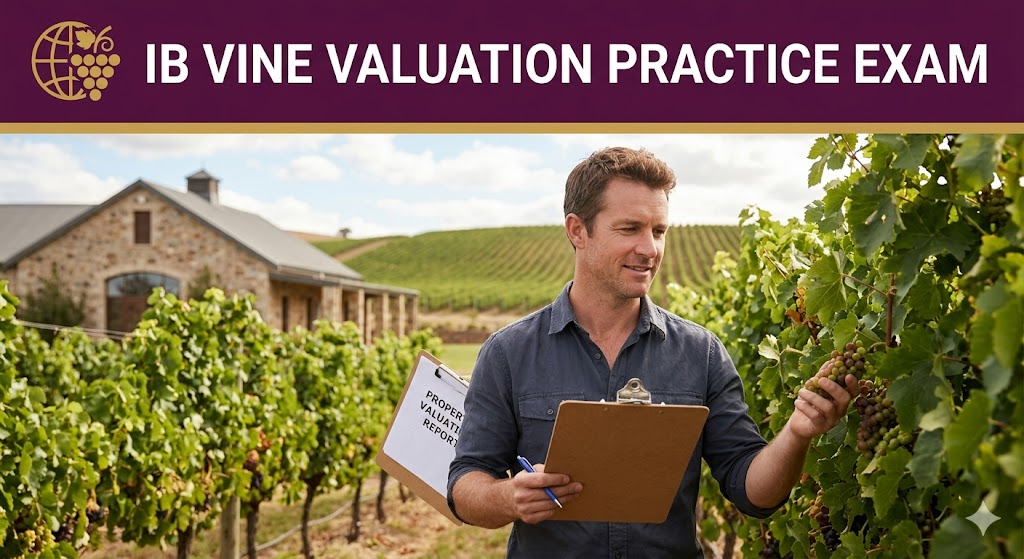
Additional Information
What the Course Entails and Exam Details
The core syllabus for the IB Vine Valuation exam covers several key areas:
Vineyard Assessment: Understanding the physical components of a vineyard, including soil composition, microclimate, trellising systems, and water sources.
Viticulture Basics: Knowledge of grape varieties, vine age, yield projections, and vineyard management practices.
Valuation Methodologies: Applying income, cost, and sales comparison approaches specifically to vineyard properties, considering long-term cycles and vintage variation.
Industry Economics: Analyzing cost structures, market trends for different wine regions, and the financial impact of regulations.
Report Writing: Developing detailed and defensible valuation reports that adhere to professional and international standards.
The specific exam details often include a number of multiple-choice questions, and some versions may incorporate case-based problem solving or short-answer questions. The practice test aims to mirror this structure, providing a comprehensive assessment of your knowledge across these modules.
What to Expect in the Final Exam
The final IB Vine Valuation exam is typically a proctored, timed test. Candidates should expect a combination of:
Multiple-Choice Questions: Assessing foundational knowledge and application of valuation principles.
Case Study Analysis: Requiring the application of valuation methods to a detailed, realistic vineyard scenario.
Calculation-Based Problems: Testing mathematical proficiency in areas like yield estimation, cost analysis, and discounted cash flow modeling.
A typical time limit might be 2 to 3 hours, and a passing score is often set around 70% or 75%. It is generally a closed-book exam, so thorough preparation and a deep understanding of the material are crucial. Be sure to confirm the exact details with the official IB Vine Valuation organization.
How to Study and Exam Centers
Effective study strategies for the IB Vine Valuation Practice Test involve a multi-faceted approach:
Review Core Materials: Start with the official course materials, text books, and study guides provided by the certifying body. Pay close attention to standard valuation frameworks and viticulture fundamentals.
Take Multiple Practice Tests: This is crucial. Use practice exams to become familiar with the question style, time constraints, and the breadth of topics covered. Analyze your results to pinpoint weak areas.
Case Study Practice: Work through as many valuation case studies as possible, simulating the detailed analysis required for the final exam.
Join Study Groups: Discussing concepts and methodologies with peers can provide new insights and reinforce your understanding.
Exam centers vary and are determined by the specific organization offering the certification. You can typically find lists of authorized centers, which may include physical testing locations, approved agricultural colleges or viticulture schools, or secured online portals for remote proctoring. Check the official website for the IB Vine Valuation body to find the most current information and schedule your exam.
Job Opportunities from the Course
A certification in IB Vine Valuation opens up a range of specialized career paths in the wine and agricultural industries:
Vineyard Appraiser
Wine Estate Manager
Agricultural Loan Officer with a focus on viticulture
Investment Analyst specializing in wine assets
Winery Acquisition and Merger Consultant
Viticulture Consultant
Regional Wine Business Strategist
Real Estate Agent specializing in vineyard properties
Achieving this certification demonstrates a level of expertise that is highly valued by banks, investment firms, large wineries, and agricultural consultancies, significantly enhancing your career prospects in this unique and growing field.
Frequently Asked Questions
Reviews
5.0
Based on 0 reviews
Leave a Review
No reviews yet. Be the first to review!