
IC Non-Life Insurance Agent's Practice Exam
$69.00
- Buy to unlock unlimited access to all Quiz questions and Answers in this Quiz.
- After purchase you can print a PDF of the whole quiz at any point. The PDF will contain the questions and the correct answers.
About this Exam
Embarking on a career in insurance requires commitment, knowledge, and the right certification. The IC Non-Life Insurance Agent's Exam is a foundational step for individuals aspiring to become licensed agents specializing in non-life (often referred to as general) insurance products. These products play a crucial role in safeguarding individuals and businesses from a vast range of risks other than life, including property damage, accidents, legal liability, and more. This practice exam is expertly designed for career changers, fresh graduates, and anyone looking to join the dynamic insurance industry. By successfully preparing for and passing this test, you are proving your foundational understanding of key concepts, product details, regulatory frameworks, and ethical practices required to responsibly represent an insurance provider and serve clients with integrity. It's your official pathway to professional credibility in a vital economic sector.
Ready to test your knowledge?
Buy Now to Access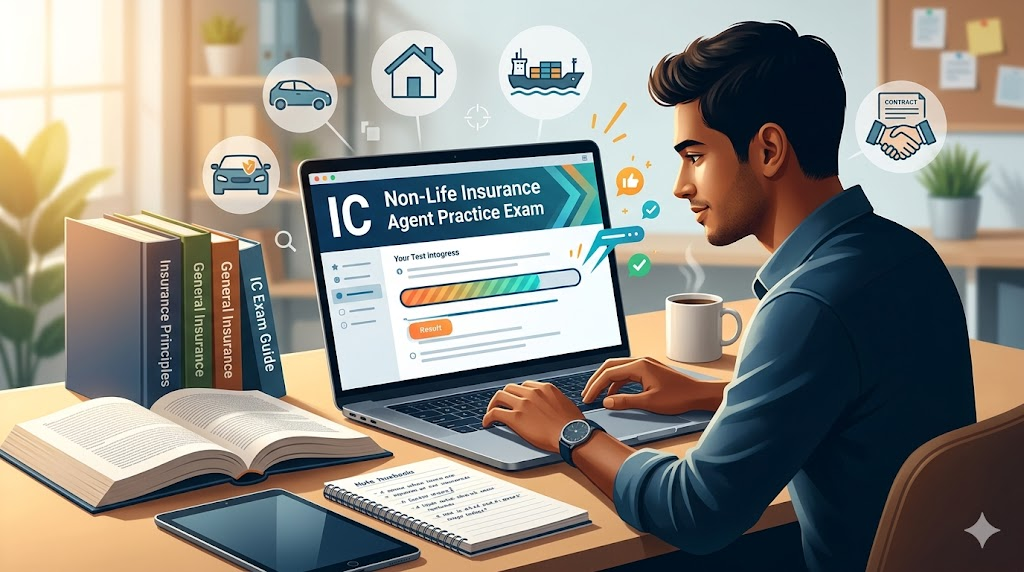
Additional Information
What the Course Entails and Exam Details
This comprehensive guide and practice resource covers the essential knowledge base needed for the IC Non-Life Insurance Agent's Exam. The exam content typically delves into a range of critical areas designed to ensure you are well-equipped to advise clients and manage policy interactions. Key topics include:
Principles of Insurance: A fundamental understanding of insurance concepts, including risk, peril, insurable interest, indemnity, subrogation, utmost good faith, and legal concepts surrounding insurance contracts.
Non-Life Insurance Products: Deep dives into the specific types of insurance you will be licensed to sell, such as property/fire insurance, motor vehicle insurance, marine insurance, liability insurance, and personal accident insurance. You will learn about coverage options, exclusions, and key clauses for each.
The Insurance Regulatory Framework: Understanding the specific governing body and the legal landscape of the insurance industry in your region (the specific authority represented by the 'IC' designation). This includes regulations on licensing, agent conduct, consumer protection, and business practices.
Agent Code of Conduct & Ethics: A strong focus on the moral and professional responsibilities of an insurance agent, emphasizing ethical selling, client confidentiality, transparency, and building long-term trust.
Customer Service & Grievance Redressal: Learning how to effectively communicate with clients, understand their needs, manage policy servicing, and correctly navigate the process for addressing consumer complaints and disputes.
The study materials, official guides, and practice tests contained within this resource are structured around these core pillars to provide you with a robust and targeted learning experience. We offer a mix of theoretical study guides, illustrative examples, and practice question banks tailored to mimic the format and difficulty level of the actual final exam.
What to Expect in the Final Exam
Knowing what to expect on test day is vital for managing anxiety and maximizing your score. The final exam for the IC Non-Life Insurance Agent is typically structured as a comprehensive assessment of the material covered during your training and study. You can generally anticipate the following:
Format: A computer-based or online exam consisting of a set number of Multiple-Choice Questions (MCQs). Each question will present a situation or a fact, with four potential answers.
Questions & Duration: The exact number of questions and the time limit can vary slightly by regulatory body. Commonly, you may face 50 to 100 questions, with a duration ranging from 60 minutes to over 2 hours. Be sure to check the specific guidelines of your administering authority.
Passing Score: To obtain your certification, you must achieve a minimum passing percentage, often in the range of 50% to 70%. Understand the exact required score for your specific region/body.
Negative Marking: While not universal, many insurance agent exams, especially introductory ones, often have no negative marking for incorrect answers. This means you should attempt every question and can use a process of elimination or a best guess for those you are unsure about. Again, confirm this rule for your specific exam.
Proctoring and Rules: The exam is typically taken under monitored conditions. This could be in a registered test center with physical proctors or via an online proctoring service that monitors you through your webcam and microphone, with specific rules against external resources, communication, or leaving the frame. You will likely need to present valid government-issued identification.
How to Study and Exam Centers
Effective preparation is the key to success. We recommend a structured and consistent study plan:
Utilize Official Materials: Your primary study resource should be the official study guides, manuals, and textbooks provided by the certifying body or authorized training providers. This practice exam is a powerful supplement to that core knowledge.
Structured Study & Active Recall: Don't just read; engage with the material. Create summaries, flashcards for definitions and clauses, and explain concepts aloud to yourself or a study partner. Actively recall information regular intervals to boost retention.
Leverage Practice Tests: This is where this practice exam excels! Time yourself under realistic conditions, answer questions across all topics, and critically review every incorrect response. Understand why an answer is correct and another is wrong. This helps identify weak points and gets you comfortable with the question style and time constraints.
Focus on Problem Areas: Dedicate extra study time to the specific sections or product types where you consistently struggle during practice.
Time Management: Practice answering questions efficiently. For MCQs, don't linger too long on one question. Make your best educated choice, perhaps flag the question for review, and move on.
Relax and Recharge: Schedule breaks and prioritize sleep, especially in the days leading up to the exam. A well-rested mind performs significantly better.
Where to Take the Exam (Exam Centers):
Authorized Test Centers: Many regulatory bodies and authorized training organizations hold examinations at designated physical locations equipped with computers and security protocols. Check the official website for a list of accredited test centers near you.
Online Portals & Proctoring: Increasingly, these exams are offered through dedicated online portals with digital proctoring, allowing you to take the test from the comfort of your home or office, provided you meet the minimum technical requirements (stable internet, webcam, microphone, appropriate environment). You will usually book your specific date and time slot through an online scheduling system.
Partner Institutions: Certain colleges, vocational schools, or insurance companies that provide the necessary training may also be approved to administer the final exam in-person. Check with your training provider for available options.
Ensure you carefully review the specific instructions provided by your chosen certifying body regarding registration, scheduling, and the confirmed method (online/in-person) for taking your exam.
Job Opportunities from the Course
Successfully obtaining your certification from the IC Non-Life Insurance Agent's Exam opens a diverse and promising career path within the robust insurance and financial services sector. A certified non-life insurance agent can pursue numerous career possibilities, including but not limited to:
Non-Life Insurance Agent (representing a specific company or as an independent advisor)
General Insurance Sales Representative
Client Relationship Manager in General Insurance
Insurance Claims Assessor (Trainee/Assistant)
Underwriter Assistant/Trainee (focused on general insurance products)
Insurance Broker Assistant
Risk Management Assistant
Customer Service Specialist within General Insurance Companies or Agencies
Frequently Asked Questions
Reviews
5.0
Based on 0 reviews
Leave a Review
No reviews yet. Be the first to review!