
ICC Structural Masonry Practice Exam
$69.00
- Buy to unlock unlimited access to all Quiz questions and Answers in this Quiz.
- After purchase you can print a PDF of the whole quiz at any point. The PDF will contain the questions and the correct answers.
About this Exam
The ICC Structural Masonry Special Inspector Certification is a prestigious credential issued by the International Code Council (ICC). It validates an individual’s comprehensive knowledge and skill in inspecting reinforced and plain masonry construction, ensuring compliance with the appropriate building codes and standards. This certification is essential for quality control on construction projects, confirming that the structural integrity of a building's masonry components is not compromised. The exam is designed for current and aspiring building inspectors, special inspectors, construction managers, quality control technicians, and structural engineers who need to demonstrate a deep understanding of masonry materials, placement, and reinforcement. A strong grasp of the relevant code sections is critical for success, and using a practice exam can be an invaluable part of your preparation journey.
Ready to test your knowledge?
Buy Now to Access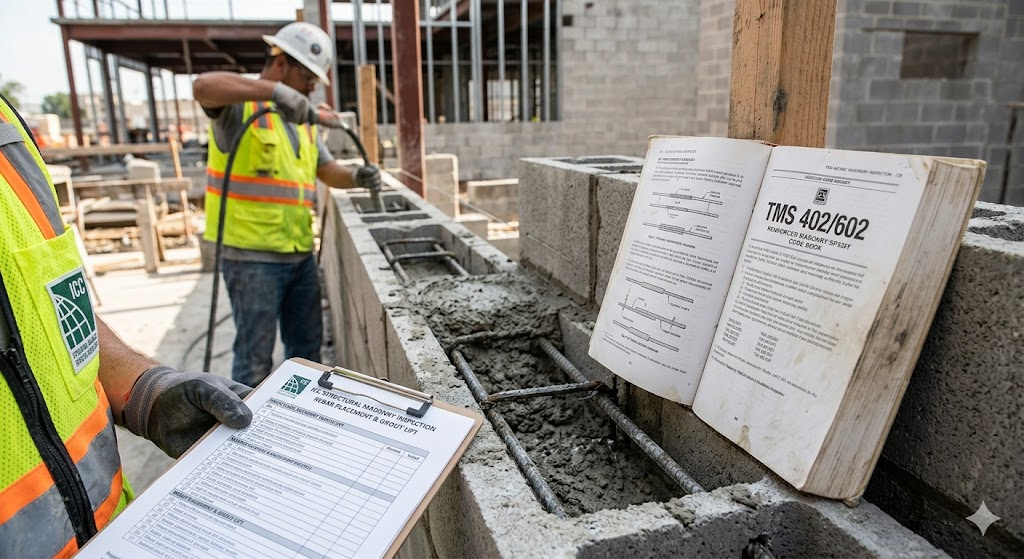
Additional Information
What the Course Entails and Exam Details
This examination covers a broad array of technical topics crucial for the structural inspection of masonry. It is a thorough test of your ability to apply code-compliant solutions to real-world scenarios in the field. The core syllabus and skill areas tested include:
Materials and Quality: Understanding specifications, standard testing methods, and storage requirements for Concrete Masonry Units (CMU), clay masonry units, mortar, grout, and reinforcement steel.
Masonry Placement: Knowledge of proper bond patterns, mortar joint details, cleaning methods, and tolerances.
Reinforcement: Verifying the type, size, placement, and splices of reinforcing steel, including both horizontal and vertical rebar, and joint reinforcement.
Grouting: Comprehensive inspection of grout placement, including proper cleaning of spaces, methods of grout consolidation, and lift heights.
Inspection Procedures: Mastering the scope of duty for a Special Inspector, understanding when "Continuous Inspection" versus "Periodic Inspection" is required.
Code Application and Standards: Navigating and applying the requirements of the International Building Code (IBC) and TMS 402/602 (Building Code Requirements and Specification for Masonry Structures).
Plan Reading: Interpreting complex structural drawings, specifications, and details related to masonry construction.
What to Expect in the Final Exam
When you arrive at the testing center for the official ICC Structural Masonry National Certification exam, you will be taking a standardized test designed by the ICC. It is an open-book examination, meaning you are permitted to bring specified reference materials, such as the International Building Code and TMS 402/602 standards, into the testing room. This feature is common for technical code exams, as it simulates real-world inspection, where you are expected to know where and how to find the correct code provision, not just memorize thousands of pages.
Exam Format: 90 multiple-choice questions.
Time Limit: You will have 3 hours and 30 minutes (3.5 hours) to complete the exam.
Passing Score: A scaled score of 75 is required to pass.
Rules: You are only allowed to bring authorized editions of the code books. Hand-written notes are generally prohibited, but certain tabs are permitted for quick navigation.
How to Study and Exam Centers
Preparation for this exam must be systematic. The sheer volume of technical data means you must learn to navigate the code efficiently.
Actionable Study Strategies:
Master the Code: Dedicate the majority of your study time to reading the relevant chapters of the IBC and TMS 402/602. Use official tabs to mark key sections, but avoid excessive writing in your book.
Use a Practice Exam: A high-quality ICC Structural Masonry Practice Exam is a powerful tool. It allows you to practice finding code answers under time pressure, identify your weak points, and become familiar with the structure and phrasing of ICC questions. Treat each practice session like the real exam, and review every question you answer incorrectly to understand the underlying code principle.
Review Index and Definitions: Many questions are based on specific technical terms. Become intimately familiar with the definitions found at the start of the masonry code chapters.
Practice Plan Reading: Find structural drawings that include masonry details. Practice verifying rebar size, placement, and splice length based on the provided specifications.
Focus on Grout and Reinforcement: Pay special attention to tolerances for rebar placement and the exact requirements for grouting procedures (e.g., maximum lift height, consolidation methods). This is a common area for detailed inspection questions.
Where and How to Take the Exam:
You do not take the final, official ICC certification exam through an online portal at home. To take the test, you must register through the ICC website and schedule your appointment with a validated testing center. The current, authorized vendor for delivering ICC National Certification exams is Pearson VUE. They have hundreds of professional physical testing centers across the United States and globally. When scheduling, you will choose a location, date, and time that is convenient for you. Make sure to arrive at the testing center at least 30 minutes before your scheduled exam time with proper identification.
Job Opportunities from the Course
Earning your ICC Structural Masonry Special Inspector Certification demonstrates technical expertise and a commitment to quality. It is a critical qualification for numerous professional roles and often serves as a prerequisite for higher-level inspection positions. The following specific career paths are unlocked or significantly advanced by this credential:
Structural Masonry Special Inspector
Reinforced Masonry Inspector
Construction Inspector
Quality Control Manager (for a Masonry Contractor)
Construction Project Manager (on masonry-intensive projects)
Building Official
Plan Reviewer (for Masonry Plans)
Forensic Engineering Technician
QA/QC Technician (for concrete/masonry labs)
This certification provides a clear path to career advancement and demonstrates a level of expertise highly sought after in the construction and engineering industries.
Frequently Asked Questions
Reviews
5.0
Based on 0 reviews
Leave a Review
No reviews yet. Be the first to review!