
iCEV Personal Finance Practice Test
$69.00
- Buy to unlock unlimited access to all Quiz questions and Answers in this Quiz.
- After purchase you can print a PDF of the whole quiz at any point. The PDF will contain the questions and the correct answers.
About this Exam
The iCEV Personal Finance curriculum is a dynamic and engaging educational program designed primarily for high school and middle school students. It provides essential knowledge and practical skills for navigating the complex world of personal finance. Mastering this curriculum, culminating in the thorough preparation offered by the practice test, equips students with the vital tools needed for responsible financial decisions, from effective budgeting and responsible credit use to understanding insurance and investment basics. Completing the full course and performing well on assessments can be part of a broader path towards recognized financial literacy certifications, showcasing a student's preparedness for adulthood and the workforce. The iCEV Personal Finance Practice Test itself is an essential preparatory tool, meticulously designed to mimic the scope, difficulty, and format of significant assessments, giving you a safe space to assess your knowledge, build confidence, and identify areas for further review. This guide focuses on preparing you for this vital benchmark, paving the way for eventual success in further financial education or certifications.
Ready to test your knowledge?
Buy Now to Access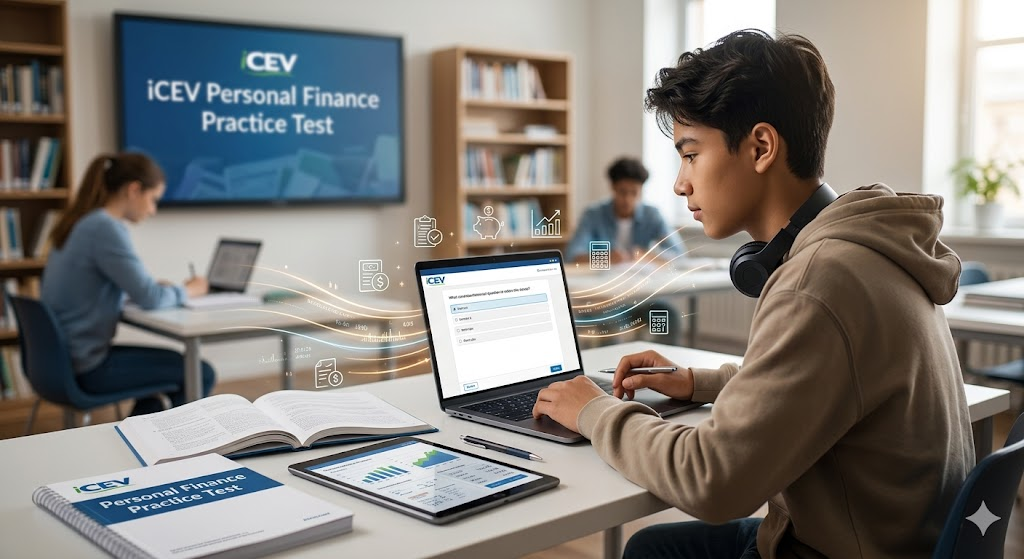
Additional Information
What the Course Entails and Exam Details
The core iCEV Personal Finance curriculum is built on standard financial literacy principles, covering the vital pillars necessary for financial well-being. The course typically includes comprehensive modules on the following key areas:
Financial Goals and Budgeting: Developing a personal and family budget, understanding different money personalities, setting short- and long-term financial goals, and distinguishing needs from wants.
Income and Money Management: Learning about different sources of income, understanding tax obligations, analyzing paychecks, and maintaining accurate financial records.
Banking: Navigating the banking system, opening and managing various types of accounts (checking, savings), and understanding different financial institutions and services.
Credit and Debt: Grasping the importance of credit scores and reports, understanding the components of borrowing costs, analyzing different types of loans, and learning about credit card responsibly.
Saving and Investing: Building and managing emergency funds, exploring various saving options, and gaining fundamental knowledge of investing strategies, risk tolerance, and asset classes like stocks and bonds.
Risk Management and Insurance: Identifying various types of risks and understanding the role of different kinds of insurance, including car, home, and health insurance.
Major Financial Decisions: Applying financial knowledge to significant life events, such as planning for post-secondary education or buying a home or car.
The iCEV Personal Finance Practice Test is designed as a direct reflection of this curriculum. It assesses your understanding of all these core concepts through a realistic simulation. The practice test serves as a comprehensive self-assessment to gauge your readiness, build test-taking stamina, and pinpoint topics that require additional study before you tackle the next step in your educational journey.
What to Expect in the Final Exam
While not the ultimate certification, the iCEV Personal Finance Practice Test has a clear structure that mimics formal assessments to maximize its effectiveness as a study tool. Here’s what you can generally expect:
Format: The practice test is a computer-based, multiple-choice assessment, presented online through the iCEV platform. This mirrors the format common in many standard tests and certifications.
Question Type: Expect a series of scenario-based and factual multiple-choice questions. These will challenge you not just to recall definitions but to apply concepts to real-world financial situations, as is common in iCEV assessments. Many comprehensive iCEV assessments consist of a significant number of questions; while the practice test might vary in exact length, treat it as a substantial evaluation of your knowledge.
Time Limits: Practice tests can be timed or untimed, depending on how your specific school program implements them. We highly recommend treating at least one practice session with a formal time limit to build realistic test-taking speed and endurance.
Passing Score/Feedback: The purpose of a practice test is improvement, not just a pass/fail. After completing the test, you will typically receive detailed feedback, including which questions you answered correctly and incorrectly, often with explanations. This feedback is incredibly valuable for your study process, allowing you to focus your review on your weaker areas. Use the results to set personal goals and to target your learning.
Rules: Always adhere to any specific rules or instructions provided by your instructor or on the iCEV platform for taking the practice test. The primary goal is to simulate a realistic testing environment to best prepare you.
How to Study and Exam Centers
Effective study and knowing how to access the test are key to your success. Here is an actionable approach:
Review Your iCEV Modules: The absolute best resource for this practice test is the iCEV course material itself. Thoroughly review all the lesson videos, read the accompanying texts, complete the interactive activities, and look over any graded assignments or quizzes. Pay close attention to definitions, formulas, and practical application examples.
Take the Practice Test Multiple Times: Treat the practice test as your most vital study tool. Take it early in your review to get a baseline and identify your weakest areas. Review the feedback diligently, and study those weak spots using your course materials. Then, retake the test periodically to measure your progress and build confidence. Aim for high accuracy and speed as you get closer to your final assessment.
Focus on Scenarios: Since the questions often involve applying concepts, make sure you can relate the theories from the curriculum to practical situations. When studying budgets, try creating a hypothetical budget. For investing, research current market trends. Relate learning to your own life or hypothetical future scenarios.
Create Study Aids: Develop flashcards for key terms, definitions, formulas, and concepts. Draw charts or diagrams for topics like the banking system or different types of insurance to help with visual learning and recall.
Simulate Test Conditions: When you feel more prepared, take a practice session with a timer and in a quiet, distraction-free environment to simulate the pressure of a real test. This builds stamina and reduces anxiety.
Relate Concepts to Real Life: The more you can connect personal finance topics to your daily life or goals, the easier it will be to understand and retain the information. Think about how you manage your allowance or a part-time job, consider your family’s financial decisions, and dream about your future financial aspirations. This makes the material more relevant and memorable.
Exam Centers: It's important to understand that iCEV exams, including practice tests and potentially final certification assessments, are typically administered entirely online through the standard iCEV platform, often within a classroom or educational setting. Students usually access the test via their assigned iCEV accounts, under the guidance and supervision of an instructor. Check with your specific teacher or school program for precise instructions on when and how you will be taking the practice test. You will likely take the test on a school-provided computer or your own device within an approved testing window.
Job Opportunities from the Course
Mastering the practical knowledge validated by the iCEV Personal Finance Practice Test can lead to various job opportunities that directly benefit from strong financial literacy and related practical skills, particularly with further education and experience. This achievement and the broader curriculum can unlock doors to paths such as:
Bookkeeper or Accounting Clerk: For entry-level roles managing financial records, processing transactions, and basic bookkeeping functions in businesses or organizations.
Bank Teller or Customer Service Representative: For positions within financial institutions, assisting customers with basic banking needs, processing transactions, and providing product information.
Personal Finance Assistant or Coordinator: Assisting financial planners or advisors with client scheduling, document preparation, and basic administrative tasks.
Budget Analyst (Entry-Level): For analyzing and managing budgets, often within a governmental or educational setting (advanced education is usually needed, but this provides a strong foundation).
Financial Educator/Coach: With further certification, for roles focused on teaching others basic personal finance skills in community centers, non-profit organizations, or employee wellness programs.
Retail/Sales Roles: Strong financial knowledge can be an asset in any sales position, helping with complex purchasing decisions (e.g., in automotive sales, electronics, etc.).
Small Business Owner/Entrepreneur: For foundational financial knowledge to manage your own business finances effectively and sustainably.
General Administrative Assistant (with finance focus): For general clerical roles that have specific financial responsibilities like managing a petty cash fund, basic expense reporting, etc.
Credit Counselor (Entry-Level): With additional training and potentially licensing, for roles helping individuals manage their debt and improve their financial situation.
Customer Support (Finance/Banking): For providing customer support for online banking systems, fintech applications, or other financial services.
Achieving success on the iCEV Personal Finance Practice Test and completing the comprehensive curriculum is an excellent stepping stone for any of these paths, demonstrating your commitment to mastering essential financial skills and enhancing your employability in roles that directly or indirectly involve money management. Combine this achievement with further specialized training, education, or professional experience to significantly expand your career possibilities in the dynamic and vital field of personal finance and related industries. This practice test is a crucial early step on that journey.
Frequently Asked Questions
Reviews
5.0
Based on 0 reviews
Leave a Review
No reviews yet. Be the first to review!