
Idaho Immigration Practice Test
$69.00
- Buy to unlock unlimited access to all Quiz questions and Answers in this Quiz.
- After purchase you can print a PDF of the whole quiz at any point. The PDF will contain the questions and the correct answers.
About this Exam
Ready to test your knowledge?
Buy Now to Access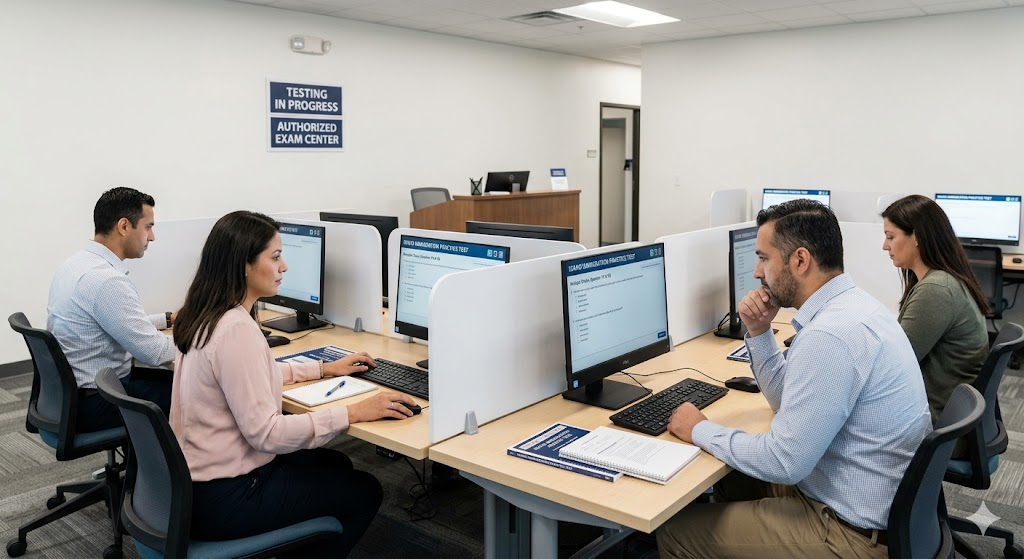
Additional Information
What the Course Entails and Exam Details
This practice exam covers a comprehensive range of topics central to navigating immigration matters within Idaho.
Core Topics Include:
Foundations of U.S. Immigration Law: Key concepts, terminology, and an overview of the major visa categories (immigrant and non-immigrant).
Family-Based Immigration: Procedures and eligibility for family-sponsored visas.
Employment-Based Immigration: Understanding different work visa options.
Asylum and Refugee Status: An introduction to humanitarian relief.
Deportation and Removal Defense: Basic understanding of proceedings and possible defenses.
Naturalization and Citizenship: The requirements and process for becoming a U.S. citizen.
Ethical Considerations: Guidelines for non-attorneys providing immigration services, including avoiding the unauthorized practice of law (UPL).
Idaho State-Specific Issues: How Idaho state laws intersect with federal immigration status (e.g., driver's licenses, public benefits eligibility, and state-level enforcement).
The exam is designed to test not only rote memorization of laws but also the practical application of these principles in realistic scenarios that a paralegal or specialist in Idaho would encounter daily. It ensures that successful candidates possess a practical, usable knowledge base.
What to Expect in the Final Exam
While the exact structure of the final exam may vary depending on the specific administering body or employer, it generally follows a standardized format focused on objective knowledge assessment.
Format: The most common format is multiple-choice questions, which evaluate your recall of specific laws, forms, and procedures. Some exams may also include situational judgment questions or true/false sections.
Number of Questions: Typically ranges from 50 to 100 questions.
Time Limit: You can expect a strict time limit, often between 90 and 120 minutes. Time management is crucial.
Passing Score: The required passing score is generally set around 70-80%, reflecting a high level of competency expected in this sensitive field.
Rules: The final exam is often proctored. It is closed-book, meaning you are not allowed to use any external resources, notes, or mobile devices during the testing session.
A practice test is invaluable here, as it simulates these conditions, allowing you to gauge your pace and accuracy under time pressure.
How to Study and Exam Centers
Effective preparation for the Idaho Immigration Practice Exam requires a strategic and dedicated approach.
Actionable Study Strategies:
Focus on the USCIS Website: This is the ultimate resource. Familiarize yourself thoroughly with the forms, instructions, and policy manuals provided on the official U.S. Citizenship and Immigration Services (USCIS) website.
Create Your Own Flashcards: Develop flashcards for key acronyms (e.g., USCIS, ICE, DACA, LPR), visa types, and crucial filing deadlines.
Take Multiple Practice Tests: Do not rely on just one attempt. Take the practice exam multiple times to identify recurring weak points. This repetition is key to reinforcing your learning.
Study Ethically: Pay special attention to sections on ethical pitfalls and the unauthorized practice of law (UPL). Understanding what you cannot do as a non-attorney is just as important as knowing what you can do.
Review Idaho State Statutes: Dedicate specific study time to understanding how Idaho state laws impact immigrant communities, as this unique localized knowledge is a core component of the exam.
Where to Take the Exam:
For the practice exam, it is typically accessed through online educational portals or specialized testing websites. The final official certification exam may be administered at specific physical locations, authorized schools, or through secure, proctored online testing platforms like Pearson VUE, depending on the requirements of the certifying organization or Idaho state body.
Job Opportunities from the Course
Successfully navigating the Idaho Immigration Practice Exam is a significant achievement that opens the door to numerous vital and fulfilling career paths within the legal and non-profit sectors in Idaho.
Immigration Paralegal: Assisting attorneys in law firms with case preparation, document drafting, and client communication.
Immigration Specialist/Caseworker: Working for non-profit organizations and legal aid societies to help clients navigate the immigration process.
Immigration Document Preparer: Independently helping individuals correctly complete and file necessary immigration forms.
Legal Assistant: Providing administrative and procedural support to immigration lawyers.
Community Outreach Coordinator: Educating immigrant communities in Idaho about their rights and available legal resources.
DOJ Accredited Representative (Non-Attorney): Representing clients before the Department of Homeland Security (DHS) and, in some cases, the Executive Office for Immigration Review (EOIR) after obtaining accreditation, based on the knowledge validated by this exam.
Prepare diligently, and this study guide will be your first major step toward a successful career serving the immigrant community in Idaho.
Good luck with your studies!
Frequently Asked Questions
Reviews
5.0
Based on 0 reviews
Leave a Review
No reviews yet. Be the first to review!