
IGCSE Geography – Urban Environments Practice Test
$69.00
- Buy to unlock unlimited access to all Quiz questions and Answers in this Quiz.
- After purchase you can print a PDF of the whole quiz at any point. The PDF will contain the questions and the correct answers.
About this Exam
The IGCSE Geography Urban Environments Practice Test is a vital educational resource designed specifically for students preparing for their International General Certificate of Secondary Education examinations. This rigorous practice test focuses on assessing a candidate's comprehensive understanding of complex urban landscapes, processes, and challenges. It is tailored for high school students globally who are looking to solidify their geographic knowledge and hone their exam-taking skills. This assessment allows candidates to gauge their readiness, identify knowledge gaps, and build the confidence necessary to excel in the official IGCSE Geography exam.
Ready to test your knowledge?
Buy Now to Access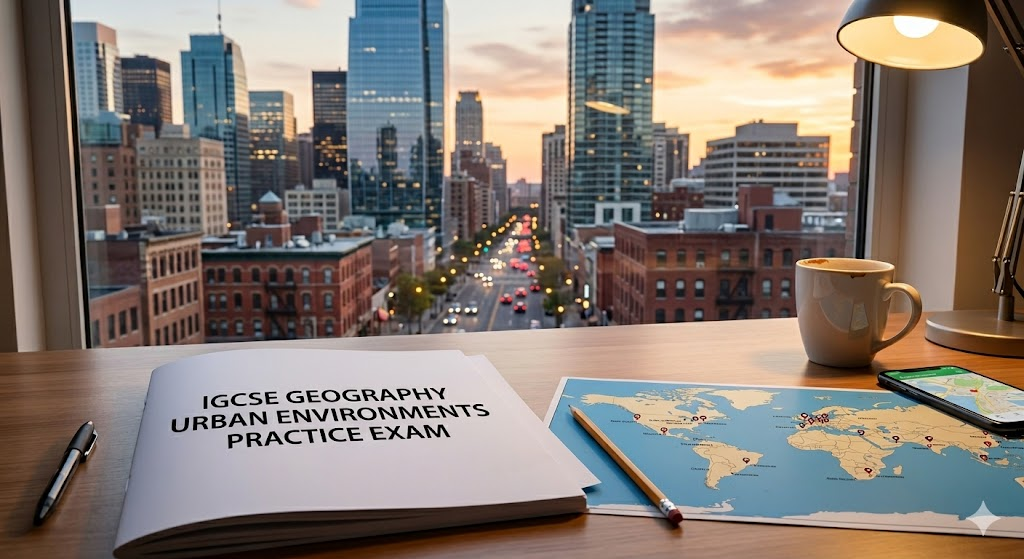
Additional Information
What the Course Entails and Exam Details
The IGCSE Geography syllabus regarding urban environments covers a diverse range of critical topics that shape modern cities. This practice exam evaluates proficiency in understanding the rapidly accelerating process of urbanization globally. Candidates are expected to demonstrate knowledge of the differing patterns, push-pull factors, and consequences of urban growth in both High-Income Countries (HICs) and Low-Income Countries (LICs). The test covers various land-use models, illustrating how residential, industrial, and commercial zones are organized within cities. Furthermore, students must be prepared to discuss significant urban challenges, including housing shortages, traffic congestion, environmental pollution, and the development of spontaneous settlements (slums). A strong emphasis is also placed on effective solutions and strategies for sustainable urban management and improving the quality of life for urban populations.
What to Expect in the Final Exam
While this is a dedicated practice test, the official IGCSE Geography final examination generally utilizes a blended assessment structure. In the final exam context, you should expect structured questions that require concise, factual answers, alongside more extensive resource-based queries. You will need to interpret various geographic tools, including complex maps, aerial photographs, cross-sections of cities, statistical diagrams, and population pyramids. It is crucial to practice articulating detailed responses and applying relevant, specific case studies to explain urban processes or evaluate management strategies effectively. While the official passing scores fluctuate based on the specific exam board (e.g., Cambridge or Edexcel) and annual adjustments, you must dedicate significant time to learning command words (such as "Describe," "Explain," "Evaluate," and "Contrast") and managing your time effectively across the entire examination sitting.
How to Study and Exam Centers
The most effective strategy for success on this practice test and the subsequent final exam is thorough, regular revision and active application. We recommend utilizing this IGCSE Geography Urban Environments Practice Test under timed conditions to simulate the real exam environment. Focus intensely on understanding key geographic terminology and memorizing critical facts and figures from your detailed case studies. Create visual study aids, such as mind maps, linking urbanization concepts to specific examples. Reviewing past papers provided by your examination board is invaluable for understanding typical question formats and marking schemes.
Candidates do not sit practice tests at specialized centers; they are tools for personal revision or classroom use. However, when you are ready for the official, accredited IGCSE examination, you must register through an authorized physical testing center. These official centers are usually established high schools or colleges, but independent candidates can also register through approved British Council offices or authorized Pearson VUE centers, depending on the specific exam board. Ensure you confirm registration deadlines and specific center requirements well in advance.
Job Opportunities from the Course
Gaining a strong foundation in IGCSE Geography, and specializing in urban environments, unlocks numerous academic and professional pathways in the future. Further specialization in this field can lead to dynamic and rewarding careers, including:
Urban and Regional Planner
Environmental Consultant
Transportation Coordinator or Analyst
Geographic Information Systems (GIS) Specialist
Sustainability Officer
Housing Policy Advisor
Landscape Architect
International Development Officer
Community Development Coordinator
Frequently Asked Questions
Reviews
5.0
Based on 0 reviews
Leave a Review
No reviews yet. Be the first to review!