
IICRC Applied Microbial Remediation Technician (AMRT) Practice Exam
$69.00
- Buy to unlock unlimited access to all Quiz questions and Answers in this Quiz.
- After purchase you can print a PDF of the whole quiz at any point. The PDF will contain the questions and the correct answers.
About this Exam
The IICRC Applied Microbial Remediation Technician (AMRT) certification is a specialized, high-level designation for professionals in the inspection, cleaning, and restoration industry. This course is specifically designed for individuals who have already established a foundational understanding of water damage restoration (typically holding a WRT certification) and wish to specialize in the safe and effective remediation of mold and sewage contamination. The AMRT program bridges the gap between science and practical application, ensuring technicians can handle biological hazards without compromising personal safety or environmental integrity.
Ready to test your knowledge?
Buy Now to Access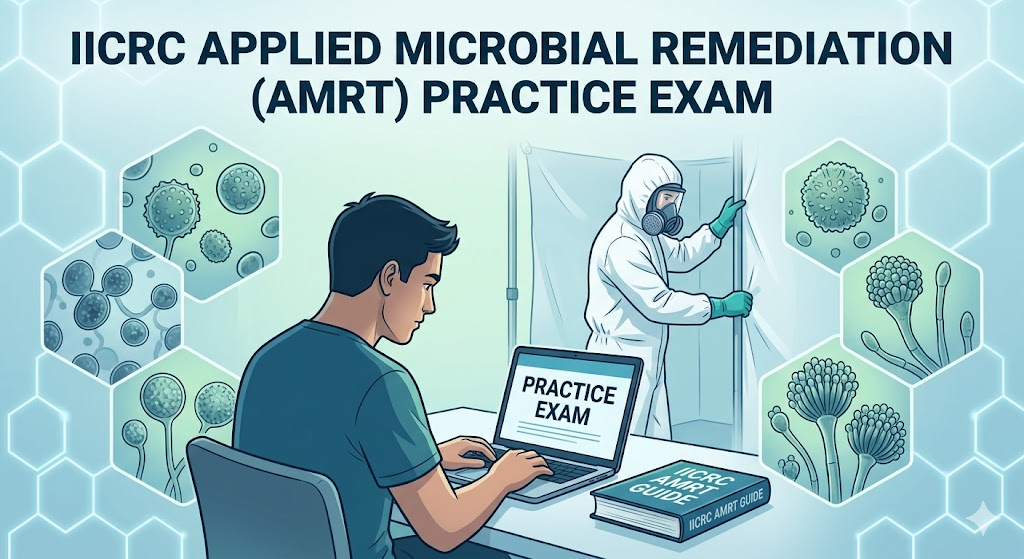
Additional Information
What the Course Entails and Exam Details
The AMRT curriculum is comprehensive, focusing intensely on the protocols outlined in the ANSI/IICRC S520 Standard for Professional Mold Remediation.
Core topics covered in the syllabus include:
Microbiology Fundamentals: Understanding mold growth, fungi biology, and health effects.
Sewage Contamination: Specific protocols for handling Category 3 (black water) losses.
Containment Strategies: Designing and constructing local, mini, and full containment zones using negative air pressure.
Remediation Processes: Detailed procedures for the removal of contaminated materials versus structural cleaning.
Equipment and Tools: Proper selection and use of HEPA vacuums, air scrubbers, and moisture meters in a microbial environment.
Safety and PPE: Rigorous standards for Personal Protective Equipment, including respirator fit testing.
Post-Remediation Verification (PRV): Understanding the criteria for a successful project clearance.
What to Expect in the Final Exam
The final exam for the AMRT certification represents a significant hurdle that tests both theoretical knowledge and practical application.
Candidates should expect a multiple-choice examination that requires critical thinking rather than simple memorization. The exam is typically composed of approximately 100 questions. To achieve certification, students must obtain a passing score of 75% or higher.
The time limit is generally set for two to three hours. It is crucial to remember that the AMRT course itself includes a mandatory hands-on component. Students must actively participate in practical containment building and remediation exercises in the classroom before they are permitted to sit for the written exam.
How to Study and Exam Centers
Preparation for the AMRT exam requires a dedication to studying the official IICRC S520 Standard. This document is the definitive source for the material tested.
Actionable study strategies include:
Master the S520: Do not just read the S520; study its definitions and core procedural sections intensely.
Utilize Course Practice Tests: Leverage any practice quizzes provided by your instructor during the required course. These are excellent indicators of the question format.
Review Your WRT Material: The AMRT course assumes fluency in basic drying concepts.
Regarding testing, the AMRT exam is unique because it is usually administered physically at the conclusion of the mandatory 4-day approved course. You cannot simply sign up for the exam at a generic testing center like Pearson VUE. To take the exam, you must first register for and attend an AMRT class through an authorized IICRC school or instructor. You should check the official IICRC global locator to find an approved training provider near you.
Job Opportunities from the Course
Earning the AMRT certification unlocks specialized, higher-paying career paths within the restoration and environmental industries. Holding this designation validates your ability to manage complex, high-liability projects.
Specific job opportunities and career paths unlocked by this certification include:
Lead Mold Remediation Technician
Microbial Remediation Supervisor
Sewage Cleanup Specialist
Restoration Project Manager (Specializing in Environmental Hazards)
Environmental Remediation Consultant
Health and Safety Compliance Officer (for Restoration Firms)
Restoration Company Owner (Adding Specialized Services)
Frequently Asked Questions
Reviews
5.0
Based on 0 reviews
Leave a Review
No reviews yet. Be the first to review!