
IICRC Repair and Reinstallation Technician (RRT) Practice Exam.
$69.00
- Buy to unlock unlimited access to all Quiz questions and Answers in this Quiz.
- After purchase you can print a PDF of the whole quiz at any point. The PDF will contain the questions and the correct answers.
About this Exam
The IICRC Repair and Reinstallation Technician (RRT) Certification is a cornerstone of professional growth within the inspection, cleaning, and restoration industry.
Designed for dedicated carpet cleaners and restoration specialists, this advanced certification validates essential skills in restoring and reinstalling carpet after various forms of damage or to rectify specific installation faults.
The course and subsequent exam ensure that you possess the technical expertise required to deliver impeccable "pre-loss condition" results, making you a vital asset to homeowners, property managers, and insurance providers.
Earning your RRT designation not only demonstrates mastery but also marks a significant step towards achieving prestigious Journeyman and Master status within the IICRC framework.
This study guide is your companion, preparing you effectively for both a practice and the final examination.
Ready to test your knowledge?
Buy Now to Access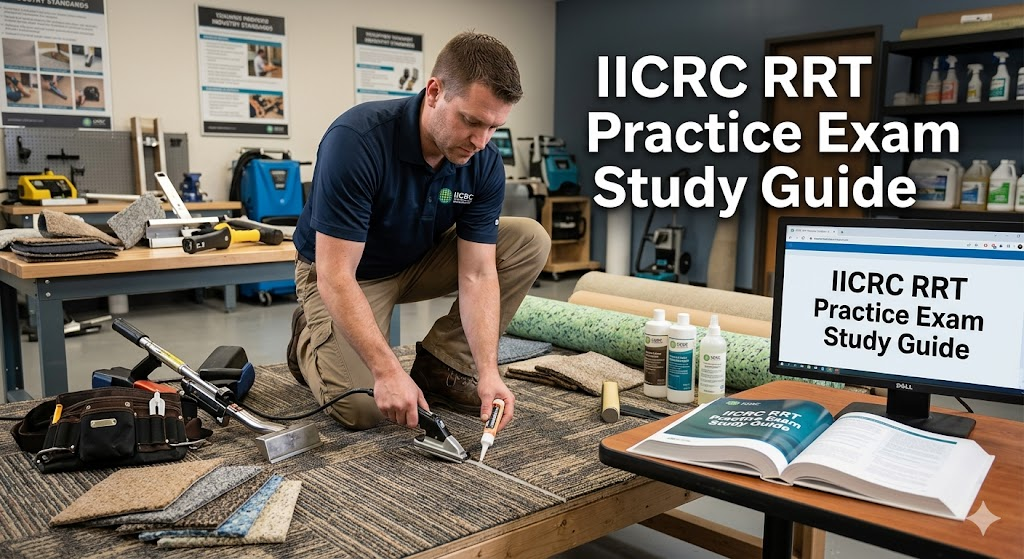
Additional Information
What the Course Entails and Exam Details
The RRT course is typically a practical, hands-on learning experience that goes beyond theory.
Your preparation and practice for this exam should reflect this comprehensive syllabus. Expect the final examination to rigorously test your understanding across several key areas:
Carpet Construction & Identification: Understanding different types of carpet, fiber properties, and manufacturing methods is fundamental to professional repair and reinstallation.
Inspection Techniques: Mastering the process of thoroughly inspecting a carpeted area before cleaning or restoration work begins is vital for assessment and effective planning.
Tools and Equipment: You must be proficient in identifying, selecting, and correctly using the specialized tools of the trade. This includes everything from simple hand tools to power stretchers, knee kickers, seaming irons, and proper adhesive application equipment.
Floor Preparation: Techniques for ensuring the subfloor is clean, dry, and suitable for a perfect installation. This covers adhesives, tackless strip installation, moldings, and transition strips.
Carpet Repair and Seaming: Learn professional methods for invisible patching, seam work, repairing specific faults (burns, tears, delamination, missing tufts), and working with various thermoplastic and specialized adhesives.
Power Stretching and Reinstallation: Master the correct application of power stretchers and knee kickers to eliminate wrinkles and ensure a taut, durable installation over padding, strictly adhering to industry standards.
Health and Safety: Comprehensive knowledge of industry safety protocols, correct usage of personal protective equipment (PPE), and adherence to relevant environmental regulations.
Standards and Best Practices: Deep familiarity with IICRC standards and other industry-recognized best practices for installation, repair, and restretching.
What to Expect in the Final Exam
While the exact structure may vary slightly depending on the specific authorized training organization or portal, the final IICRC RRT examination is generally a comprehensive, timed assessment:
Format: The exam predominantly utilizes a multiple-choice format, requiring you to select the best answer from several options. Questions may be structured to test theoretical knowledge, practical application, tool identification, problem-solving scenarios, and standard procedures. There is typically no formal hands-on practical section during the written/online exam itself, though your course training will heavily feature practical components, which your theoretical knowledge must support.
Passing Score: To earn your RRT certification, you must achieve a score of 75% or greater.
Time Limit: The exam is administered within a defined time limit, typically lasting between 2 to 3 hours, ensuring efficiency and knowledge retention.
Content: Questions are meticulously designed to cover all topics outlined in the comprehensive RRT syllabus and training materials. You can expect questions relating to specific repair techniques, standard measurements, correct tool usage, safety precautions, and troubleshooting common carpet installation issues.
Delivery: Depending on your chosen learning method (in-person or live-stream/on-demand online), the exam may be proctored in a classroom setting on the last day of your course or completed online through the official IICRC exam portal within a specified post-course deadline.
Rules: The final exam is typically closed-book, meaning you will not be permitted to use course materials, notes, or external aids during the test.
How to Study and Exam Centers
Preparation for the RRT exam requires a strategic approach, blending study with practical understanding:
Attend the Full IICRC RRT Course: Participation in a structured training program is fundamental and usually mandatory before you can take the official exam.
Thorough Course Material Review: Dive deep into the official IICRC course manual, standard documents, and all supplemental training materials provided. Focus on key terminology, industry standards, precise definitions, and established best practices. Make study notes and summary sheets.
Use Practice Exams & Study Guides: Leverage resources just like this one! Practice exams are invaluable for familiarizing yourself with the multiple-choice format, the level of question difficulty, and common topics. Analyze your performance in these practice sessions to identify areas where you need further review.
Visualize and Review Practical Techniques: The RRT is a practically-oriented certification. While the exam may not include hands-on tasks, it will test your knowledge of those tasks. Revisit instructional videos, practice correct tool handling if possible, and mentally walk through standard procedures for seaming, patching, and power stretching. Imagine common challenges and how you would professionally resolve them based on your training.
Focus on Standards & Safety: Pay careful attention to safety procedures, tool selection, correct measurements, and standard operating guidelines, as these are often major focal points for exam questions.
Collaborate and Practice: If possible, discuss concepts with fellow technicians or instructors. Practical scenarios can often be better understood through group review and shared experience.
Taking the Exam and Exam Centers:
After In-Person Training: For physical, instructor-led courses, the exam is almost always administered in the classroom at the conclusion of the training session.
After Online Training: If you completed the RRT course via a live-stream or online platform, you will typically receive instructions and a deadline (often within 45 days) to complete the official exam via the secure IICRC online exam portal. Ensure you have a stable internet connection and a conducive, quiet environment for the proctored test.
Finding Centers/Schools: The IICRC maintains a registry of authorized training schools, organizations, and instructors. You can search this registry on the official IICRC website to find approved providers and locations for both training and examination.
Job Opportunities from the Course
A RRT certification significantly enhances your professional credibility and marketability, opening doors to various exciting career paths.
While opportunities are diverse, here are some distinct job titles and roles directly linked to, or significantly enhanced by, this credential:
Carpet Repair Technician
Water Damage Restoration Specialist (RRT is a requirement or asset)
Fire Damage Restoration Technician (RRT is a key specialty skill)
Certified Flooring Inspector (RRT knowledge supports forensic analysis)
Quality Control Inspector for flooring manufacturers and distributors
Project Manager or Supervisor for restoration or flooring installation companies
Insurance Claims Adjuster/Assessor specialized in textile and flooring claims
Specialized preferred vendor or contractor for insurance networks and major property management firms
Training Instructor or Mentor within the industry
Furthermore, obtaining your RRT certification is a significant milestone required to achieve valuable journeyman and master level designations in areas such as "Journeyman Water Restorer," "Journeyman Textile Cleaner," and ultimately, the prestigious "Master Water Restorer" or "Master Textile Cleaner" certifications within the IICRC framework.
The expertise and recognition associated with this certification empower you to command higher earning potential and attract more lucrative referral and contract work.
Frequently Asked Questions
Reviews
5.0
Based on 0 reviews
Leave a Review
No reviews yet. Be the first to review!