
IICRC Trauma and Crime Scene Technician (TCST) Practice Exam
$69.00
- Buy to unlock unlimited access to all Quiz questions and Answers in this Quiz.
- After purchase you can print a PDF of the whole quiz at any point. The PDF will contain the questions and the correct answers.
About this Exam
The IICRC Trauma and Crime Scene Technician (TCST) certification is a highly specialized designation designed for restoration professionals, cleaners, and individuals wanting to gain advanced knowledge in the safe, compliant, and compassionate remediation of biologically contaminated scenes. This comprehensive certification program equips technicians with the essential skills and safety protocols to handle cleanup after traumatic events, crime scenes, unattended deaths, infectious disease outbreaks, and other biohazardous situations. The course and final exam are designed for those who demonstrate the resilience and dedication required for this essential, yet challenging, line of work, ensuring they can perform these critical services with technical expertise and appropriate sensitivity.
Ready to test your knowledge?
Buy Now to Access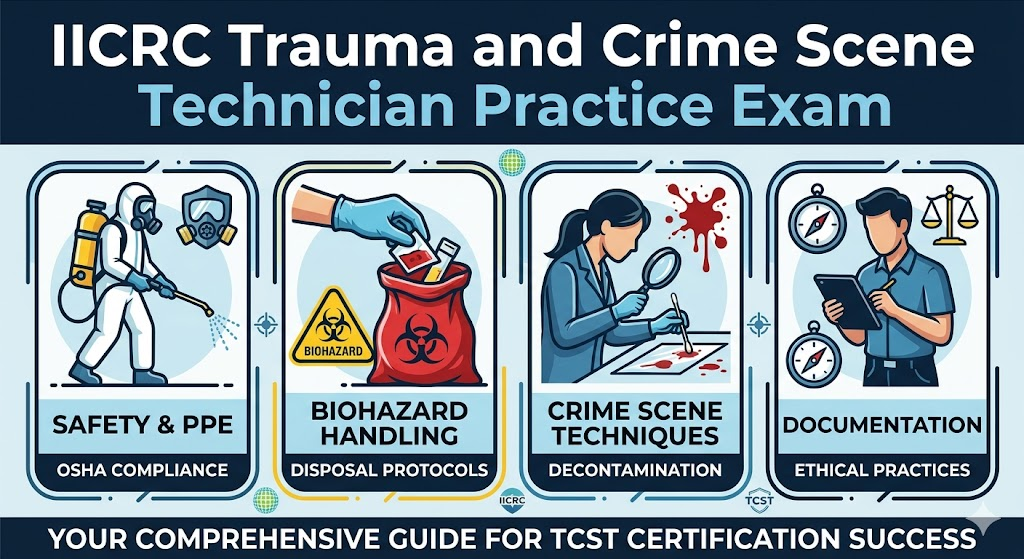
Additional Information
What the Course Entails and Exam Details
This specialized certification requires completing a prerequisite IICRC-approved training course (typically a multi-day program) before attempting the final exam. The curriculum provides an in-depth foundation in all aspects of trauma and crime scene decontamination. Key topics you will master include:
Safety and Health Regulations: Comprehensive training on OSHA regulations (such as the Bloodborne Pathogens Standard), respiratory protection, personal protective equipment (PPE), and proper safety protocols to mitigate risks.
Infectious Agents and Disease: Detailed knowledge of bloodborne pathogens, viruses, bacteria, and other potential infectious materials encountered in biohazard remediation, including transmission and prevention.
Contamination Control: Understanding of effective containment, specialized equipment (like HEPA filtration and foggers), and advanced cleaning and disinfection procedures for various surfaces and materials.
Waste Handling and Disposal: Proper procedures for the handling, storage, transport, and disposal of biohazardous waste according to local, state, and federal regulations.
Biocide Application: Deep knowledge of the different classes of antimicrobial chemicals, their effective applications, proper usage, and safety precautions.
Inspection, Assessment, and Documentation: Techniques for performing initial site assessments, developing detailed remediation plans, meticulous documentation, and post-remediation verification.
Compassionate Communication and Ethics: Specific training on how to handle interactions with grieving family members, respect privacy, and maintain high ethical standards in sensitive situations.
What to Expect in the Final Exam
The IICRC TCST final exam is designed to rigorously test your understanding of the comprehensive course content and your ability to apply safety principles and technical knowledge to real-world scenarios. It is purely a written examination with no practical component required for this specific designation.
Exam Format: The test consists of multiple-choice questions designed to assess your comprehension of all material covered in the classroom and study guide. There are typically around 100 to 150 questions on the exam.
Passing Score: To become a certified TCST, a passing score is required, which is usually in the range of 70% to 75% or higher. It is essential to check the specific passing requirements with your approved training school or the IICRC directly as they can be subject to change.
Time Limit: Candidates are typically given between 2 and 3 hours to complete the examination, allowing sufficient time for thoughtful consideration of each question.
Exam Environment: The final exam is typically administered immediately following the completion of your approved in-person TCST training course by the authorized instructor or school. Alternatively, some approved schools and IICRC options may offer proctored online exams through authorized online platforms. In both cases, the environment is closed-book, and strict proctoring procedures are enforced.
How to Study and Exam Centers
Successfully preparing for the IICRC TCST exam requires a combination of diligent study and active engagement with the course material.
Effective Study Strategies:
Thorough Review of Course Materials: Your instructor's notes, the IICRC S540 Standard, and the specific textbook and materials provided by your approved training school are your primary study resources. Re-read and master every section, paying closest attention to safety protocols and regulatory details.
Focus on Key Concepts and Procedures: Dedicate extra time to understanding complex topics like OSHA compliance, correct PPE selection and use, chemical handling, and the sequential steps of biohazard cleanup and disposal.
Utilize Practice Exams and Quizzes: Look for official or reputable practice tests and quizzes that mimic the exam format to test your knowledge retention and identify areas needing improvement.
Create Flashcards and Study Guides: Condense key terms, regulations, procedures, and safety checklists into flashcards or summary study guides for quick review.
Participate in Class Discussions and Groups: Engage in class activities and discussions, and form study groups with peers to talk through challenging concepts.
Exam Centers: The IICRC TCST final exam is not typical through independent third-party centers like Pearson VUE. Instead, it is inextricably linked to taking and completing an authorized training course. The process involves:
Completion of an Approved Course: You must take the full, required hours of the TCST course from an IICRC-approved school or instructor to even be eligible for the exam.
In-Class or Proctored Online: The exam itself is almost always offered by the same approved school or instructor, immediately after the training ends, either in the physical classroom or via an approved, proctored online portal.
Verification: You must check directly with authorized IICRC schools or the official IICRC website to locate approved training providers and their upcoming schedule for course and exam offerings.
Job Opportunities from the Course
Earning your IICRC Trauma and Crime Scene Technician certification demonstrates that you possess specialized knowledge and skills that are in demand, opening doors to various career opportunities within restoration, remediation, and specialized cleanup industries.
Crime Scene Decontamination Technician: Specializing in the remediation and cleaning of crime scenes.
Trauma Scene Decontamination Technician: Providing essential cleanup services after any traumatic event.
Biohazard Remediation Specialist: A broader role encompassing cleanup of all types of biological materials, including infectious diseases.
Forensic Cleaning Technician: Working with forensic services and restoration firms.
Decomposition Cleanup Specialist: Focusing on the specific challenges of unattended deaths.
Meth Lab Remediation Technician (if combined with appropriate training): Specialized skill sets often overlap with clandestine drug lab cleanup.
Infectious Disease Decontamination Specialist: Vital for cleaning spaces after a known disease outbreak.
Senior Remediation Technician / Supervisor: Leading teams in biohazard situations.
Restoration/Remiation Business Owner/Operator: Providing new, specialized services for a company.
Frequently Asked Questions
Reviews
5.0
Based on 0 reviews
Leave a Review
No reviews yet. Be the first to review!