
Illinois All Line Statutes and Regulations Practice Test
$69.00
- Buy to unlock unlimited access to all Quiz questions and Answers in this Quiz.
- After purchase you can print a PDF of the whole quiz at any point. The PDF will contain the questions and the correct answers.
About this Exam
The Illinois All Line Statutes and Regulations exam is a crucial stepping stone for anyone looking to build a career in the insurance industry within the state of Illinois.
This specific certification test ensures that prospective insurance professionals fully understand the legal and ethical frameworks that govern their trade.
It is designed for aspiring insurance producers, brokers, and agents who are applying for licensure in life, health, property, or casualty insurance lines.
By passing this exam, candidates prove they are well-versed in the state-specific laws enforced by the Illinois Department of Insurance, guaranteeing that they can protect consumers and operate lawfully.
Ready to test your knowledge?
Buy Now to Access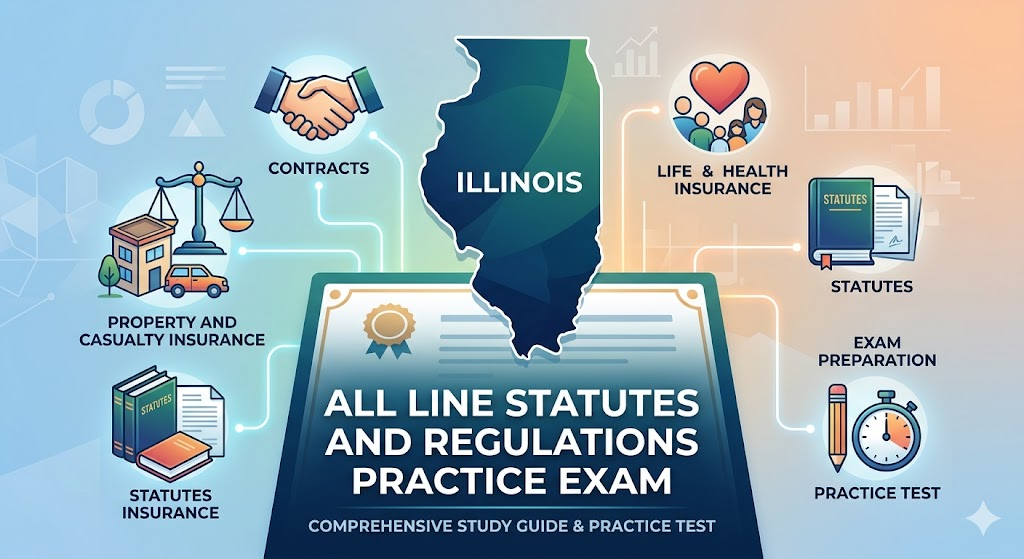
Additional Information
What the Course Entails and Exam Details
Preparing for this exam means diving deep into the specific legislative rules that control the Illinois insurance market.
The core syllabus covers the duties and powers of the Director of Insurance, including how investigations, hearings, and penalties are handled.
Students will also explore the stringent licensing requirements, understanding exactly what it takes to obtain, maintain, reinstate, or surrender a producer license.
Another major topic entails unfair trade practices, such as rebating, defamation, twisting, and misrepresentation, ensuring agents know exactly what ethical boundaries exist.
Furthermore, the course materials will cover the rules regarding commissions, fiduciary responsibilities, disclosure requirements, and the purpose of the Illinois Insurance Guaranty Funds.
What to Expect in the Final Exam
When you sit for the final exam, you should expect a computerized, multiple-choice testing format.
The Illinois All Line Statutes and Regulations segment is typically integrated into the broader state licensing exam, meaning you will face a dedicated section of state-specific questions alongside your general insurance line questions.
Depending on the specific lines of authority you are testing for, the state regulations section will generally consist of around 30 to 50 scored questions.
To achieve a passing score, candidates must typically score a 70% or higher on the overall exam.
Strict time limits are enforced, usually giving test-takers around two hours to complete the entire session, so pacing and time management are incredibly important.
You must also adhere to strict testing rules, which include presenting valid government-issued identification and leaving all personal belongings, phones, and study materials outside the testing room.
How to Study and Exam Centers
Success on this exam requires a strategic and highly disciplined approach to studying.
Your best practice method is to take multiple timed practice exams to simulate the pressure of the real test environment.
Focus heavily on state-specific numerical data, such as the exact number of days you have to report an address change or the specific dollar amounts for regulatory fines, as these are frequently tested.
Flashcards are highly recommended for memorizing definitions and the specific timelines required by Illinois law.
When you are ready to take the test, exams are administered through Pearson VUE, which is the official testing vendor for the State of Illinois.
You can schedule your exam at various physical Pearson VUE testing centers located throughout Illinois, including locations in Chicago, Springfield, and Peoria.
Alternatively, many candidates now have the option to take the exam via OnVUE, a secure online proctoring portal that allows you to test from the comfort of your home or office, provided your testing environment meets their strict technical and physical requirements.
Job Opportunities from the Course
Earning your license by passing this exam opens the door to a highly lucrative and stable career path in the financial and insurance sectors.
You can become a Licensed Insurance Producer, working directly with clients to assess their risks and sell them appropriate policies.
Many graduates choose to become Independent Insurance Agents, giving them the freedom to run their own business and offer products from multiple carriers.
You could also pursue a role as an Insurance Broker, acting as a direct representative for the buyer rather than the insurance company.
Additionally, this legal and regulatory knowledge translates perfectly into roles like Claims Adjuster, where you investigate insurance claims to determine liability.
For those who prefer the corporate side of the industry, becoming a Compliance Officer or an Agency Manager are excellent career trajectories that rely heavily on a deep understanding of state statutes.
Frequently Asked Questions
Reviews
5.0
Based on 0 reviews
Leave a Review
No reviews yet. Be the first to review!