
Illinois Department of Public Health Practice Exam
$69.00
- Buy to unlock unlimited access to all Quiz questions and Answers in this Quiz.
- After purchase you can print a PDF of the whole quiz at any point. The PDF will contain the questions and the correct answers.
About this Exam
The Illinois Department of Public Health (IDPH) oversees a wide range of professional certifications crucial for maintaining safety, health, and environmental standards across the state. These examinations are designed for individuals seeking licensure in specialized fields such as emergency medical services, environmental health (including lead and asbestos mitigation), structural pest control, and food safety. Earning an IDPH certification validates your competency and ensures you are equipped to protect the public while adhering to stringent state regulations. This guide offers a generalized approach to preparing for these vital assessments.
Ready to test your knowledge?
Buy Now to Access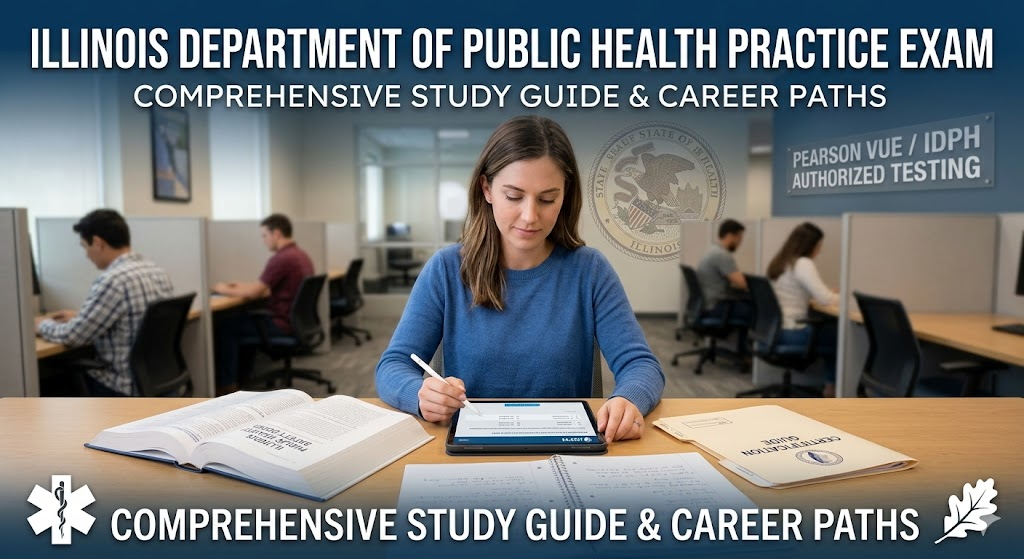
Additional Information
What the Course Entails and Exam Details
Because the IDPH administers numerous distinct certification programs, the mandatory course content and exam details are highly specific to your chosen discipline. Generally, the coursework entails a combination of theoretical knowledge, regulatory review, and, in many fields, practical hands-on training.
For example, those in Environmental Health specializations, such as Lead Abatement or Asbestos Control, must master state and federal safety guidelines, detection techniques, and proper mitigation procedures. Students in Structural Pest Control study pest biology, integrated pest management (IPM) principles, and the safe application of pesticides. Individuals pursuing Emergency Medical Services (EMS) licenses (such as EMT or Paramedic) undergo rigorous training in lifesaving medical protocols, anatomy, and patient care. Community Health Worker candidates focus on advocacy, public health knowledge, and care coordination.
You must ensure you are studying the syllabus provided by your specific IDPH-approved training provider.
What to Expect in the Final Exam
While formats vary across different IDPH branches, students can generally expect a rigorous evaluation of both their knowledge and their ability to apply it safely. Most final exams are computerized and consist primarily of objective questions.
Exam Format: The most common format is a multiple-choice examination designed to test regulatory knowledge and problem-solving skills. Some disciplines, particularly EMS and specialized technical fields, may also require a practical skill demonstration or hands-on component.
Passing Score: A passing grade is typically set at 70% or higher for each section of the examination. Be sure to confirm the exact requirement for your specific license.
Time Limits and Rules: Exams are timed, and the duration varies. Candidates are usually required to present valid government-issued identification at the testing center. Strict rules regarding what items can be brought into the testing area are enforced. Official candidate handbooks for your specific discipline detail all applicable rules, appeal processes, and retake policies.
How to Study and Exam Centers
Preparation is the absolute key to success on any IDPH exam.
Study Strategies: Start by thoroughly reviewing the official study manuals and reference materials provided by the IDPH or your training course. For disciplines like Structural Pest Control, the IDPH offers dedicated study guides and official practice exams; utilizing these is essential for familiarizing yourself with the question style and key concepts. Create flashcards for critical regulations, safety acronyms, and technical terms. Forming study groups to discuss complex scenarios and legal responsibilities can also be highly effective. For practical components, dedication to hands-on practice during your training course is mandatory.
Exam Centers and Registration: The registration and testing process depends on the certification type. Some exams are scheduled directly through the relevant IDPH program office in Springfield. Many other standardized IDPH exams are administered through authorized third-party testing partners such as Pearson VUE, which offers numerous secure computer-based testing centers throughout Illinois and nationwide. Candidates for EMS licensure may also test through the National Registry of EMTs (NREMT). Always refer to your application confirmation letter for your precise testing location and time.
Job Opportunities from the Course
Successfully passing your IDPH exam opens doors to stable and impactful career paths in public health and safety.
Upon receiving your license or certification, you may qualify for specific roles such as:
Certified Structural Pest Control Technician
Licensed Lead Inspector or Risk Assessor
Licensed Asbestos Abatement Worker or Supervisor
Licensed Hearing Instrument Dispenser
Emergency Medical Technician (EMT-Basic) or Paramedic
Licensed Environmental Health Practitioner
Certified Food Service Sanitation Manager
Certified Community Health Worker (CHW)
Frequently Asked Questions
Reviews
5.0
Based on 0 reviews
Leave a Review
No reviews yet. Be the first to review!