
Illinois Hunter Safety Practice Test
$69.00
- Buy to unlock unlimited access to all Quiz questions and Answers in this Quiz.
- After purchase you can print a PDF of the whole quiz at any point. The PDF will contain the questions and the correct answers.
About this Exam
Embark on a rewarding journey toward safe and responsible hunting with the Illinois Hunter Safety course. Designed for both new hunters and seasoned enthusiasts looking for a refresher, this certification ensures you are well-versed in essential safety practices and ethical hunting principles. Successfully completing this course is not only a vital step for responsible hunting but also mandatory for obtaining an Illinois hunting license if you were born on or after January 1, 1980.
Ready to test your knowledge?
Buy Now to Access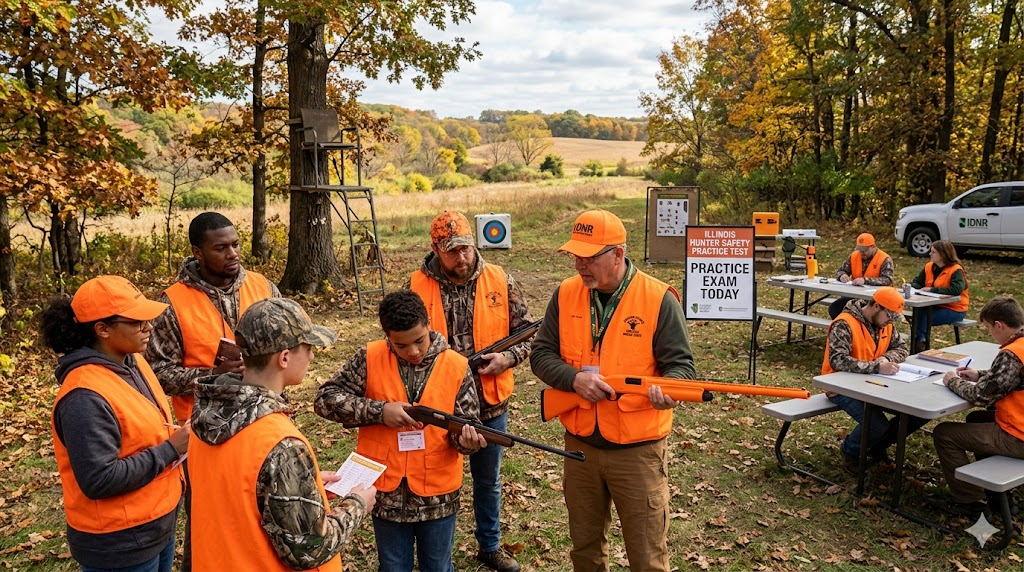
Additional Information
What the Course Entails and Exam Details
This comprehensive course covers a wide array of crucial topics. You'll delve into firearm safety principles, learning how to handle various types of firearms responsibly. The syllabus also covers ethical hunting behavior, wildlife conservation and management, tree stand safety, basic survival skills, and first aid. Additionally, you will gain important knowledge about Illinois hunting laws and regulations.
What to Expect in the Final Exam
The final Illinois Hunter Safety exam is designed to assess your understanding of the core concepts taught in the course. Here's a general overview of what to expect:
Format: The exam typically consists of multiple-choice and true/false questions.
Content: Questions will cover all major topics, from firearm safety and ethical considerations to specific Illinois regulations and wildlife management practices.
Passing Score: To earn your certification, you will need to achieve a minimum passing score, which is commonly around 80%.
Time Limit: While the exam is generally not strictly timed in a way that creates pressure, you should allow yourself ample time to carefully read and answer each question.
Specific Rules: Integrity is paramount. The exam must be taken individually without the use of reference materials.
How to Study and Exam Centers
Effective preparation is key to succeeding on the Illinois Hunter Safety exam. Here are some actionable study strategies:
Utilize Official Resources: Thoroughly study the educational materials provided in the Illinois Hunter Safety course, whether you're taking it online or in a classroom setting. Pay close attention to key concepts and safety rules.
Take Practice Tests: Reinforce your learning and build confidence by taking practice tests. These valuable tools simulate the exam experience and help you identify areas where you may need further study.
Attend In-Person Workshops (If Applicable): If you choose the classroom option, actively participate and ask questions. The hands-on experience and expert instruction can significantly enhance your understanding.
Regarding where and how to take the exam:
Online Option: Illinois offers a convenient online hunter safety course and exam option. You can access and complete the coursework and final test from the comfort of your home.
In-Person Option: For those who prefer traditional learning, in-person courses are available throughout the state. These courses culminate in a final exam, and successful completion grants you the certification. You can find a list of authorized courses and schedules on the Illinois Department of Natural Resources (IDNR) website.
Job Opportunities from the Course
While the primary purpose of the Illinois Hunter Safety certification is to promote safe hunting practices and enable individuals to obtain a hunting license, it can also open doors to various professional and volunteering opportunities:
Hunting Guide or Outfitter: Share your passion and knowledge by guiding others on memorable hunting experiences. This role requires extensive expertise in hunting techniques, wildlife behavior, and, of course, a deep commitment to safety.
Conservation Officer (e.g., IDNR Conservation Police Officer): Enforce wildlife laws, protect natural resources, and ensure public safety in state parks and natural areas. This career path often requires a strong background in biology, law enforcement, and outdoor safety.
Hunter Safety Instructor: Become a certified instructor and help educate future generations of hunters. By sharing your knowledge and emphasizing responsible practices, you can make a meaningful contribution to the hunting community.
Park Ranger or Wildlife Technician: Work for state or federal agencies, managing natural resources, conducting wildlife surveys, and promoting safe recreational activities, including hunting.
Related Retail Positions: Your certification and background in hunting can be an asset in retail roles within the outdoor industry, such as at sporting goods stores, where you can assist customers with specialized equipment and advice.
Volunteer Opportunities: Your knowledge can be invaluable in various volunteer capacities, such as assisting with wildlife research projects, participating in hunter mentor programs, or helping with conservation efforts.
Frequently Asked Questions
Reviews
5.0
Based on 0 reviews
Leave a Review
No reviews yet. Be the first to review!