
ILTS Literacy Content Practice Exam
$69.00
- Buy to unlock unlimited access to all Quiz questions and Answers in this Quiz.
- After purchase you can print a PDF of the whole quiz at any point. The PDF will contain the questions and the correct answers.
About this Exam
Embarking on a career as an educator in Illinois is an inspiring journey, and the ILTS Literacy Content test is a pivotal step for those dedicated to unlocking the power of the written word for students. The Illinois Licensure Testing System (ILTS) is a rigorous framework designed to ensure that teachers across the state possess the comprehensive knowledge and skills needed for classroom success. The ILTS Literacy Content exam is specifically tailored for prospective educators aiming to demonstrate their proficiency in the foundational and advanced aspects of reading, writing, speaking, and listening. This certification validates your dedication to fostering literacy, a fundamental skill that underpins academic achievement across all disciplines and empowers individuals for lifelong learning. Whether you are aiming to be a general classroom teacher, a specialized reading instructor, or a literary interventionist, achieving a passing score on this exam signals to school districts your readiness to make a meaningful impact. Preparing for this assessment with a dedicated practice exam is a strategic and highly effective way to refine your knowledge, build confidence, and ensure you are ready to excel on test day.
Ready to test your knowledge?
Buy Now to Access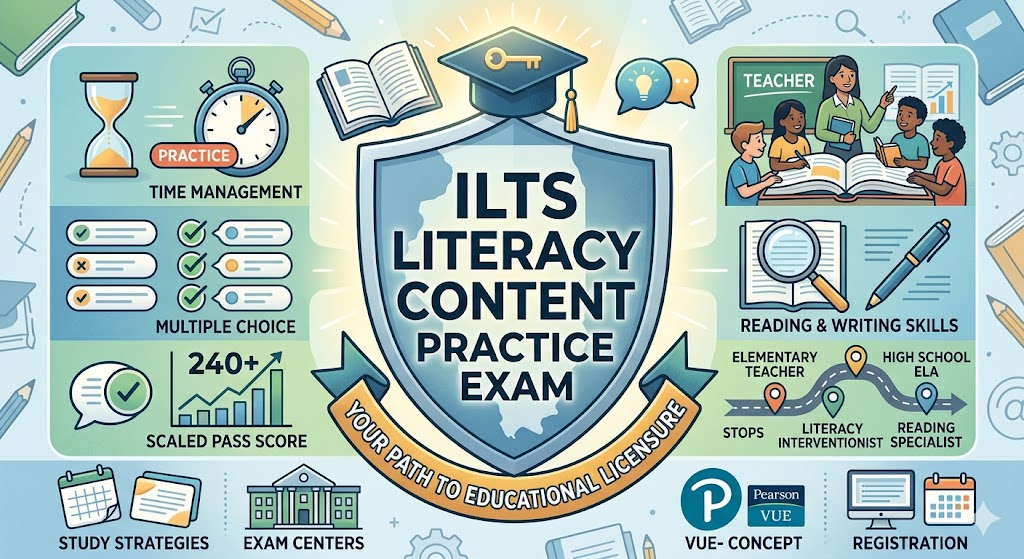
Additional Information
What the Course Entails and Exam Details
Preparing for the ILTS Literacy Content exam involves a deep dive into the diverse and interconnected elements of modern literacy education. While this isn't a single 'course' but rather an assessment based on the knowledge generally gained through a teacher preparation program, understanding the core competencies is essential. The exam is structured around several critical domains:
Foundations of Reading and Writing: You will explore the scientific principles of reading development, from phonics and phonemic awareness to fluent reading and text comprehension strategies. You’ll also delve into the developmental stages of writing and the best practices for teaching composition, including writing structures, genres, and purposes.
Literary and Informational Texts: The test assesses your ability to analyze a wide range of texts. For literary texts, you'll demonstrate knowledge of literary elements, themes, and techniques. For informational texts, the focus is on assessing structural features, argumentative strategies, and key ideas.
Communication, Vocabulary, and Research: This domain covers the fundamental skills of oral communication (speaking and listening), the intricacies of language and vocabulary development, and the essential skills of conducting and teaching research, including sourcing, evaluating information, and citing.
Assessment and Instruction: Crucially, the exam evaluates your pedagogical knowledge. You will be tested on your ability to use diverse and appropriate assessment tools to identify student needs and your capability to design effective literacy instruction that addresses those diverse learners and aligns with relevant educational standards, including the Illinois Learning Standards for English Language Arts.
The specific "ILTS Literacy Content Practice Exam" is a dynamic tool designed to mirror the actual test's content distribution and question complexity, allowing you to identify your strengths and target areas for improvement across all these domains. The real exam consists of approximately 100 multiple-choice questions administered in a computer-based format.
What to Expect in the Final Exam
On your actual ILTS Literacy Content test day, you will face a computer-based examination. The test is entirely multiple-choice, which means you will select the best answer from the provided options for each question. Here are the key details to keep in mind:
Exam Format: Entirely computer-based. The question count is typically around 100 multiple-choice questions, which are designed to be challenging yet representative of the required knowledge. Some questions may involve reading passages or analyzing pedagogical scenarios.
Time Limit: You will have a generous time limit of approximately 3 hours and 15 minutes of testing time, not including the tutorial and a nondisclosure agreement. This is designed to give you sufficient time to read carefully, analyze each question, and review your answers.
Passing Score: The Illinois State Board of Education uses a scaled scoring system ranging from 100 to 300. To successfully pass the ILTS Literacy Content exam, you must achieve a minimum scaled score of 240. This means you do not need to get a specific percentage of questions correct; rather, your raw score is converted to this uniform scale that accounts for slight variations in difficulty between different test forms.
Specific Rules: On test day, you will be required to present a valid, government-issued photo ID. No outside materials, dictionaries, formula sheets, or calculators are permitted, unless otherwise specified for specific test content. The testing system often includes features that allow you to "flag" questions you find difficult, allowing you to easily revisit them later, and a process of elimination tool can sometimes be digitally applied to options. Results are not typically available immediately, but official score reports are generally released a few weeks after testing.
How to Study and Exam Centers
Preparation is paramount for success, and a multi-faceted approach is most effective. Begin by thoroughly reviewing the official ILTS Literacy Content test framework to understand all potential topics. This should be followed by structured study, allocating dedicated time to each domain.
Practice, Practice, Practice: Utilize a high-quality "ILTS Literacy Content Practice Exam" (or multiple practice exams) as a cornerstone of your study plan. These simulated tests will:
Familiarize you with the types of multiple-choice questions you’ll encounter.
Help you gauge your current knowledge level and identify areas needing more attention.
Improve your time management skills by simulating the real exam’s time pressure.
Build your stamina for sustained focus during the long testing session.
Study Guides and Resources: Combine practice tests with comprehensive study guides, academic textbooks from your education courses, and reputable online educational resources focused on literacy teaching and Illinois teaching standards. Many platforms offer diagnostics that can tailor a study plan for you.
Active Learning: Don't just read passively. Make flashcards for key terms, summarize concepts, teach topics to others, and create outlines. Form study groups with peers preparing for the same or similar ILTS exams.
Schedule and Health: Develop a realistic study schedule leading up to your exam date. Consistent, incremental learning is far more effective than last-minute cramming. Crucially, prioritize your physical health by getting enough sleep, eating well, and taking breaks. Your brain performs best when well-rested and cared for.
Where and How to Take the Exam: The ILTS exams, including the Literacy Content test, are administered through the authorized testing agent, Pearson VUE. You must first create an ILTS/ISBE account online. Once registered and your eligibility is confirmed (if required for your path), you can schedule your testing appointment via the official ILTS website. Tests are offered year-round at numerous authorized Pearson VUE test centers throughout Illinois and nationwide. The exams for teacher content licensure are typically only available in physical test centers, not through online proctoring, so you must select a convenient physical location. Be sure to schedule well in advance to secure your preferred date and time, especially in high-demand periods.
Job Opportunities from the Course
Achieving certification by passing the ILTS Literacy Content exam is a powerful key that unlocks a wide range of inspiring career paths within the dynamic Illinois educational landscape. Your validated proficiency in fostering essential reading, writing, and communication skills makes you a highly sought-after professional. While specific titles and availability can vary by district and grade level (and may require additional specialized training or experience in some cases), potential career opportunities include:
Elementary School Teacher (Grades 1-6): Providing fundamental literacy instruction as part of a general classroom environment.
Middle School English Language Arts Teacher (Grades 5-8): Inspiring adolescents to engage with complex literature and develop sophisticated writing skills.
High School English Teacher (Grades 9-12): Guiding students through advanced literary analysis, rigorous composition, and effective research, potentially in honors or AP programs.
Reading/Literacy Teacher (K-12): Providing specialized, focused reading instruction to students across various grade levels. (This may be a distinct role depending on district or require a specific Reading endorsement/specialist license, which this content exam may be a key component of).
Literacy Interventionist/Reading Interventionist: Working intensively with smaller groups of students who require specialized support to close achievement gaps.
Curriculum Specialist (in Literacy): Designing and evaluating literacy curricula and instructional materials for a school or district. (This typically requires advanced experience and education).
Educational Consultant: Advising schools, organizations, or individuals on effective literacy education strategies and practices. (Also typically requires significant experience and background).
Private Tutor/Learning Center Instructor: Offering specialized, one-on-one or small group support focused on literacy development and enrichment.
By preparing diligently for and excelling on the ILTS Literacy Content exam, you are not just passing a test; you are confirming your capability to be a fundamental catalyst for student learning, critical thinking, and future success. Each job opportunity in this list represents a unique and fulfilling way to apply your expertise and passion, making a tangible, positive difference in the lives of young learners across Illinois.
Frequently Asked Questions
Reviews
5.0
Based on 0 reviews
Leave a Review
No reviews yet. Be the first to review!