
Independent Electrical Contractors (IEC) Y2S1 Part 3 Practice Test
$69.00
- Buy to unlock unlimited access to all Quiz questions and Answers in this Quiz.
- After purchase you can print a PDF of the whole quiz at any point. The PDF will contain the questions and the correct answers.
About this Exam
This study guide is designed for electrical apprentices currently enrolled in the Independent Electrical Contractors (IEC) Year 2, Semester 1 program. It focuses specifically on the content covered in Part 3 of this semester. The actual IEC exams and their corresponding practice tests serve as vital check-points to ensure apprentices are developing the theoretical understanding and practical knowledge required to progress towards becoming a licensed electrician. This practice test helps you gauge your comprehension of critical Year 2 electrical concepts before sitting for the formal final exam. It is a critical tool for identifying your strengths and areas needing improvement, ensuring you are well-prepared for the challenging real-world assessments within the IEC curriculum. Completing this stage signifies significant progress and a deeper commitment to the trade.
Ready to test your knowledge?
Buy Now to Access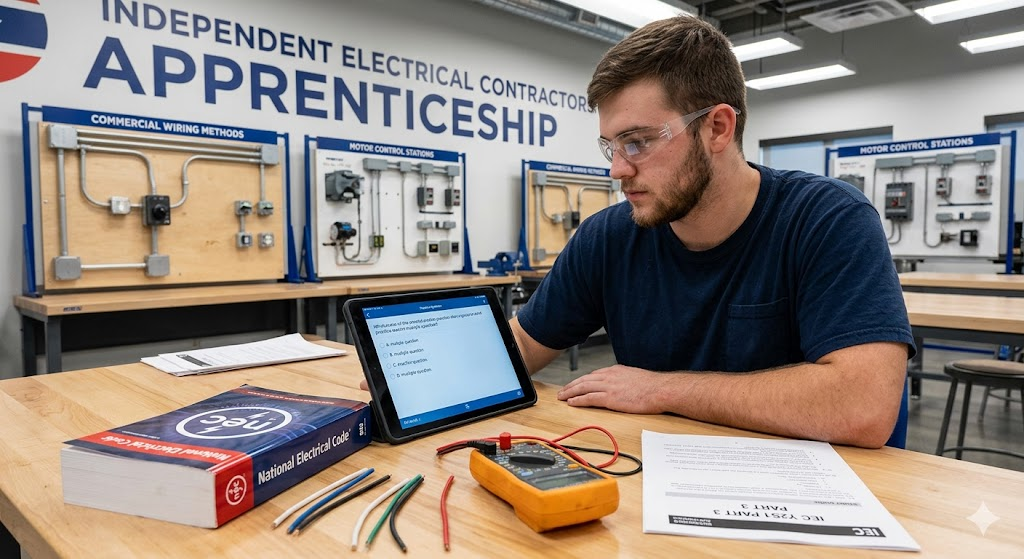
Additional Information
What the Course Entails and Exam Details
The IEC curriculum is a structured program blending on-the-job training with comprehensive classroom instruction. Year 2 typically marks a pivotal point, moving deeper into complex electrical theory and practical applications. The course content that this particular practice test covers, within Semester 1, Part 3, will delve into the critical application of the National Electrical Code (NEC®). Specific topics you can expect to master and be tested on include advanced branching circuit concepts, detailed voltage drop calculations, the correct sizing of conductors and overcurrent protection devices for various scenarios, and foundational knowledge of commercial wiring methods. The exam itself usually takes a multiple-choice format, designed to efficiently and comprehensively assess your ability to interpret and apply the code within relevant practical and theoretical contexts. This practice exam should contain a set of questions that mirror the style, difficulty, and core subjects of the actual assessment.
What to Expect in the Final Exam
While this specific practice test is a powerful preparatory tool, it is essential to understand the format and expectations of the actual final exam for this module. The real IEC final exam is a proctored, high-stakes assessment. It will typically be a time-limited test, often lasting several hours, consisting entirely of multiple-choice questions or a blend of question types to thoroughly evaluate your comprehension. To pass and advance, you must achieve a specific minimum score, typically within the range of 70% to 75%, and you must also maintain certain attendance and on-the-job hour requirements as part of the overall apprenticeship program. The exam environment is structured: you will likely be required to present valid identification, adhere to strict closed-book or very specific code-restricted rules (allowing only your approved NEC® book, sometimes with permitted tabs, and a non-programmable calculator), and follow all proctor instructions explicitly. No smartphones or unapproved materials are allowed. The questions will be challenging and practical, requiring not just memory but the real application of skills and code rules you have learned.
How to Study and Exam Centers
Effectively preparing for this practice test and the subsequent final exam requires dedicated effort and consistent strategy:
Utilize the Practice Test Multiple Times: Attempt the practice test multiple times to get familiar with the types of questions and manage your time. Understand not just the correct answer, but why the others are incorrect.
Review Class Materials: Thoroughly review your textbook chapters, handouts, and any in-class notes from your instructor. Focus particularly on key code articles and calculation methods.
Master the NEC® Book: Dedicate significant time to navigating and understanding your copy of the National Electrical Code. Learn where key tables, definitions, and requirements are located.
Form Study Groups: Collaborating with fellow apprentices can provide new perspectives and help clarify difficult concepts.
Ask Your Instructor: Don't hesitate to seek clarification from your IEC instructor on any topic you find challenging.
Practice Calculations: Ensure you can confidently perform voltage drop, load, and circuit calculations without assistance.
Accessing the Practice Test: Your practice test is typically available through an online portal or learning management system provided by your local IEC chapter.
Regarding the Actual Final Exam: For information on where and how to take the actual proctored final exam, you must coordinate with your local IEC chapter or program administrator. They will provide details on exam registration, specific physical testing centers (often within the IEC facility), any potential secure online proctoring options available to your program, required fees, and mandatory dates. Keep a close eye on all communication from your program regarding registration and testing procedures.
Job Opportunities from the Course
Successfully progressing through your IEC Year 2 coursework, including passing this specific assessment and the eventual proctored final, is a significant milestone in your professional journey. It builds the foundational knowledge and hours on the job needed to ultimately earn your electrical license. While the qualification itself is a step within the program, it directly unlocks and advances various roles within the electrical trade, with potential future opportunities including:
Electrical Apprentice (advanced levels)
Residential Wireman
Commercial Electrician
Industrial Electrician
Maintenance Electrician
Solar/Renewable Energy Installer
Journeyman Electrician (upon further experience and licensing)
Electrical Contractor (upon long-term experience and further licensure)
This guide provides the tools and information you need to tackle the IEC Y2S1 Part 3 Practice Test confidently. Combine consistent study, active participation in your coursework and on-the-job training, and a strategic approach to practice exams, and you will be well on your way to success in your electrical career. Good luck!
Frequently Asked Questions
Reviews
5.0
Based on 0 reviews
Leave a Review
No reviews yet. Be the first to review!